


Effects of armed conflict on child health and development: A systematic review
- PMID: 30650095
- PMCID: PMC6334973
- DOI: 10.1371/journal.pone.0210071
Effects of armed conflict on child health and development: A systematic review
Erratum in
-
Correction: Effects of armed conflict on child health and development: A systematic review.PLoS One. 2019 Feb 11;14(2):e0212393. doi: 10.1371/journal.pone.0212393. eCollection 2019. PLoS One. 2019. PMID: 30742672 Free PMC article.
Abstract
Background: Armed conflicts affect more than one in 10 children globally. While there is a large literature on mental health, the effects of armed conflict on children's physical health and development are not well understood. This systematic review summarizes the current and past knowledge on the effects of armed conflict on child health and development.
Methods: A systematic review was performed with searches in major and regional databases for papers published 1 January 1945 to 25 April 2017. Included studies provided data on physical and/or developmental outcomes associated with armed conflict in children under 18 years. Data were extracted on health outcomes, displacement, social isolation, experience of violence, orphan status, and access to basic needs. The review is registered with PROSPERO: CRD42017036425.
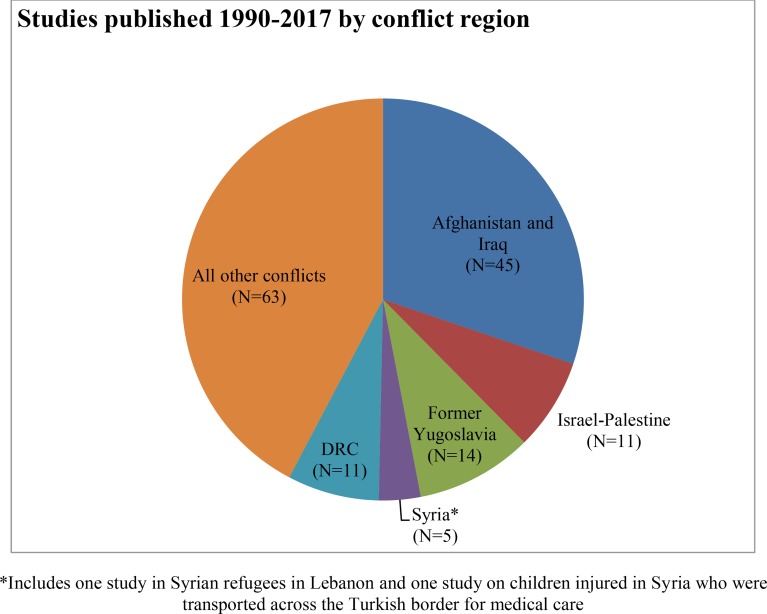
Findings: Among 17,679 publications screened, 155 were eligible for inclusion. Nearly half of the 131 quantitative studies were case reports, chart or registry reviews, and one-third were cross-sectional studies. Additionally, 18 qualitative and 6 mixed-methods studies were included. The papers describe mortality, injuries, illnesses, environmental exposures, limitations in access to health care and education, and the experience of violence, including torture and sexual violence. Studies also described conflict-related social changes affecting child health. The geographical coverage of the literature is limited. Data on the effects of conflict on child development are scarce.
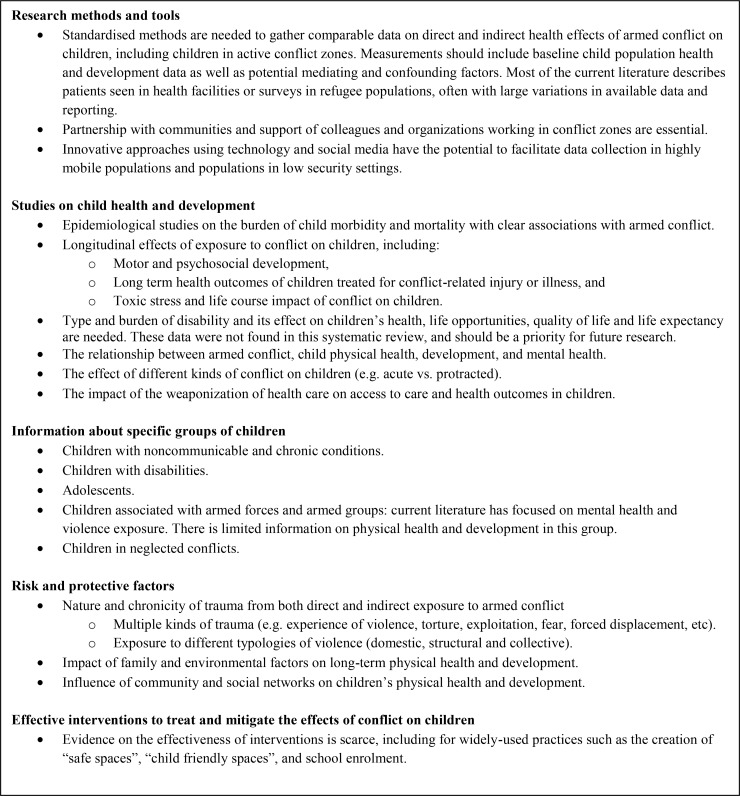
Interpretation: The available data document the pervasive effect of conflict as a form of violence against children and a negative social determinant of child health. There is an urgent need for research on the mechanisms by which conflict affects child health and development and the relationship between physical health, mental health, and social conditions. Particular priority should be given to studies on child development, the long term effects of exposure to conflict, and protective and mitigating factors against the harmful effects of armed conflict on children.
Conflict of interest statement
The authors have declared that no competing interests exist.
Figures
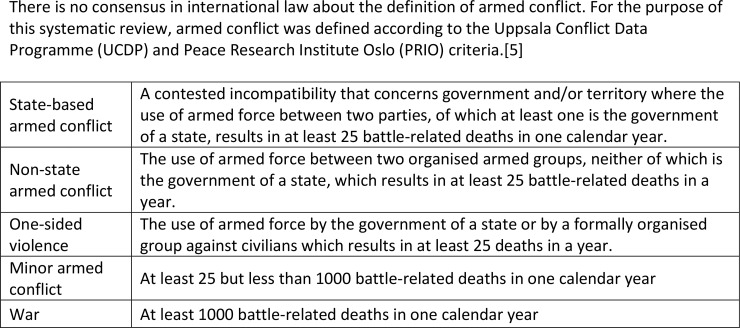
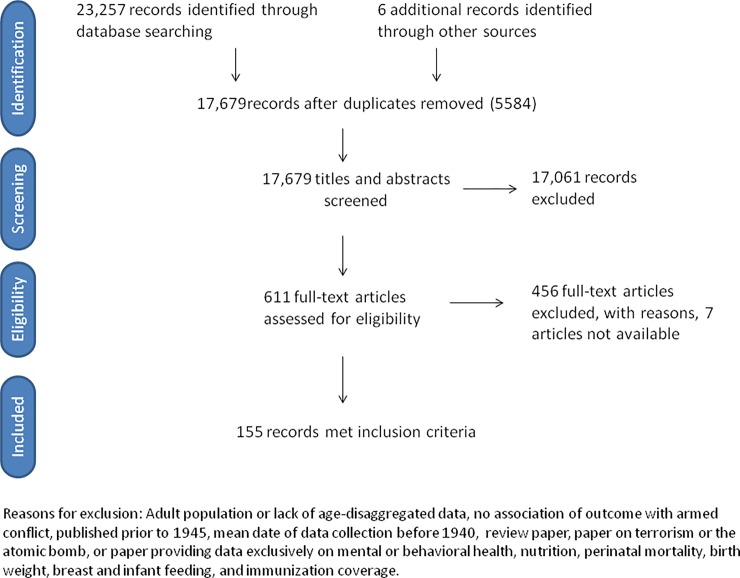
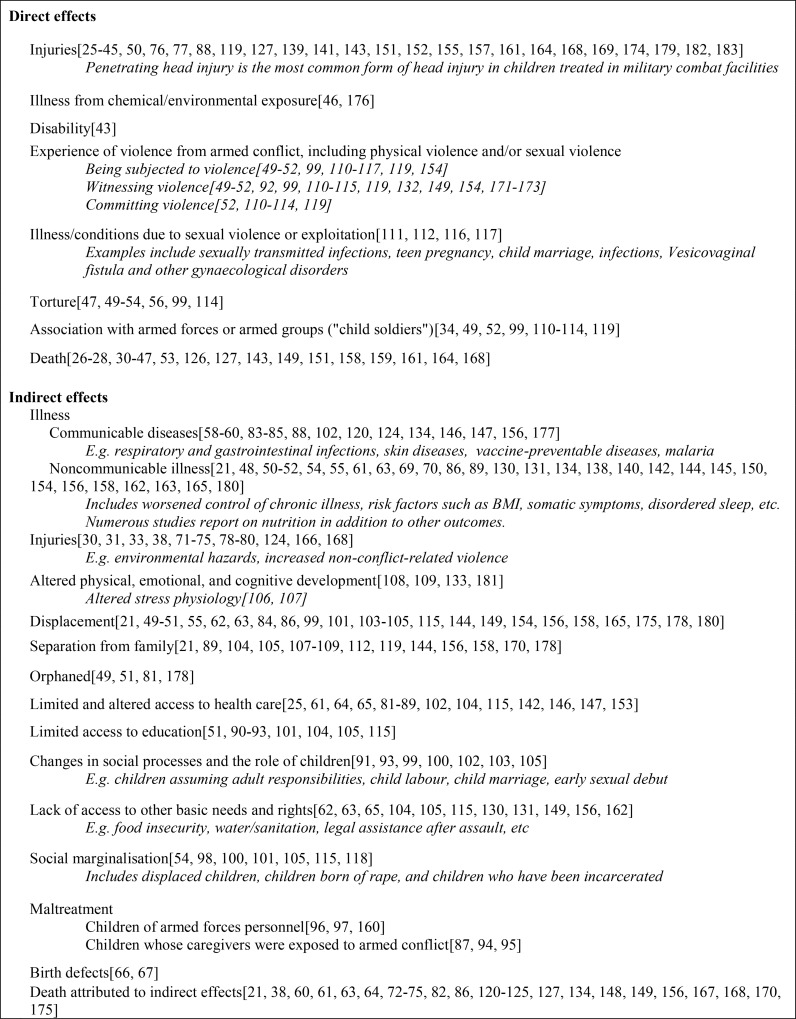
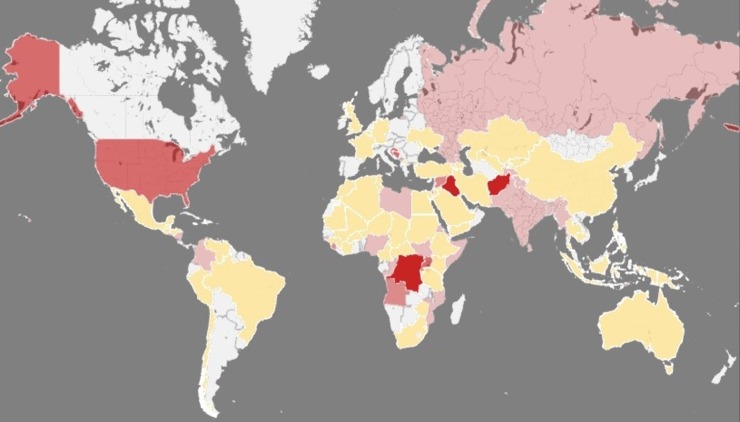
References
-
- UNICEF. More than 1 in 10 Children Living in Countries and Areas Affected by Armed Conflict. New York: United States Fund for UNICEF; 2015.
-
- Education Under Attack 2014. Global Coalition to Protect Education from Attack, 2014.
-
- Report on Attacks on Health Care in Emergencies. Geneva: World Health Organization, 2016.
-
- Dupuy K, Gates S, Nygård HM, Rudolfsen I, Rustad SA, Strand H, et al. Trends in Armed Conflict, 1946–2016. Oslo, Norway: Peace Research Institute Oslo (PRIO), 2017.
-
- Uppsala Conflict Data Program. Definitions. Uppsala Universitet: Department of Peace and Conflict Research; 2018. [19 October 2018]. Available from: https://www.pcr.uu.se/research/ucdp/definitions.
Publication types
MeSH terms
LinkOut - more resources
Full Text Sources
Medical
Miscellaneous
