Review
. 2019 Jan 15;24(2):300.
doi: 10.3390/molecules24020300.

Oxidative Transformations of Lignans

Affiliations
Review

Oxidative Transformations of Lignans

Patrik A Runeberg et al. Molecules. .

Abstract

Numerous oxidative transformations of lignan structures have been reported in the literature. In this paper we present an overview on the current findings in the field. The focus is put on transformations targeting a specific structure, a specific reaction, or an interconversion of the lignan skeleton. Oxidative transformations related to biosynthesis, antioxidant measurements, and total syntheses are mostly excluded. Non-metal mediated as well as metal mediated oxidations are reported, and mechanisms based on hydrogen abstractions, epoxidations, hydroxylations, and radical reactions are discussed for the transformation and interconversion of lignan structures. Enzymatic oxidations, photooxidation, and electrochemical oxidations are also briefly reported.

Keywords: lignans; oxidation.


Conflict of interest statement

The authors declare no conflict of interest.

Figures
Scheme 1
Scheme 1
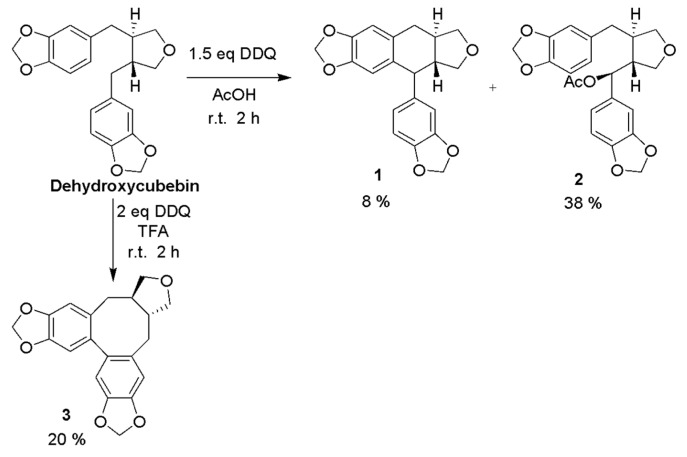
Oxidation of dehydroxycubebin by DDQ. AcOH promotes benzylic functionalization while TFA promotes aryl-aryl coupling.
Scheme 2
Scheme 2
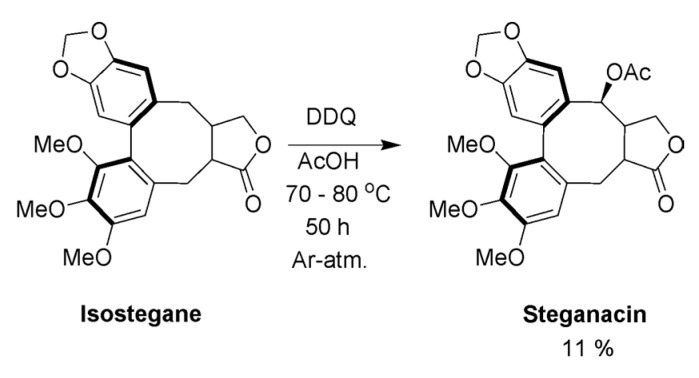
Benzylic O-acetylation of (+)-isostegane by 2,3-Dichloro-5,6-dicyano-1,4-benzoquinone (DDQ) in AcOH.
Scheme 3
Scheme 3
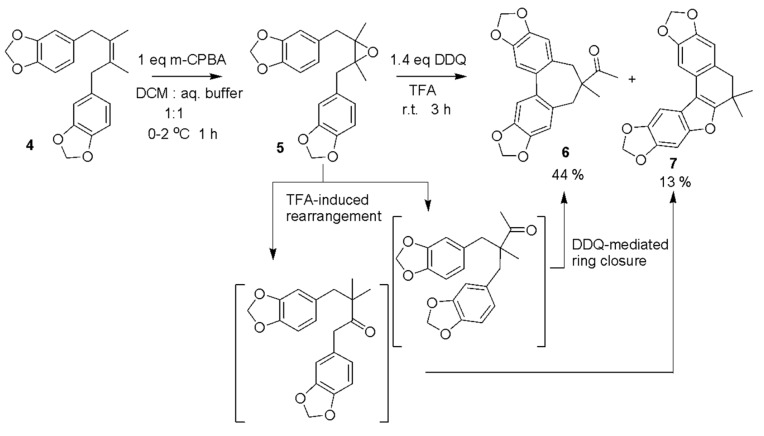
TFA- and DDQ-mediated rearrangement and oxidative ring closure of an epoxide lignan.
Scheme 4
Scheme 4
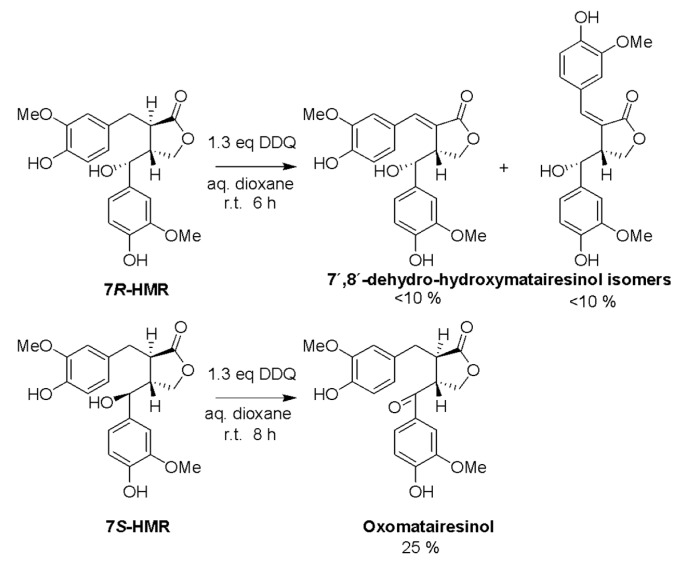
Oxidation of hydroxymatairesinol (HMR) by DDQ is dependent on the stereochemistry of the benzylic alcohol position. The major products are shown here. A range of minor products were also formed in the reactions.
Scheme 5
Scheme 5
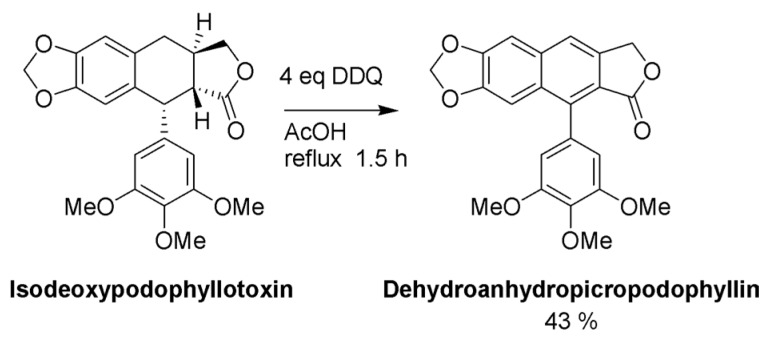
DDQ-mediated aromatization of isodeoxypodophyllotoxin.
Scheme 6
Scheme 6
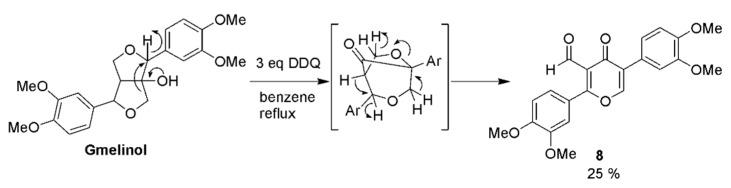
Oxidation of gmelinol with three equivalents DDQ.
Scheme 7
Scheme 7
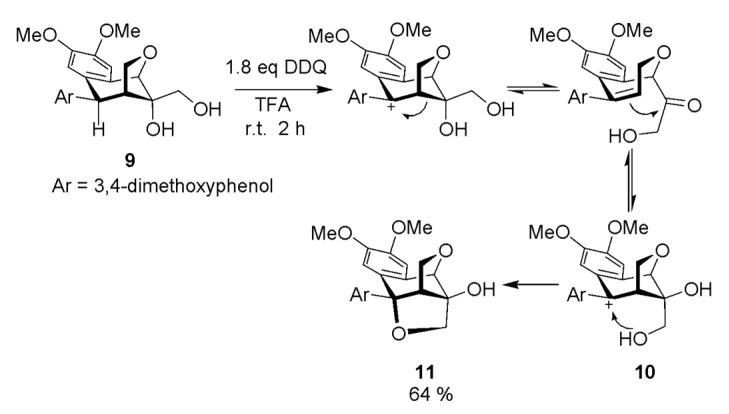
DDQ-mediated epimerization and nucleophilic ring closure.
Scheme 8
Scheme 8
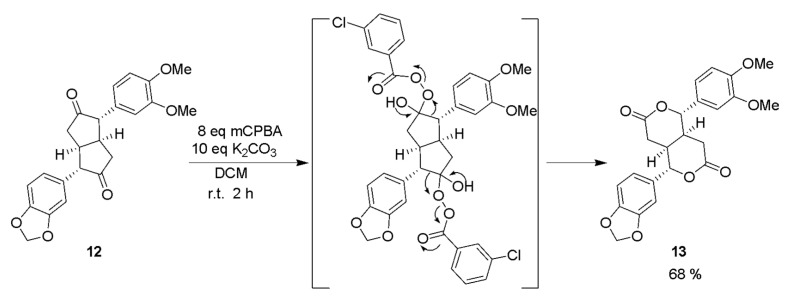
Baeyer-Villiger oxidation of a diketone to a dilactone.
Scheme 9
Scheme 9
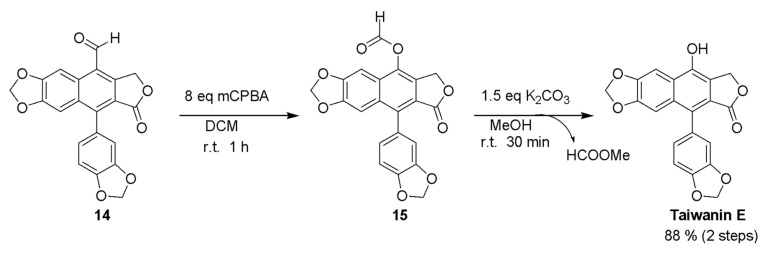
Baeyer-Villiger oxidation of an aldehyde to the corresponding formate, which was further hydrolyzed to the alcohol (taiwanin E).
Scheme 10
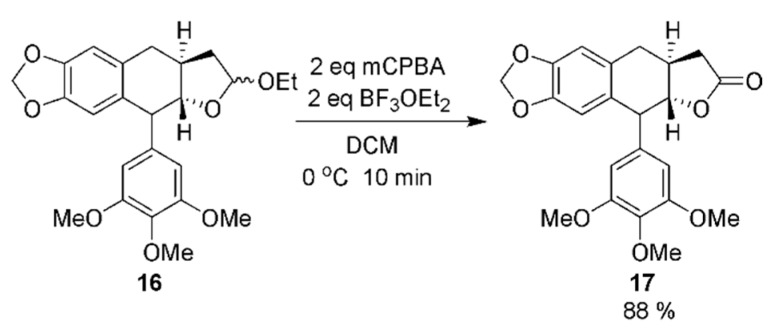
Scheme 10
Lewis acid and mCPBA mediated oxidation of an ethoxytetrahydrofuran to the corresponding lactone.
Scheme 11
Scheme 11
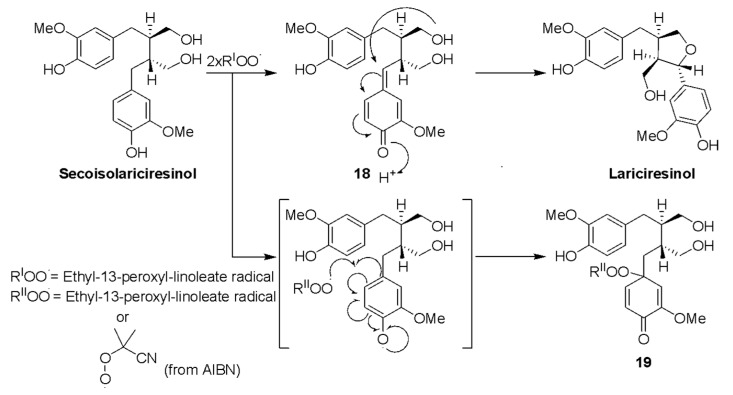
Peroxyl radical mediated oxidation of the lignan secoisolariciresinol.
Scheme 12
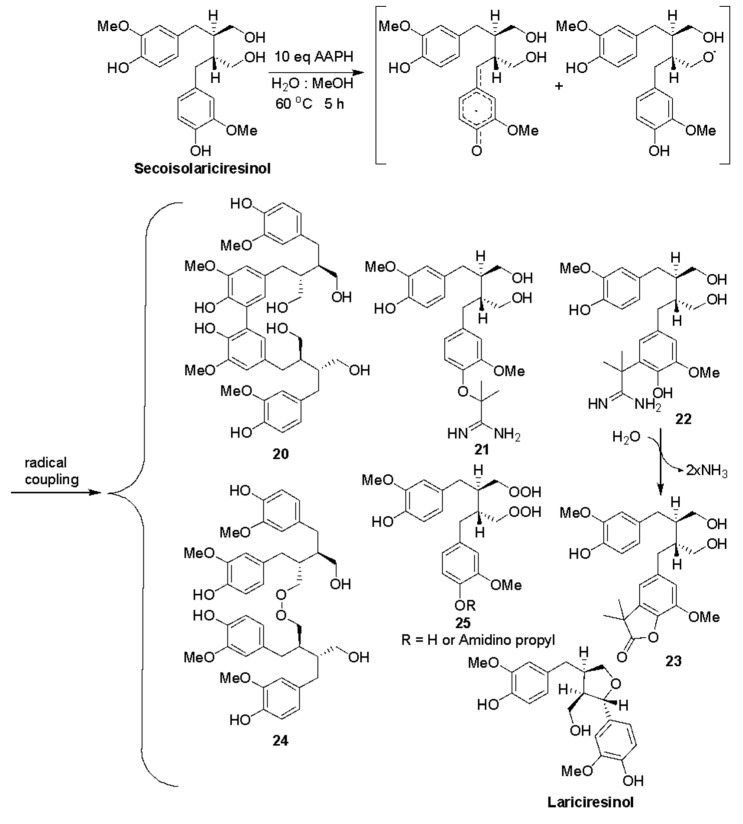
Scheme 12
Oxidation products formed from secoisolariciresinol after 2,2′-Azobis(2-amidinopropan) dihydrochloride (AAPH)-mediated radical scavenging.
Scheme 13
Scheme 13
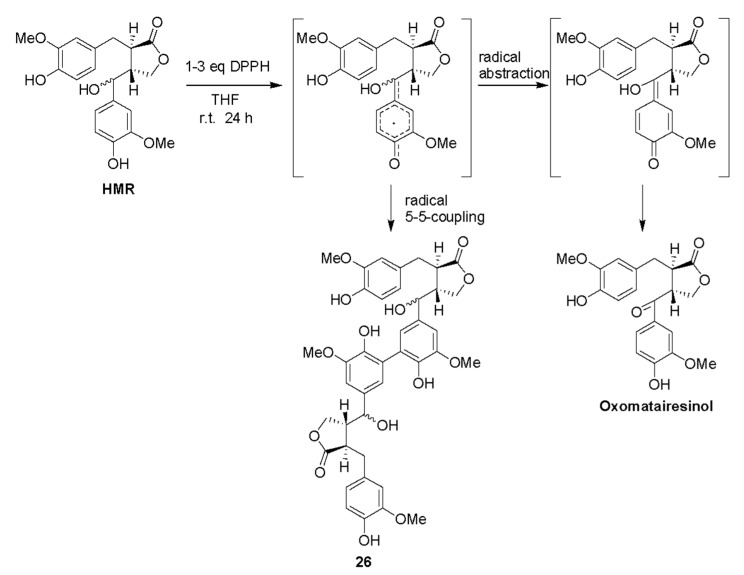
Reaction products of HMR with the free radical DPPH.
Scheme 14
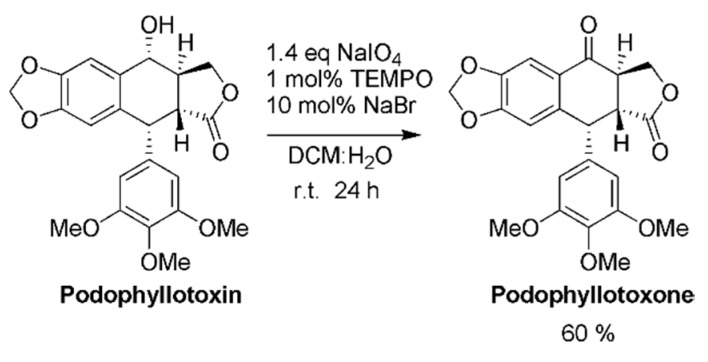
Scheme 14
2,2,6,6-Tetramethyl-1-piperidinyloxy (TEMPO)-mediated oxidation of the benzylic alcohol of podophyllotoxin.
Scheme 15
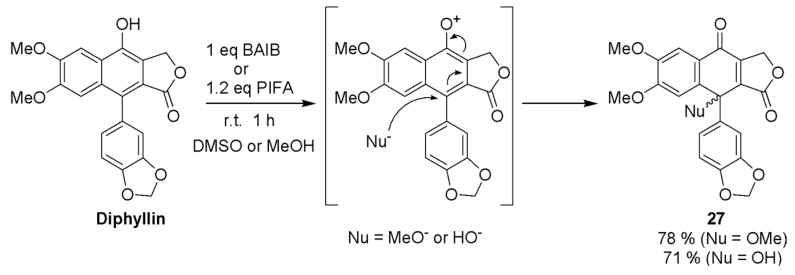
Scheme 15
Bis(trifluoroacetoxy)iodo benzene (PIFA) or Bis(acetoxy)iodo benzene (BAIB)-mediated oxidation of diphyllin.
Scheme 16
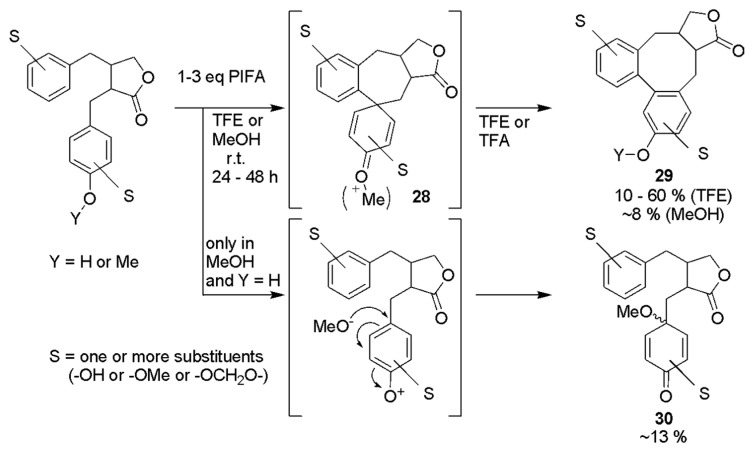
Scheme 16
Lignan oxidation by PIFA in TFE or MeOH. With TFE as the solvent, the major reaction was formation of the cyclooctadiene. In methanol, nucleophilic attack occurred as an additional reaction.
Scheme 17
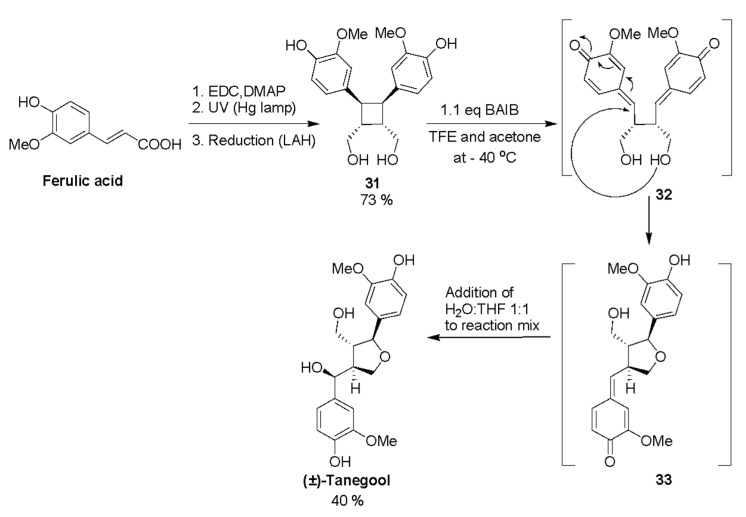
Scheme 17
Total synthesis of (±)-tanegool involving BAIB mediated oxidative ring opening.
Scheme 18
Scheme 18
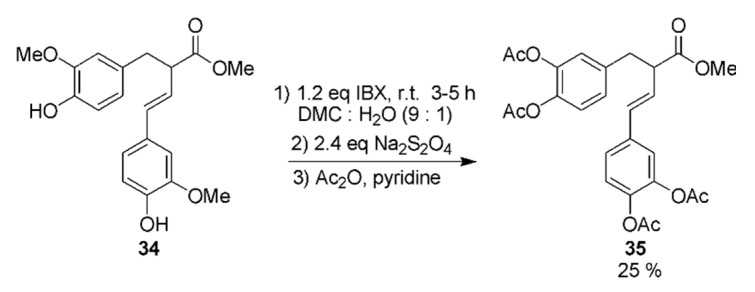
Selective 3-Iodobenzoic Acid (IBX)-mediated demethylation of a norlignan.
Scheme 19
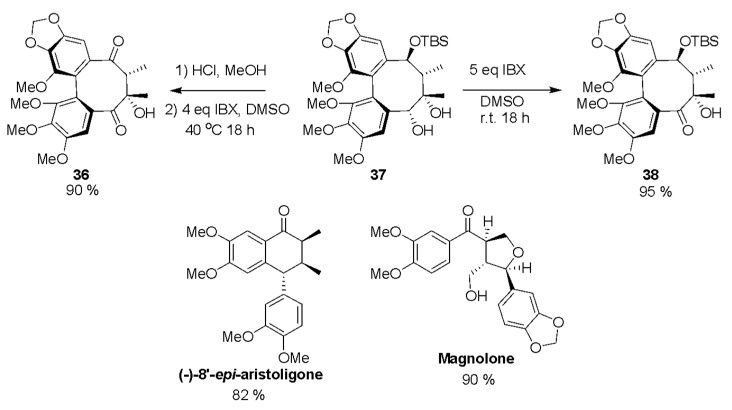
Scheme 19
Oxidation of benzylic alcohols by IBX.
Scheme 20
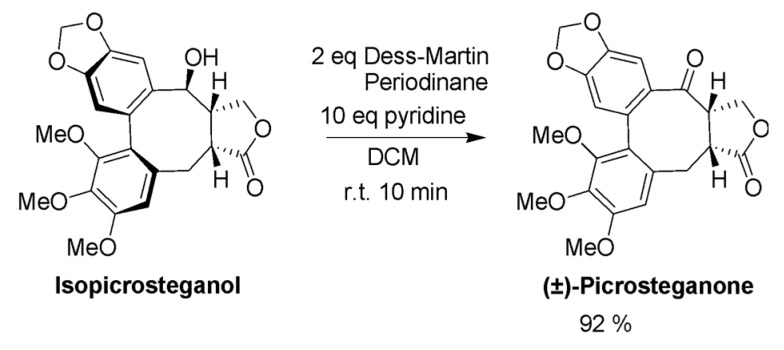
Scheme 20
Dess-Martin oxidation of the benzylic alcohol to the ketone.
Scheme 21
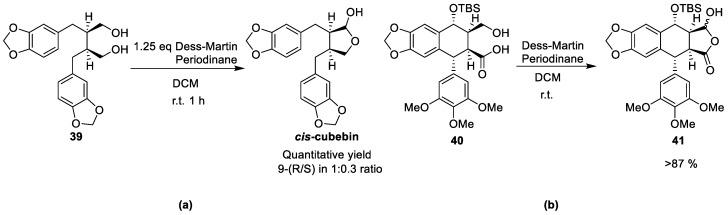
Scheme 21
Dess-Martin oxidation of (a) diol 39 to cis-cubebin; (b) hydroxyacid 40 to hydroxybutyrolactone 41.
Scheme 22
Scheme 22
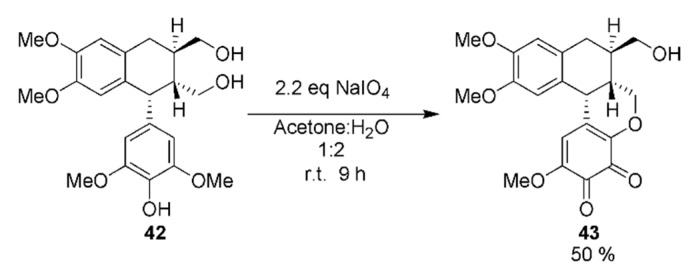
NaIO4-mediated oxidation to an ether bridged o-quinone structure.
Scheme 23
Scheme 23
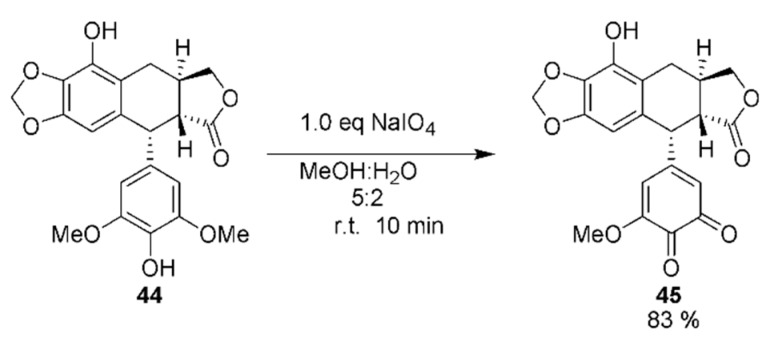
NaIO4-mediated oxidation of syringyl-lignan forming an o-quinone structure.
Scheme 24
Scheme 24
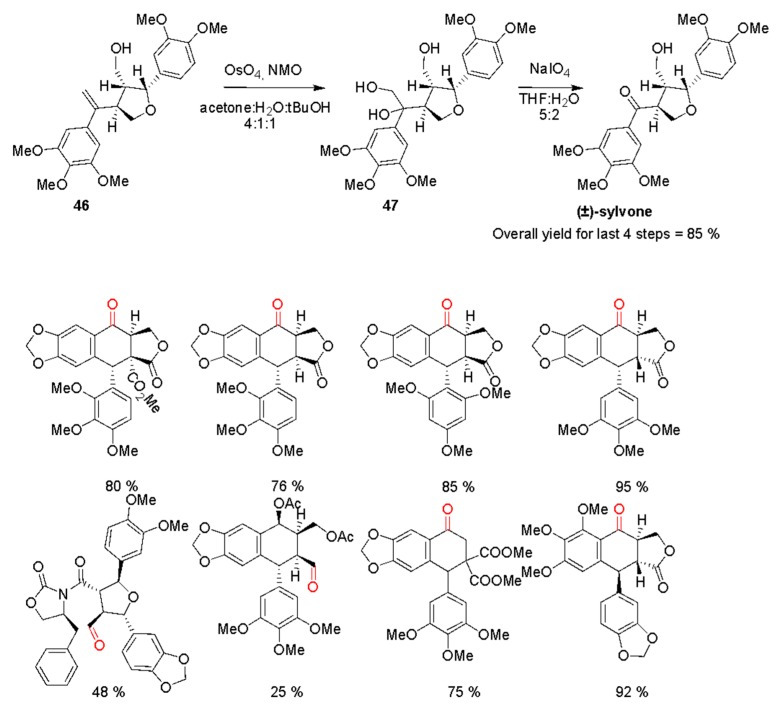
Lemieux-Johnson oxidation in the synthesis of sylvone (upper). Other lignan structures where the same methodology has been applied (position for oxidation marked in red). The isolated overall yields for both steps are given (lower).
Scheme 25
Scheme 25
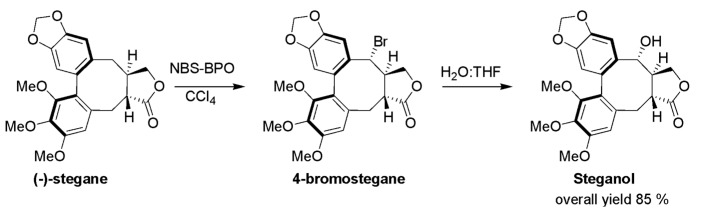
Wohl-Ziegler bromination of (+)-isostegane followed by hydrolysis to (−)-steganol.
Scheme 26
Scheme 26
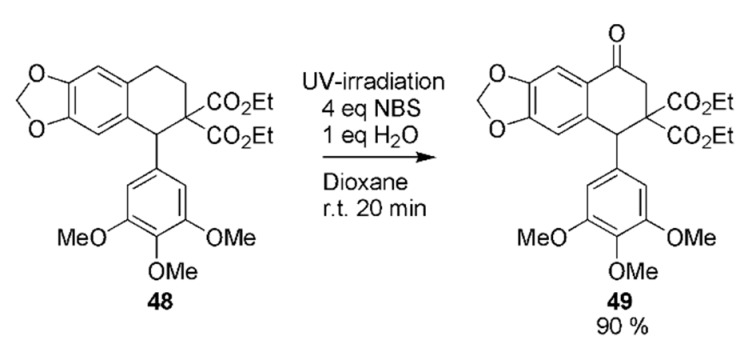
UV and NBS-mediated formation of the benzylic ketone (49).
Scheme 27
Scheme 27
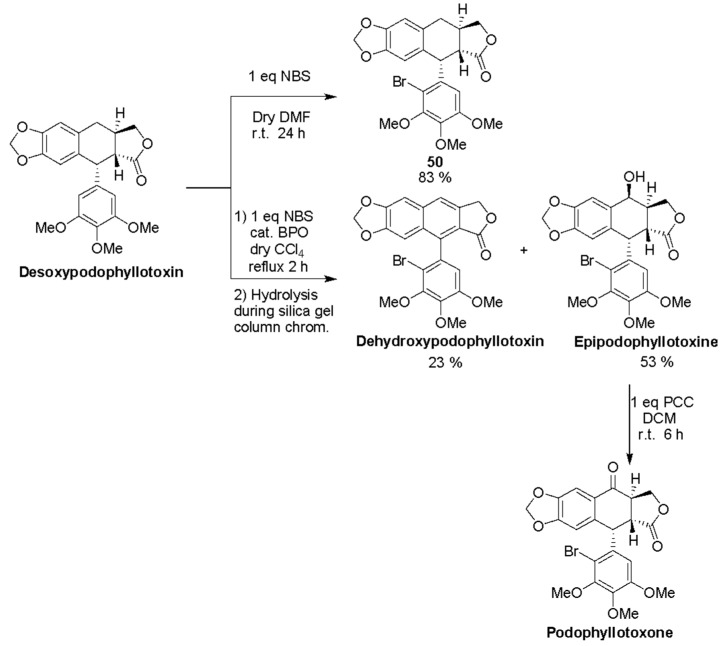
Reaction of deoxypodophyllotoxin with NBS in DMF and CCl4, and further oxidation of epipodophyllotoxine by PCC to the corresponding ketone (podophyllotoxone).
Scheme 28
Scheme 28
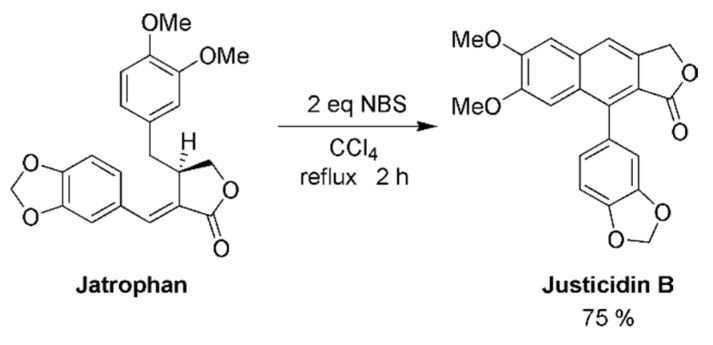
Synthesis of justicidin B by NBS-oxidation of jetrophan.
Scheme 29
Scheme 29
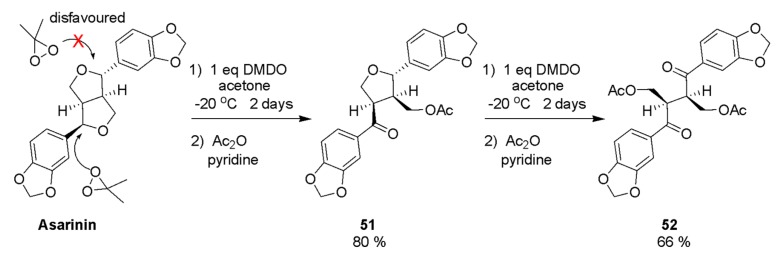
Selective ring opening of asarinin by DMDO.
Scheme 30
Scheme 30
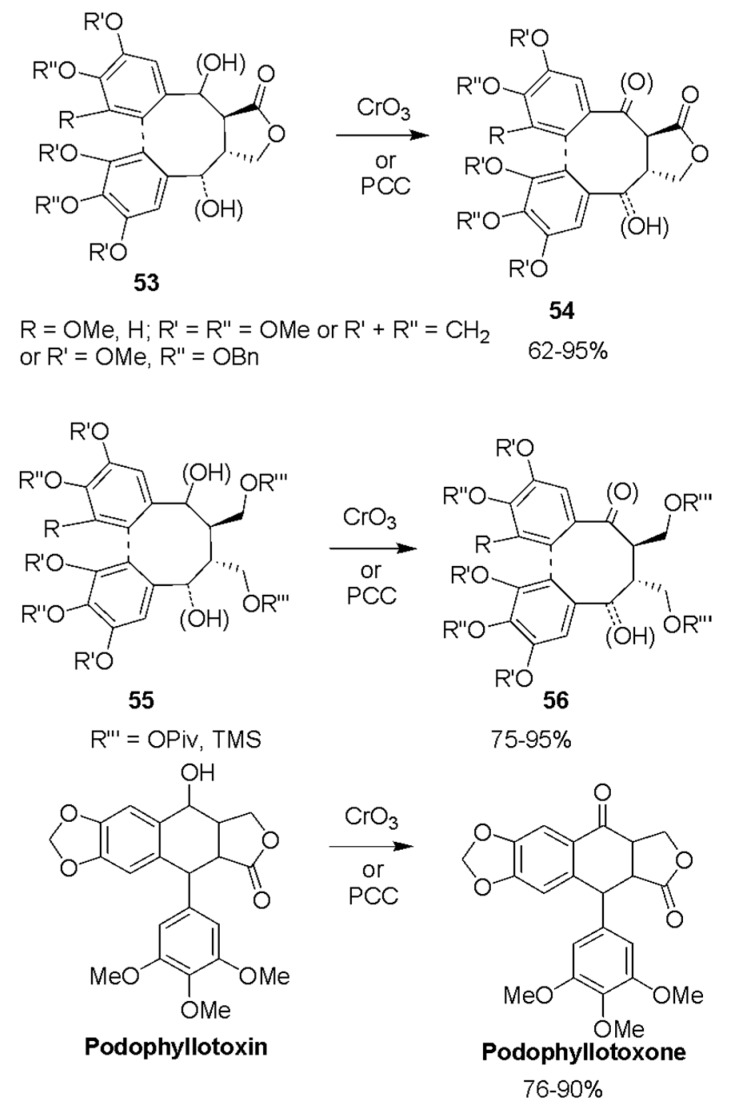
Oxidation of the benzylic alcohol to the corresponding ketone by Cr(VI) oxidants. The dotted line corresponds to either the existence of the bond or the absence of the bond.
Scheme 31
Scheme 31
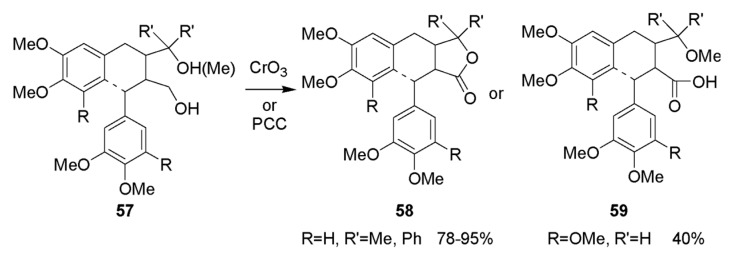
Oxidation of the primary alcohols by Cr(VI) oxidants. The dotted line corresponds to either the existence of the bond or the absence of the bond.
Scheme 32
Scheme 32
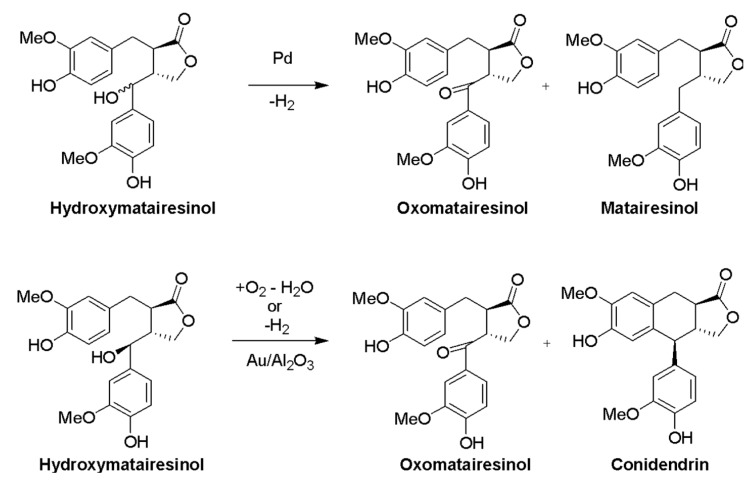
Palladium and gold catalyzed oxidation (dehydrogenation) of hydroxymatairesinol.
Scheme 33
Scheme 33
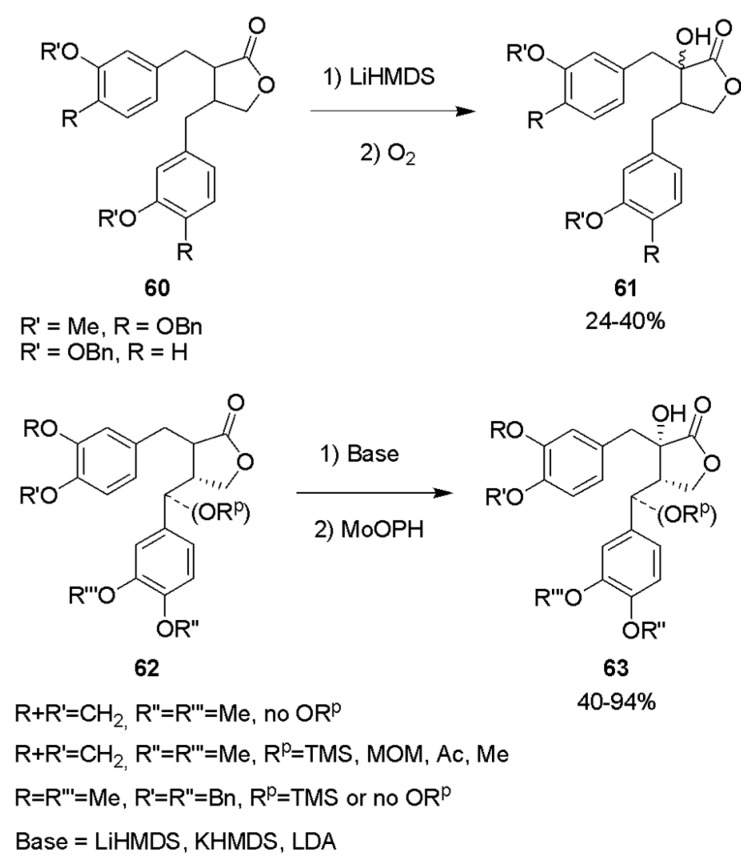
Molybdenum catalyzed α-hydroxylation of butyrolactone lignans. The dotted line corresponds to either the existence of the bond or the absence of the bond.
Scheme 34
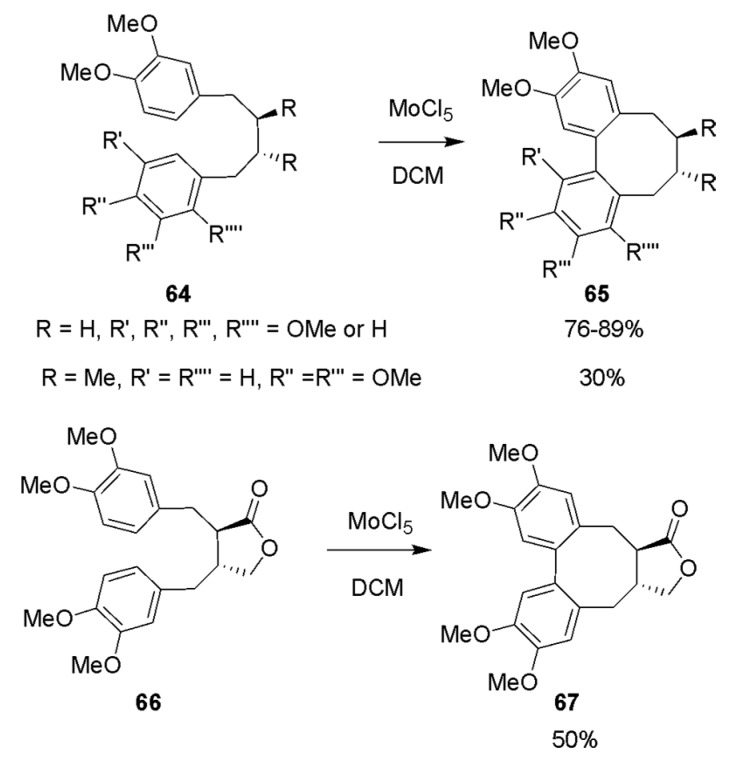
Scheme 34
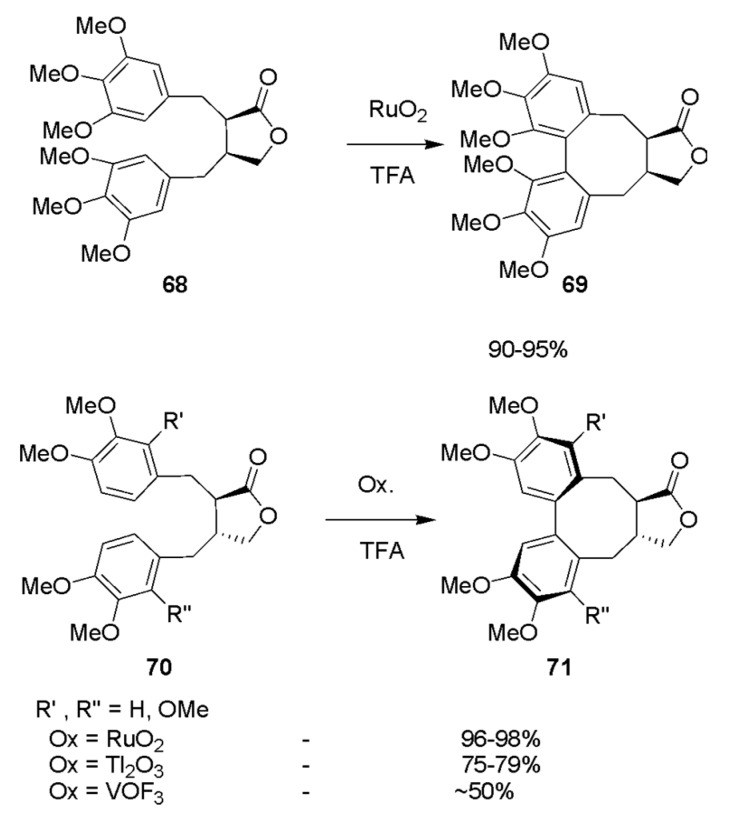
Ar-Ar oxidative coupling by MoCl5.
Scheme 35
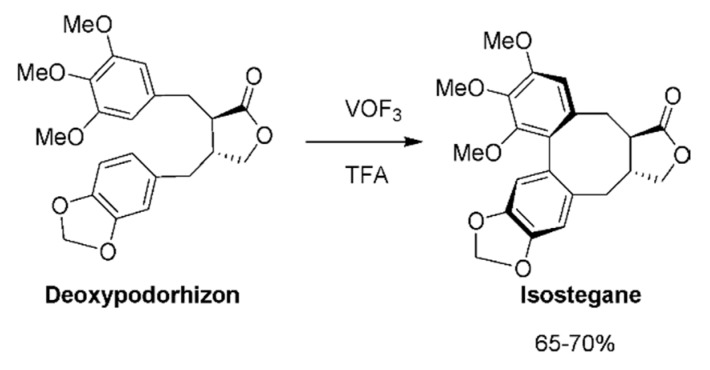
Scheme 35
Ar-Ar oxidative coupling by VOF3.
Scheme 36
Scheme 36
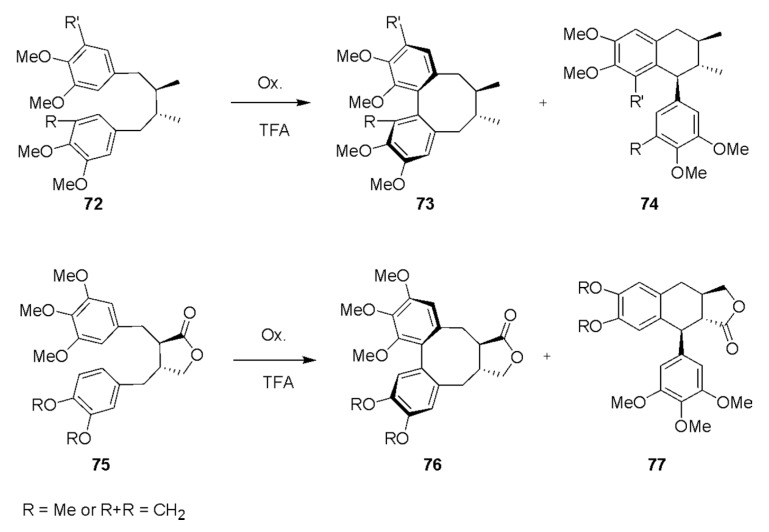
Ar-Ar oxidative coupling by VOF3, RuO2, or Tl2O3.
Scheme 37
Scheme 37
Ru, Tl, and V mediated oxidative cyclizations, forming 2-2′ and 2-7′cyclolignans.
Scheme 38
Scheme 38
Oxidative coupling of matairesinol derivatives in the presence of free phenolic groups.
Scheme 39
Scheme 39
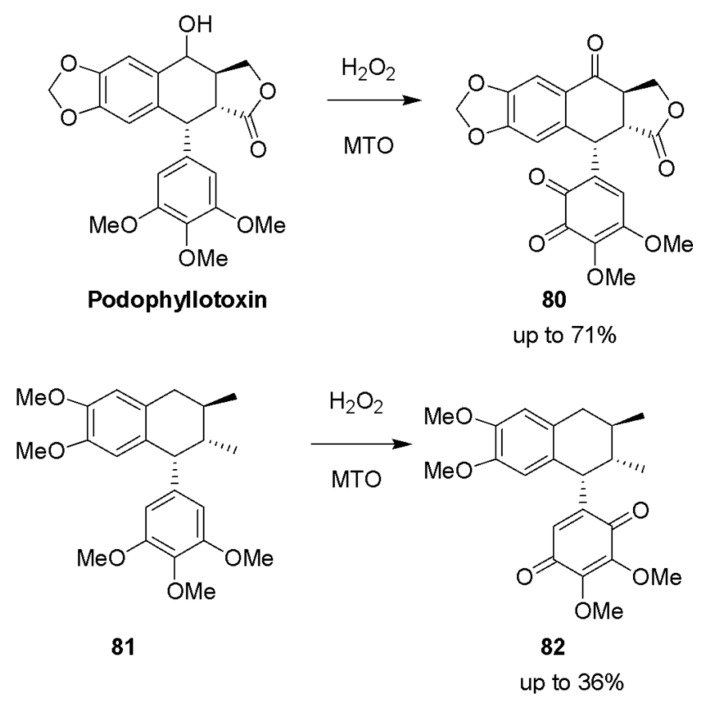
Oxidation of podophyllotoxin and related structures by Methyl Trioxo-Rhenium (MTO).
Scheme 40
Scheme 40
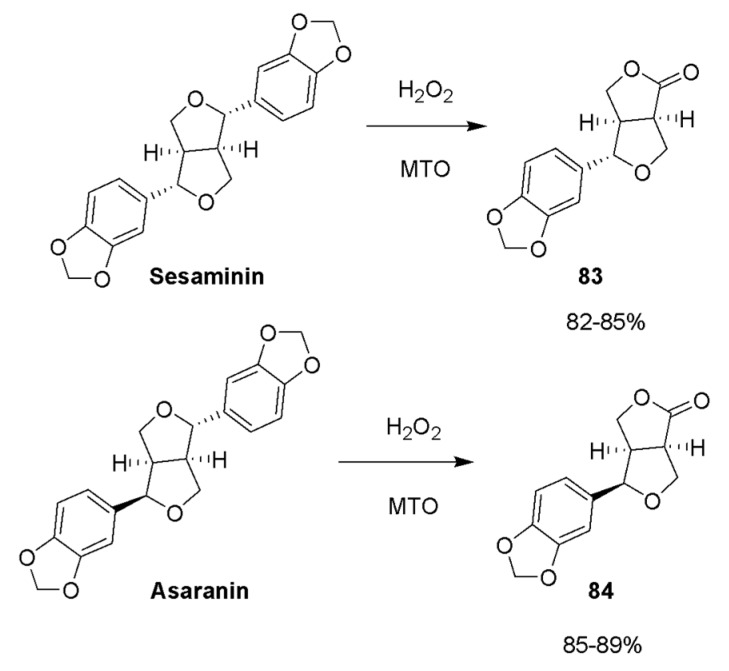
Oxidation of asaranin and sesaminin with MTO.
Scheme 41
Scheme 41
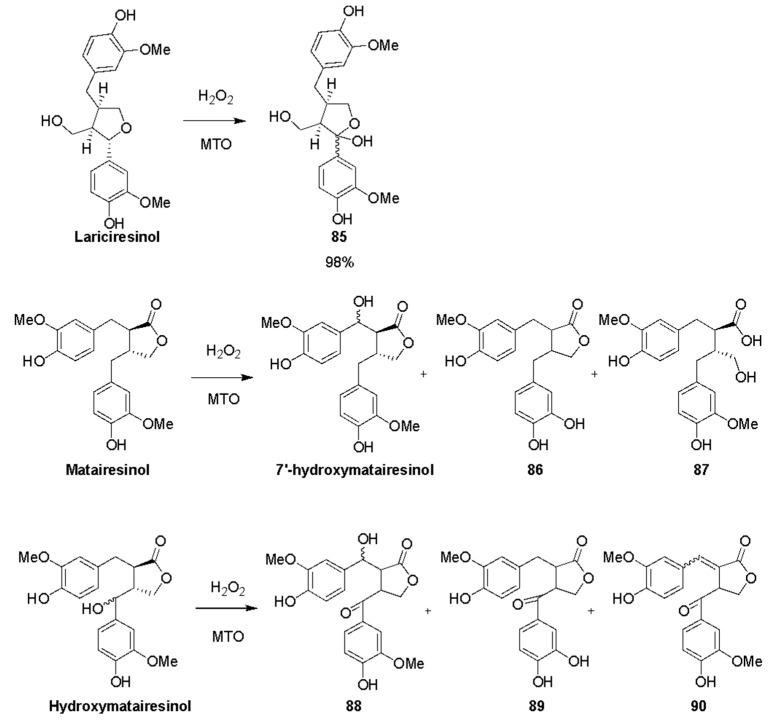
Oxidation of lariciresinol, matairesinol, and hydroxymatairesinol by MTO (major products shown).
Scheme 42
Scheme 42
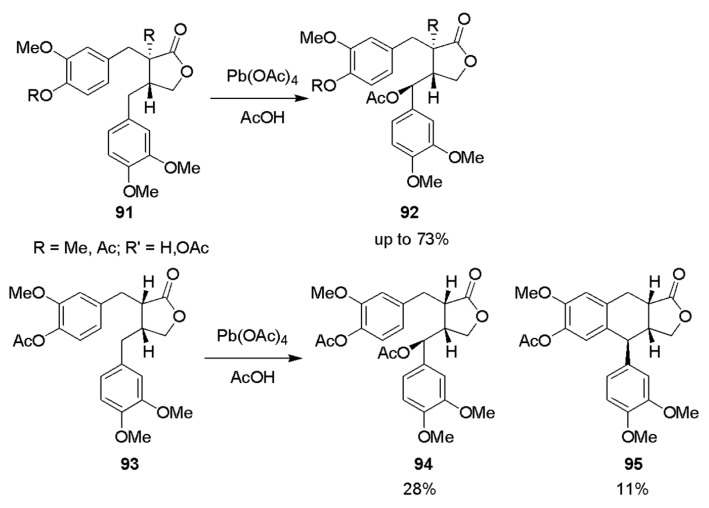
Lead acetate acetoxylation of matairesinol derivatives.
Scheme 43
Scheme 43
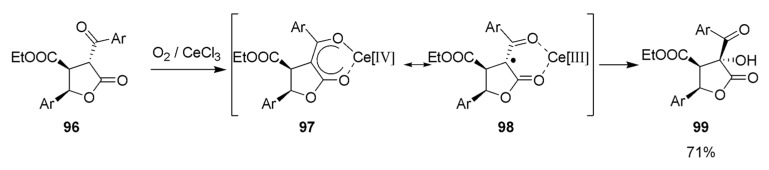
Cerium trichloride mediated α-hydroxylation.
Scheme 44
Scheme 44
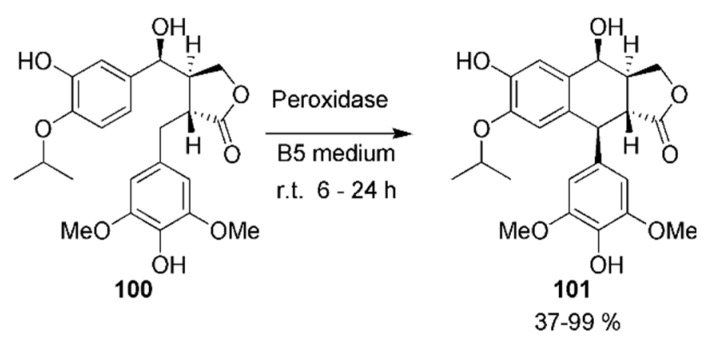
Enzymatic, peroxidase-mediated ring closure.
Scheme 45
Scheme 45
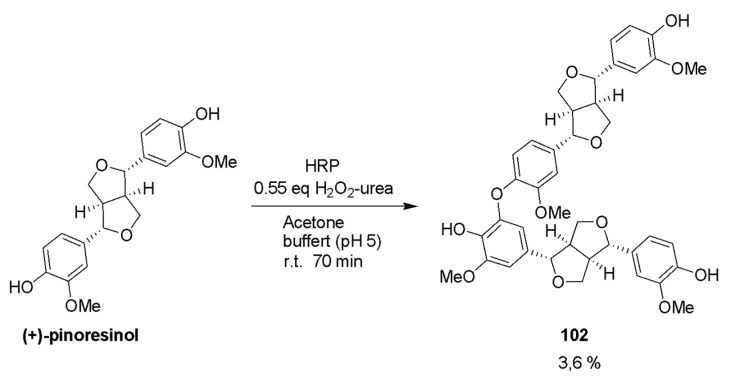
Peroxidase and H2O2- mediated 4-O-5-coupling.
Scheme 46
Scheme 46
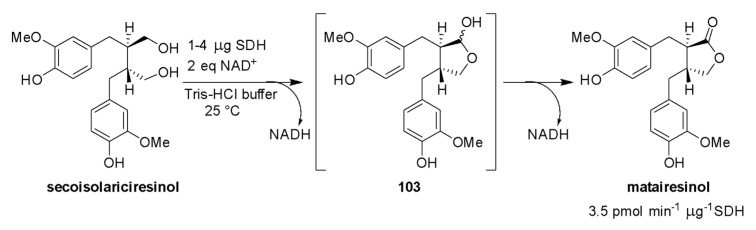
Enzymatic transformation of secolariciresinol into matairesinol.
Scheme 47
Scheme 47
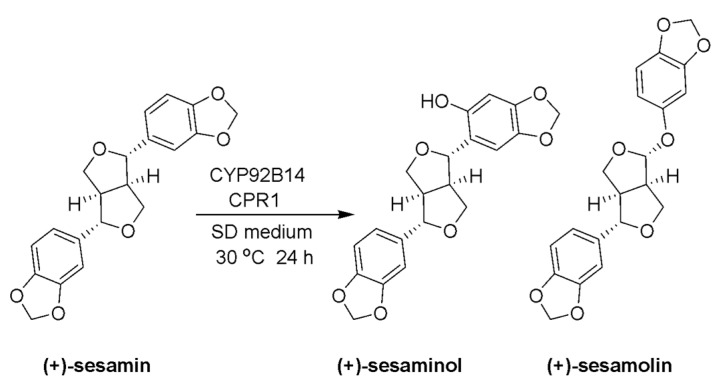
Enzymatic transformation of sesamin into sesaminol and sesamolin.
Scheme 48
Scheme 48
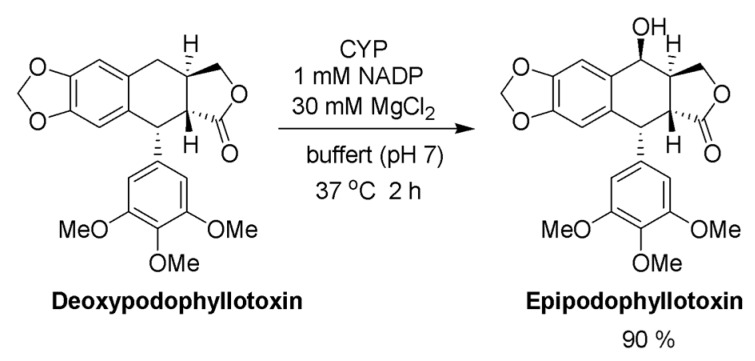
Enzymatic bioconversion of deoxypodophyllotoxin into epipodophyllotoxin.
Scheme 49
Scheme 49
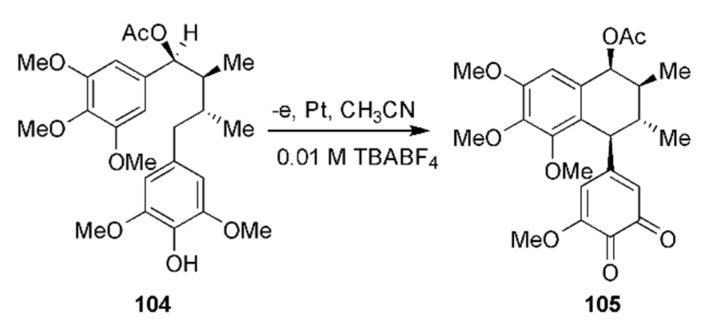
Electrochemical oxidation of an acetoxy lignan to an o-quinone.
Scheme 50
Scheme 50
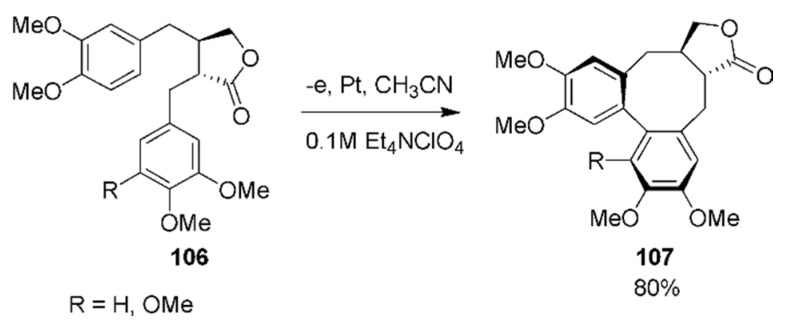
Synthesis of dibenzocyclooctadienes by electrochemical oxidation of butyrolactone lignans.
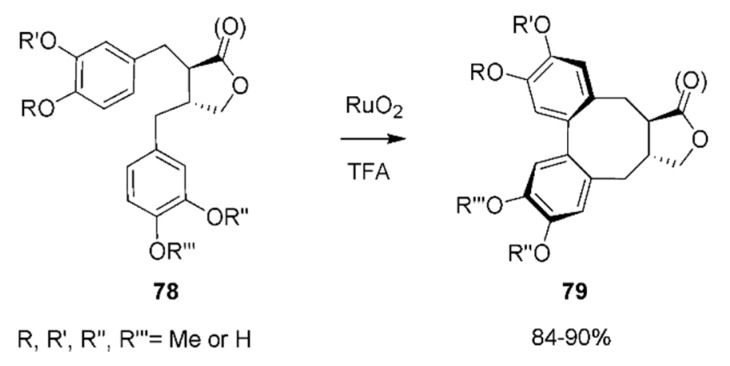
Figure 1
Figure 1
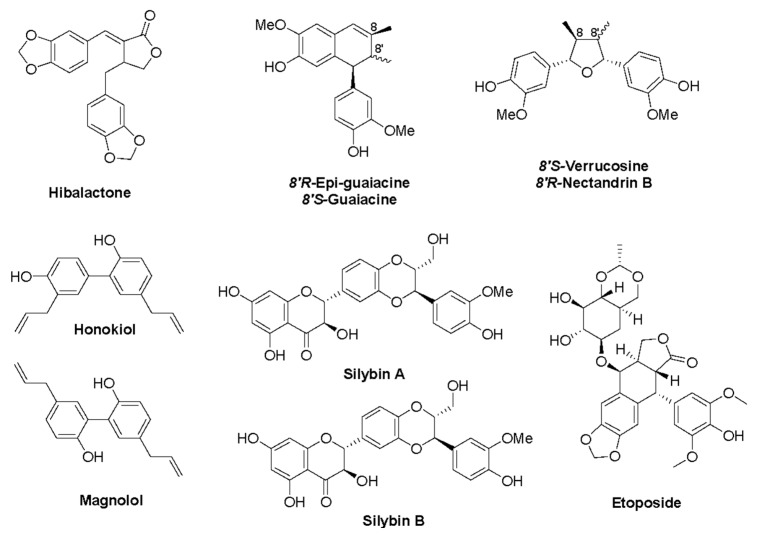
The structures of the lignans hibalactone, epi-guaiacin, guaiacin, verrucosin, nectandrin B, honokiol and magnolol, the glycoside etoposide, and the flavonolignan silybin.
Scheme 51
Scheme 51
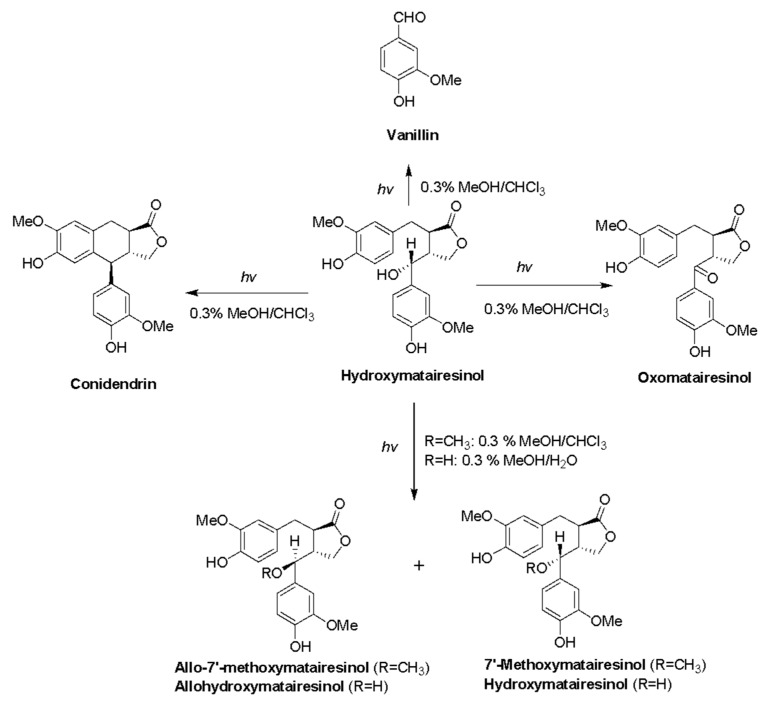
The photooxidation reactions of hydroxymatairesinol.

References

    1. Zhang J., Chen J., Liang Z., Zhao C. New Lignans and Their Biological Activities. Chem. Biodivers. 2014;11:1–54. doi: 10.1002/cbdv.201100433. - DOI - PubMed
    1. Saleem M., Kim H.J., Ali M.S., Lee Y.S. An update on bioactive plant lignans. Nat. Prod. Rep. 2005;22:696–716. doi: 10.1039/b514045p. - DOI - PubMed
    1. Harmatha J., Dinan L. Biological activities of lignans and stilbenoids associated with plant-insect chemical interactions. Phytochem. Rev. 2003;2:321–330. doi: 10.1023/B:PHYT.0000045494.98645.a3. - DOI
    1. Talaei M., Pan A. Role of phytoestrogens in prevention and management of type 2 diabetes. World J. Diabetes. 2015;6:271–283. doi: 10.4239/wjd.v6.i2.271. - DOI - PMC - PubMed
    1. Deo S., Utane R., Khubalkar R., Thombre S. Extraction and isolation, synthesis, physiological activity of 1-phenyl naphthalene and its derivatives: A review. Pharma Innov. J. 2017;6:21–30.

LinkOut - more resources