


Excised linear introns regulate growth in yeast
- PMID: 30651636
- PMCID: PMC6464110
- DOI: 10.1038/s41586-018-0828-1
Excised linear introns regulate growth in yeast
Abstract
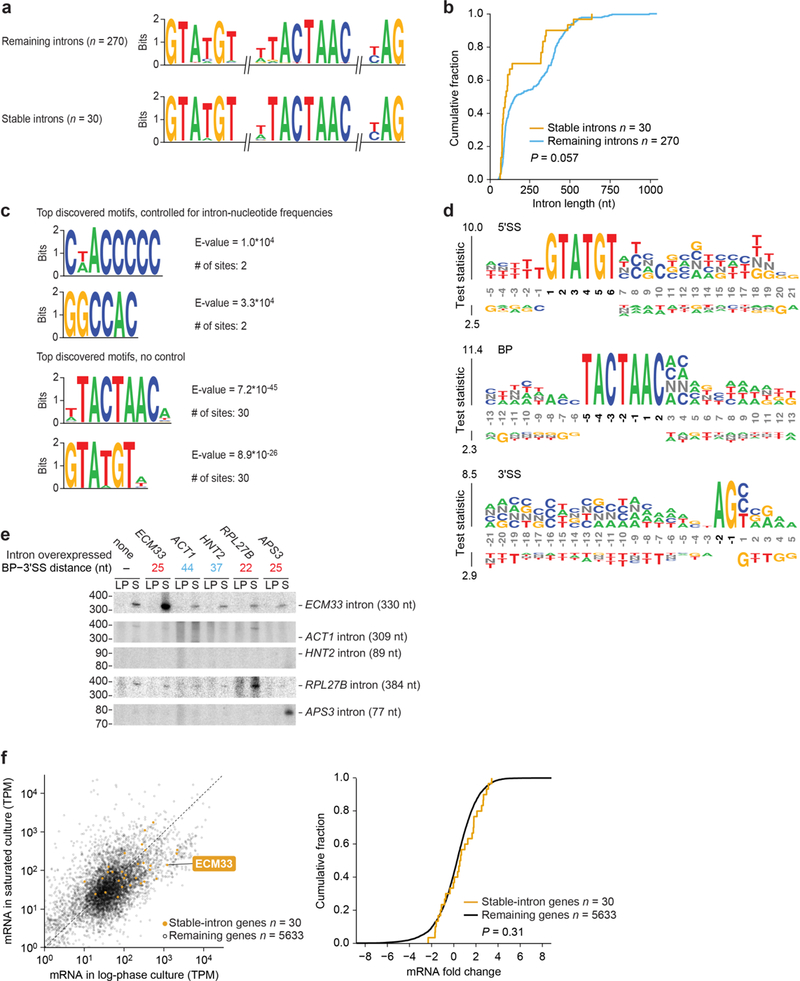
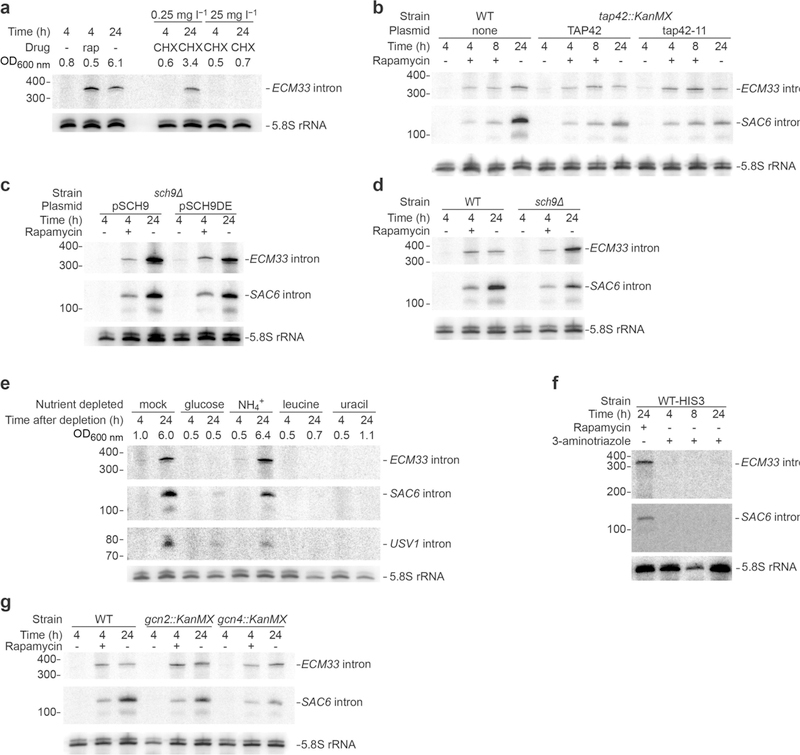
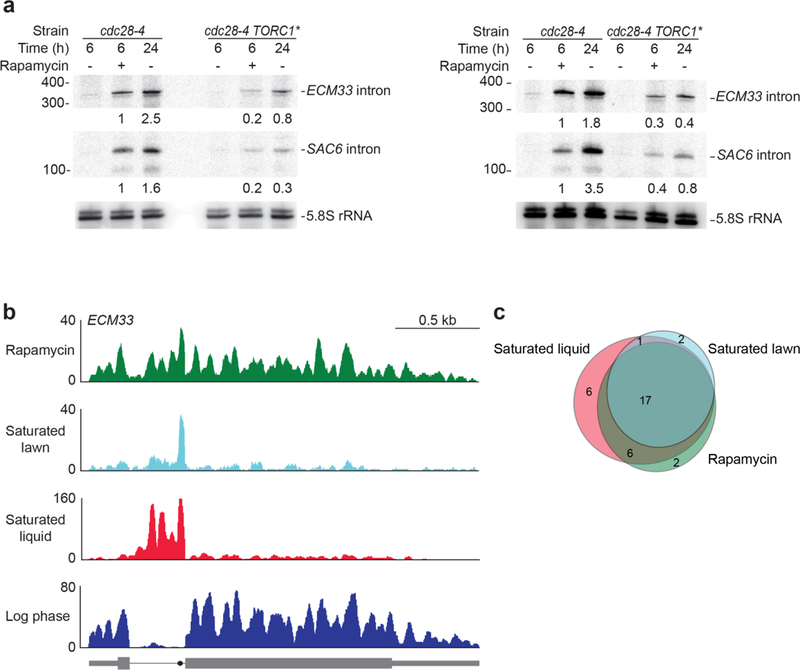
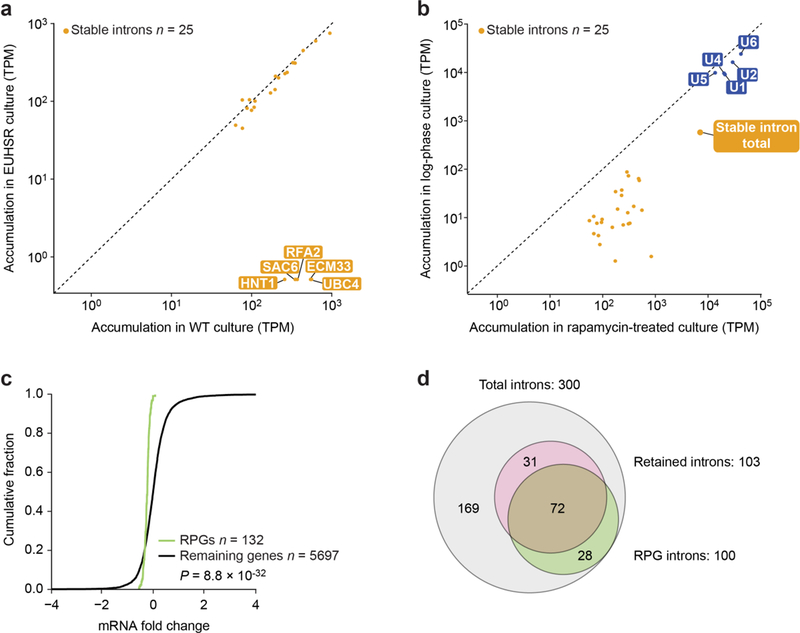
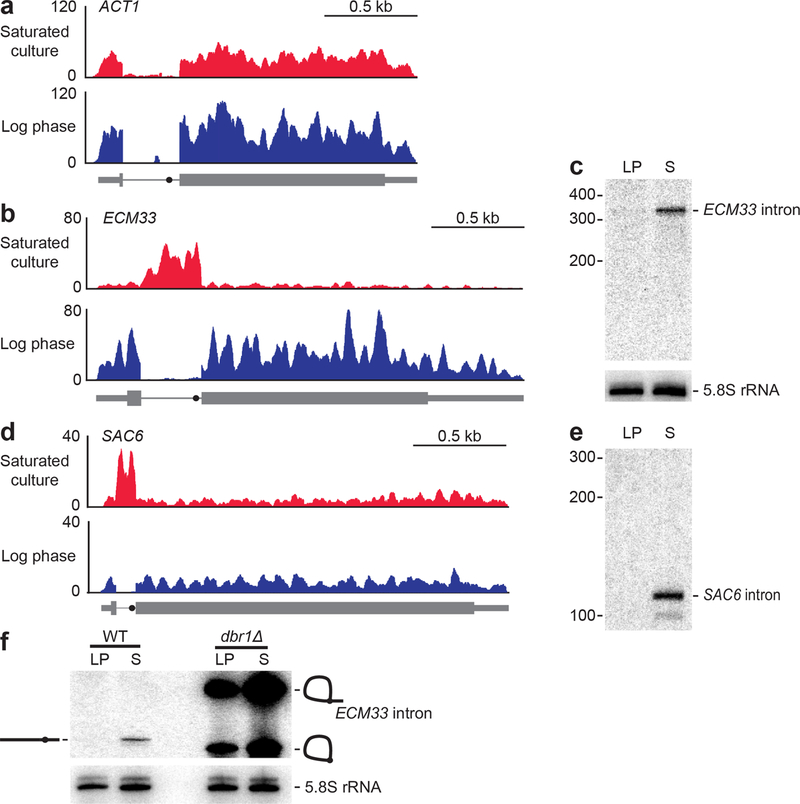
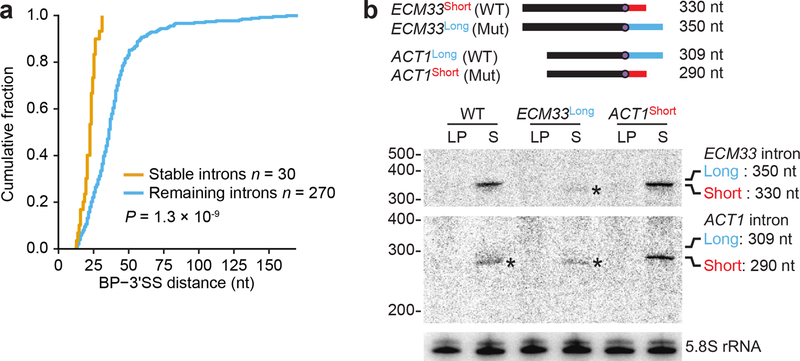
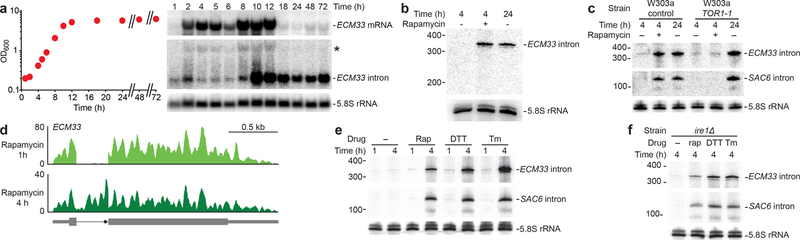
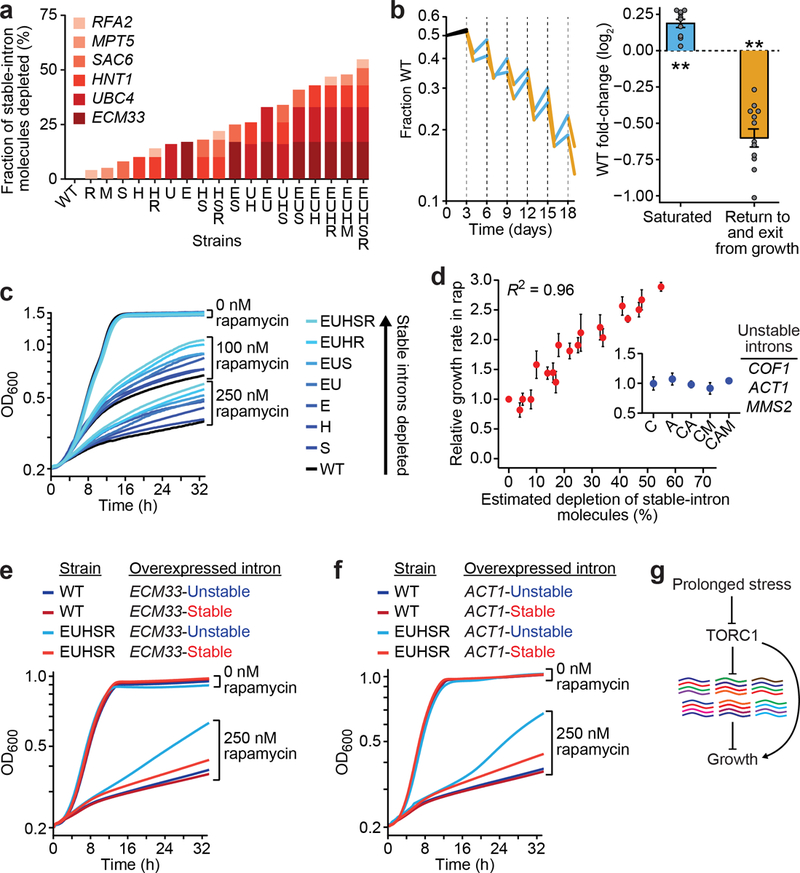
Spliceosomal introns are ubiquitous non-coding RNAs that are typically destined for rapid debranching and degradation. Here we describe 34 excised introns in Saccharomyces cerevisiae that-despite being rapidly degraded in log-phase growth-accumulate as linear RNAs under either saturated-growth conditions or other stresses that cause prolonged inhibition of TORC1, which is a key integrator of growth signalling. Introns that become stabilized remain associated with components of the spliceosome and differ from other spliceosomal introns in having a short distance between their lariat branch point and 3' splice site, which is necessary and sufficient for their stabilization. Deletion of these unusual introns is disadvantageous in saturated conditions and causes aberrantly high growth rates in yeast that are chronically challenged with the TORC1 inhibitor rapamycin. The reintroduction of native or engineered stable introns suppresses this aberrant rapamycin response. Thus, excised introns function within the TOR growth-signalling network of S. cerevisiae and, more generally, excised spliceosomal introns can have biological functions.
Conflict of interest statement
Competing Interests
The authors declare no competing financial interests.
Figures
Comment in
-
Intron RNA sequences help yeast cells to survive starvation.Nature. 2019 Jan;565(7741):578-579. doi: 10.1038/d41586-019-00088-y. Nature. 2019. PMID: 30683935 Free PMC article.
-
Craving for Introns.Mol Cell. 2019 Mar 21;73(6):1095-1096. doi: 10.1016/j.molcel.2019.03.008. Mol Cell. 2019. PMID: 30901563
References
Publication types
MeSH terms
Substances
Grants and funding
LinkOut - more resources
Full Text Sources
Other Literature Sources
Molecular Biology Databases
Research Materials
