


A specific synbiotic-containing amino acid-based formula in dietary management of cow's milk allergy: a randomized controlled trial
- PMID: 30651972
- PMCID: PMC6332540
- DOI: 10.1186/s13601-019-0241-3
A specific synbiotic-containing amino acid-based formula in dietary management of cow's milk allergy: a randomized controlled trial
Abstract
Background: Here we report follow-up data from a double-blind, randomized, controlled multicenter trial, which investigated fecal microbiota changes with a new amino acid-based formula (AAF) including synbiotics in infants with non-immunoglobulin E (IgE)-mediated cow's milk allergy (CMA).
Methods: Subjects were randomized to receive test product (AAF including fructo-oligosaccharides and Bifidobacterium breve M-16V) or control product (AAF) for 8 weeks, after which infants could continue study product until 26 weeks. Fecal percentages of bifidobacteria and Eubacterium rectale/Clostridium coccoides group (ER/CC) were assessed at 0, 8, 12, and 26 weeks. Additional endpoints included stool markers of gut immune status, clinical symptoms, and safety assessments including adverse events and medication use.
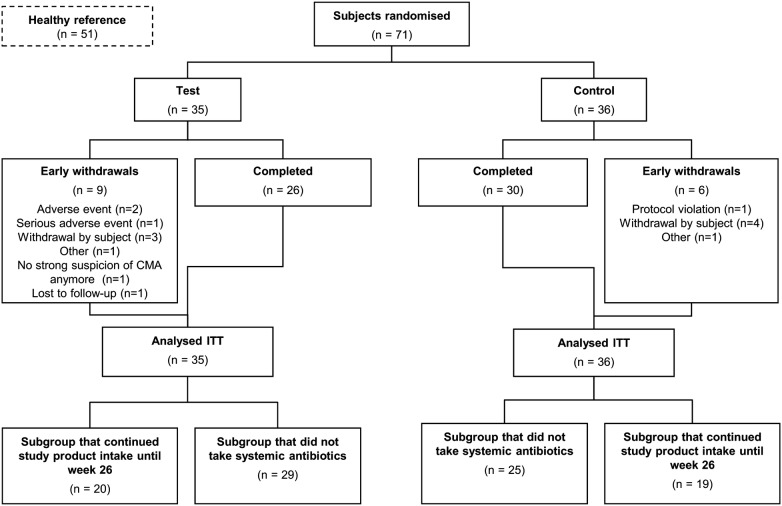
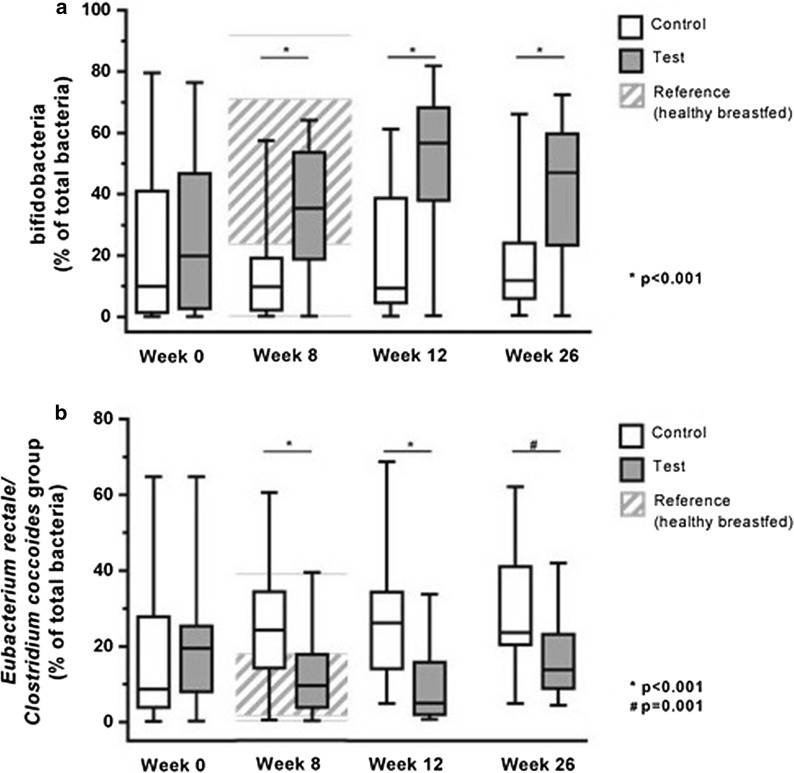
Results: The trial included 35 test subjects, 36 controls, and 51 in the healthy reference group. Study product was continued by 86% and 92% of test and control subjects between week 8-12, and by 71% and 80%, respectively until week 26. At week 26 median percentages of bifidobacteria were significantly higher in test than control [47.0% vs. 11.8% (p < 0.001)], whereas percentages of ER/CC were significantly lower [(13.7% vs. 23.6% (p = 0.003)]. Safety parameters were similar between groups. Interestingly use of dermatological medication and reported ear infections were lower in test versus control, p = 0.019 and 0.011, respectively. Baseline clinical symptoms and stool markers were mild (but persistent) and low, respectively. Symptoms reduced towards lowest score in both groups.
Conclusion: Beneficial effects of this AAF including specific synbiotics on microbiota composition were observed over 26 weeks, and shown suitable for dietary management of infants with non-IgE-mediated CMA.Trial Registration NTR3979.
Keywords: Bifidobacterium breve M-16V; Cow’s milk allergy; Gut microbiota; Prebiotic; Probiotic; Symptoms.
Figures
References
-
- Bellini F, Ricci G, Remondini D, Pession A. Cow’s milk allergy (CMA) in children: identification of allergologic tests predictive of food allergy. Eur Ann Allergy Clin Immunol. 2014;46:100–105. - PubMed
-
- Koletzko S, Niggemann B, Arato A, Dias JA, Heuschkel R, Husby S, et al. Diagnostic approach and management of cow’s-milk protein allergy in infants and children: ESPGHAN GI Committee practical guidelines. J Pediatr Gastroenterol Nutr. 2012;55:221–229. doi: 10.1097/MPG.0b013e31825c9482. - DOI - PubMed
-
- Dambacher WM, de Kort EH, Blom WM, Houben GF, de Vries E. Double-blind placebo-controlled food challenges in children with alleged cow’s milk allergy: prevention of unnecessary elimination diets and determination of eliciting doses. Nutr J. 2013;12:22. doi: 10.1186/1475-2891-12-22. - DOI - PMC - PubMed
LinkOut - more resources
Full Text Sources
