


The association of adelmidrol with sodium hyaluronate displays beneficial properties against bladder changes following spinal cord injury in mice
- PMID: 30653511
- PMCID: PMC6336272
- DOI: 10.1371/journal.pone.0208730
The association of adelmidrol with sodium hyaluronate displays beneficial properties against bladder changes following spinal cord injury in mice
Abstract
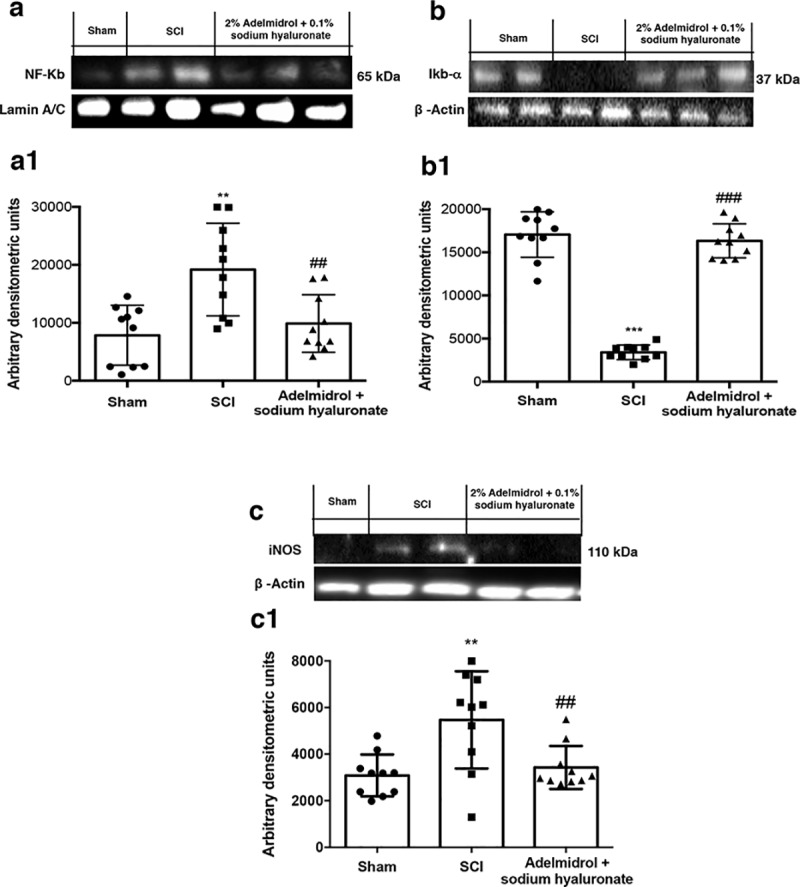
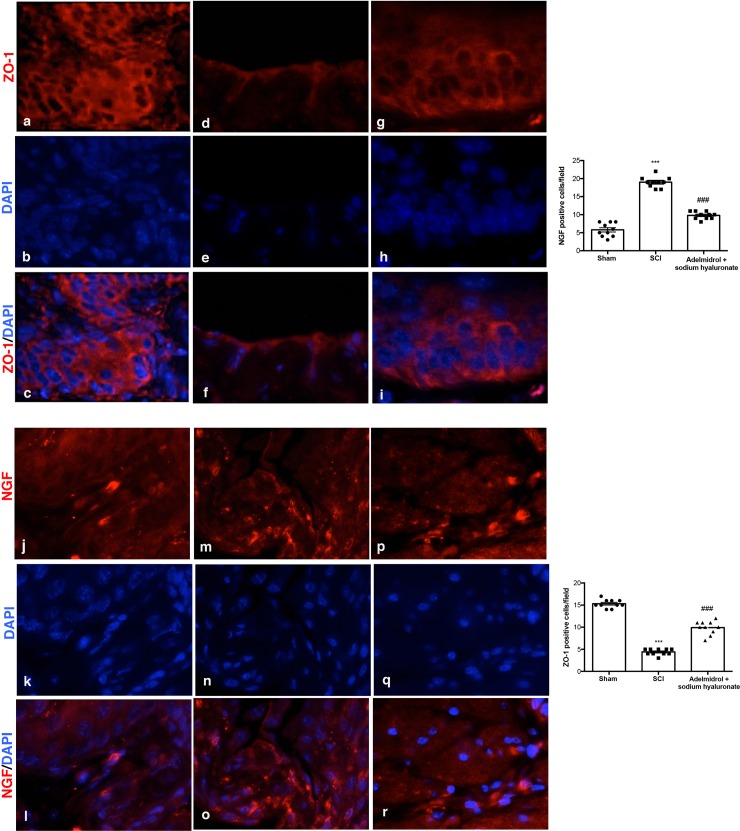
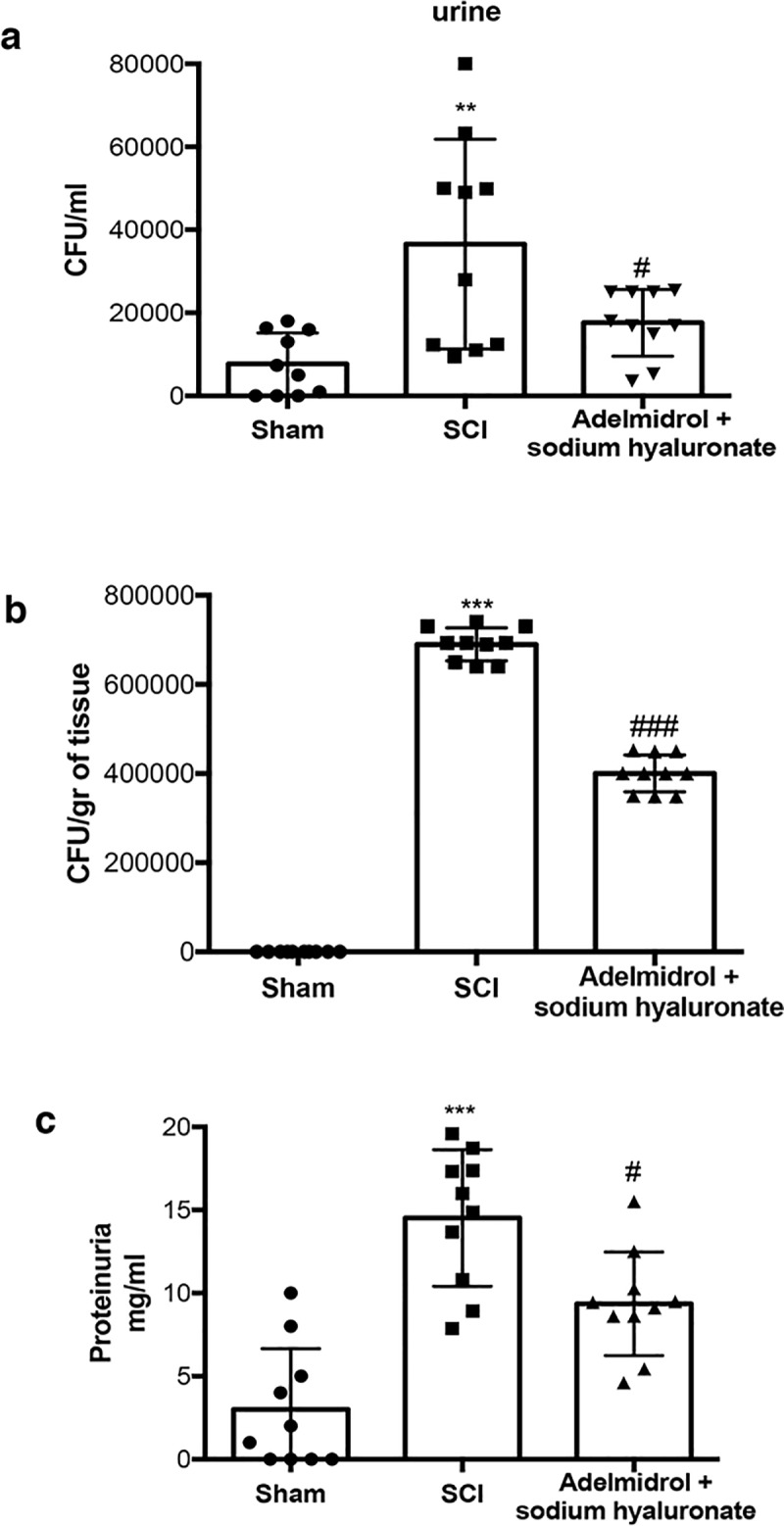
The disruption of coordinated control between the brain, spinal cord and peripheral nervous system caused by spinal cord injury (SCI) leads to several secondary pathological conditions, including lower urinary tract dysfunction. In fact, urinary tract dysfunction associated with SCI is urinary dysfunction could be a consequence of a lack of neuroregeneration of supraspinal pathways that control bladder function. The object of the current research was to explore the effects of adelmidrol + sodium hyaluronate, on bladder damage generated after SCI in mice. Spinal cord was exposed via laminectomy, and SCI was induced by extradural compression at T6 to T7 level, by an aneurysm clip with a closing force of 24 g. Mice were treated intravesically with adelmidrol + sodium hyaluronate daily for 48 h and 7 days after SCI. Adelmidrol + sodium hyaluronate reduced significantly mast cell degranulation and down-regulated the nuclear factor-κB pathway in the bladder after SCI both at 48 h and 7days. Moreover, adelmidrol + sodium hyaluronate reduced nerve growth factor expression, suggesting an association between neurotrophins and bladder pressure. At 7 days after SCI, the bladder was characterized by a marked bacterial infection and proteinuria; surprisingly, adelmidrol + sodium hyaluronate reduced significantly both parameters. These data show the protective roles of adelmidrol + sodium hyaluronate on bladder following SCI, highlighting a potential therapeutic target for the reduction of bladder changes.
Conflict of interest statement
The authors have read the journal's policy and have the following conflicts: Salvatore Cuzzocrea is co-inventor on patent WO2013/121449 A8 (Epitech Group SpA). Moreover, Dr Cuzzocrea is also a co-inventor with Epitech group on the following patents: EP 2814489, EP 2821083, EP 2985037, 102015000067344. No other authors have conflict of interests. This does not alter our adherence to all the PLOS ONE policies on sharing data and materials.
Figures
References
-
- Ambrozaitis K, Kontautas E, Spakauskas B, Vaitkaitis D. Pathophysiology of acute spinal cord injury. Medicina (Kaunas, Lithuania). 2005;42(3):255–61. - PubMed
MeSH terms
Substances
LinkOut - more resources
Full Text Sources
Medical
