


Feasibility of smart wristbands for continuous monitoring during pregnancy and one month after birth
- PMID: 30654747
- PMCID: PMC6337833
- DOI: 10.1186/s12884-019-2187-9
Feasibility of smart wristbands for continuous monitoring during pregnancy and one month after birth
Abstract
Background: Smart wristbands enable the continuous monitoring of health parameters, for example, in maternity care. Understanding the feasibility and acceptability of these devices in an authentic context is essential. The aim of this study was to evaluate the feasibility of using a smart wristband to collect continuous activity, sleep and heart rate data from the beginning of the second trimester until one month postpartum.
Methods: The feasibility of a smart wristband was tested prospectively through pregnancy in nulliparous women (n = 20). The outcomes measured were the wear time of the device and the participants' experiences with the smart wristband. The data were collected from the wristbands, phone interviews, questionnaires, and electronic patient records. The quantitative data were analyzed with hierarchical linear mixed models for repeated measures, and qualitative data were analyzed using content analysis.
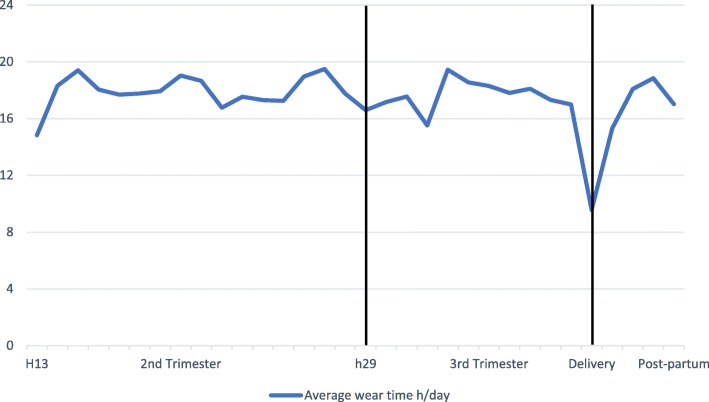
Results: Participants (n = 20) were recruited at a median of 12.9 weeks of gestation. They used the smart wristbands for an average of 182 days during the seven-month study period. The daily use of the devices was similar during the second (17.9 h, 95% CI 15.2 to 20.7) and third trimesters (16.7 h, 95% CI 13.8 to 19.5) but decreased during the postpartum period (14.4 h, 95% CI 11.4 to 17.4, p = 0.0079). Participants who could not wear smart wristbands at work used the device 300 min less per day than did those with no use limitations. Eight of the participants did not wear the devices or wore them only occasionally after giving birth. Nineteen participants reported that the smart wristband did not have any permanent effects on their behavior. Problems with charging and synchronizing the devices, perceiving the devices as uncomfortable, or viewing the data as unreliable, and the fear of scratching their babies with the devices were the main reasons for not using the smart wristbands.
Conclusions: A smart wristband is a feasible tool for continuous monitoring during pregnancy. However, the daily use decreased after birth. The results of this study may support the planning of future studies and help with overcoming barriers related to the use of smart wristbands on pregnant women.
Keywords: Activity tracker; Biosensor; Feasibility; Internet-of-things; Pregnancy; Self-monitoring; Smart wristband; User experience; Wearable sensors.
Conflict of interest statement
Ethics approval and consent to participate
Research was performed in accordance with the Declaration of Helsinki and the study protocol received approval from the Ethics Committee of the Hospital District of Southwest Finland and the University of Turku (35/1801/2016). Written informed consent was obtained from all participants.
Consent for publication
Not applicable
Competing interests
The authors declare that they have no competing interests.
Publisher’s Note
Springer Nature remains neutral with regard to jurisdictional claims in published maps and institutional affiliations.
Figures
References
-
- Klemetti R, Hakulinen-Viitanen T. editor. Handbook for Finnish maternity health clinics. Recommendations for practices [in Finnish] Äitiysneuvolaopas. Suosituksia äitiysneuvolatoimintaan. National Institute for health and welfare; 2013. http://www.julkari.fi/bitstream/handle/10024/110521/THL_OPA2013_029_verk.... Accessed 20 June 2018.
