


A systematic review of the perceptions of adolescents on graphic health warnings and plain packaging of cigarettes
- PMID: 30654833
- PMCID: PMC6335796
- DOI: 10.1186/s13643-018-0933-0
A systematic review of the perceptions of adolescents on graphic health warnings and plain packaging of cigarettes
Abstract
Background: Graphic health warnings on tobacco packaging and the plain packaging of tobacco products are key tobacco control interventions. This systematic review investigates the perceptions of adolescents towards these packaging interventions.
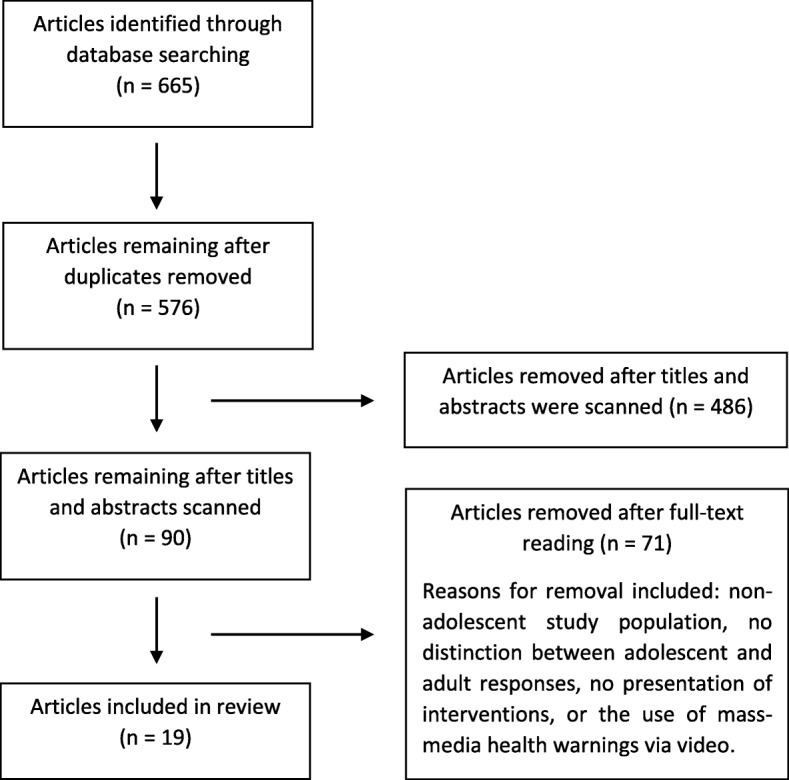
Methods: Published, original-research, English-language articles from 1 January 2000 to 1 September 2017 were identified through a systematic literature search of the PubMed, CINAHL, PsycINFO, Web of Science, and Scopus databases. Articles describing investigations into the perceptions of adolescents aged 11 to 19 years towards graphic health warnings and/or plain-packaged cigarettes were included in this review.
Results: Nineteen articles, involving 15,935 adolescent participants, of which 72.85% were non-smokers or ex-smokers and 27.15% occasional or daily smokers, met the eligibility criteria. Graphic health warnings were perceived as more effective than text-only warnings, with warnings depicting lung cancer, and oral diseases being perceived as particularly effective. Health warnings increased viewer fear, anxiety, shock, and guilt and were considered effective in preventing non-smokers from experimenting with tobacco and prompting current smokers to quit. Plain packaging reduced the attractiveness and other positive attributes of cigarette packaging, with darker colours found to be the most effective. When used in combination, plain packaging increased the visibility of graphic health warnings, with participants also perceiving them as having an increased tar content and having more serious health risks, and increased thoughts of quitting amongst smokers.
Conclusions: Graphic health warnings and plain packaging appear to increase adolescent awareness of the dangers of tobacco use. Further research into the most effective warnings to use in combination with plain packaging is needed to ensure the greatest reduction in tobacco use and prevent tobacco-attributable morbidity and mortality in this vulnerable population.
Keywords: Health literacy; Public health; Tobacco control; Youth.
Conflict of interest statement
Ethics approval and consent to participate
Not applicable.
Consent for publication
Not applicable.
Competing interests
The authors declare that they have no competing interests.
Publisher’s Note
Springer Nature remains neutral with regard to jurisdictional claims in published maps and institutional affiliations.
Figures
References
-
- World Health Organization . WHO report on the global tobacco epidemic, 2017; monitoring tobacco use and prevention policies. Geneva: World Health Organization; 2017.
-
- Winstanley MH. 3.24 genetic influences on tobacco-caused disease. In: Scollo MM, Winstanley MH, editors. Tobacco in Australia: facts and issues. Cancer Council Victoria: Melbourne; 2011.
-
- Jammer LD, Whalen CK, Loughlin SE, Mermelstein R, Audrain-McGovern J, Krishnan-Sarin S, et al. Tobacco use across the formative years: a road map to developmental vulnerabilities. Nicotine Tob Res. 2003;5(Suppl 1):S71–S87. - PubMed
Publication types
MeSH terms
LinkOut - more resources
Full Text Sources
Miscellaneous
