


Prevalence of abnormal Alzheimer's disease biomarkers in patients with subjective cognitive decline: cross-sectional comparison of three European memory clinic samples
- PMID: 30654834
- PMCID: PMC6337830
- DOI: 10.1186/s13195-018-0463-y
Prevalence of abnormal Alzheimer's disease biomarkers in patients with subjective cognitive decline: cross-sectional comparison of three European memory clinic samples
Abstract
Introduction: Subjective cognitive decline (SCD) in cognitively unimpaired older individuals has been recognized as an early clinical at-risk state for Alzheimer's disease (AD) dementia and as a target population for future dementia prevention trials. Currently, however, SCD is heterogeneously defined across studies, potentially leading to variations in the prevalence of AD pathology. Here, we compared the prevalence and identified common determinants of abnormal AD biomarkers in SCD across three European memory clinics participating in the European initiative on harmonization of SCD in preclinical AD (Euro-SCD).
Methods: We included three memory clinic SCD samples with available cerebrospinal fluid (CSF) biomaterial (IDIBAPS, Barcelona, Spain, n = 44; Amsterdam Dementia Cohort (ADC), The Netherlands, n = 50; DELCODE multicenter study, Germany, n = 42). CSF biomarkers (amyloid beta (Aβ)42, tau, and phosphorylated tau (ptau181)) were centrally analyzed in Amsterdam using prespecified cutoffs to define prevalence of pathological biomarker concentrations. We used logistic regression analysis in the combined sample across the three centers to investigate center effects with regard to likelihood of biomarker abnormality while taking potential common predictors (e.g., age, sex, apolipoprotein E (APOE) status, subtle cognitive deficits, depressive symptoms) into account.
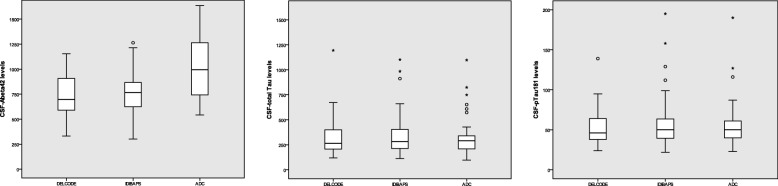
Results: The prevalence of abnormal Aβ42, but not tau or ptau181, levels was different across centers (64% DELCODE, 57% IDIBAPS, 22% ADC; p < 0.001). Logistic regression analysis revealed that the likelihood of abnormal Aβ42 (and also abnormal tau or ptau181) levels was predicted by age and APOE status. For Aβ42 abnormality, we additionally observed a center effect, indicating between-center heterogeneity not explained by age, APOE, or the other included covariates.
Conclusions: While heterogeneous frequency of abnormal Aβ42 was partly explained by between-sample differences in age range and APOE status, the additional observation of center effects indicates between-center heterogeneity that may be attributed to different recruitment procedures. These findings highlight the need for the development of harmonized recruitment protocols for SCD case definition in multinational studies to achieve similar enrichment rates of preclinical AD.
Keywords: CSF biomarkers; Preclinical Alzheimer’s disease; Subjective cognitive decline.
Conflict of interest statement
Ethics approval and consent to participate
The study protocol was approved by the ethical committees of all participating centers of the Euro-SCD project. For the IDIBAPS sample, this was the ethics committee of the Alzheimer’s Disease and Other Cognitive Disorders Unit, Hospital Clinic of the University of Barcelona. Likewise, the VUmc local Medical Ethics Committee has approved a general protocol for biobanking and using the clinical data for research purposes. For the DELCODE multicenter study, approval was given by the ethical committees of the medical faculties of all participating sites: Berlin (Charité, University Medicine), Bonn, Cologne, Göttingen, Magdeburg, Munich (Ludwig-Maximilians-University), Rostock, and Tübingen. The process was led and coordinated by the ethical committee of the medical faculty of the University of Bonn. All patients provided written informed consent.
Consent for publication
Not applicable.
Competing interests
The authors declare that they have no competing interests.
Publisher’s Note
Springer Nature remains neutral with regard to jurisdictional claims in published maps and institutional affiliations.
Figures
References
Publication types
MeSH terms
Substances
Grants and funding
LinkOut - more resources
Full Text Sources
Medical
Miscellaneous
