


The Microbiome and Genitourinary Cancer: A Collaborative Review
- PMID: 30655087
- PMCID: PMC9774685
- DOI: 10.1016/j.eururo.2018.12.043
The Microbiome and Genitourinary Cancer: A Collaborative Review
Abstract
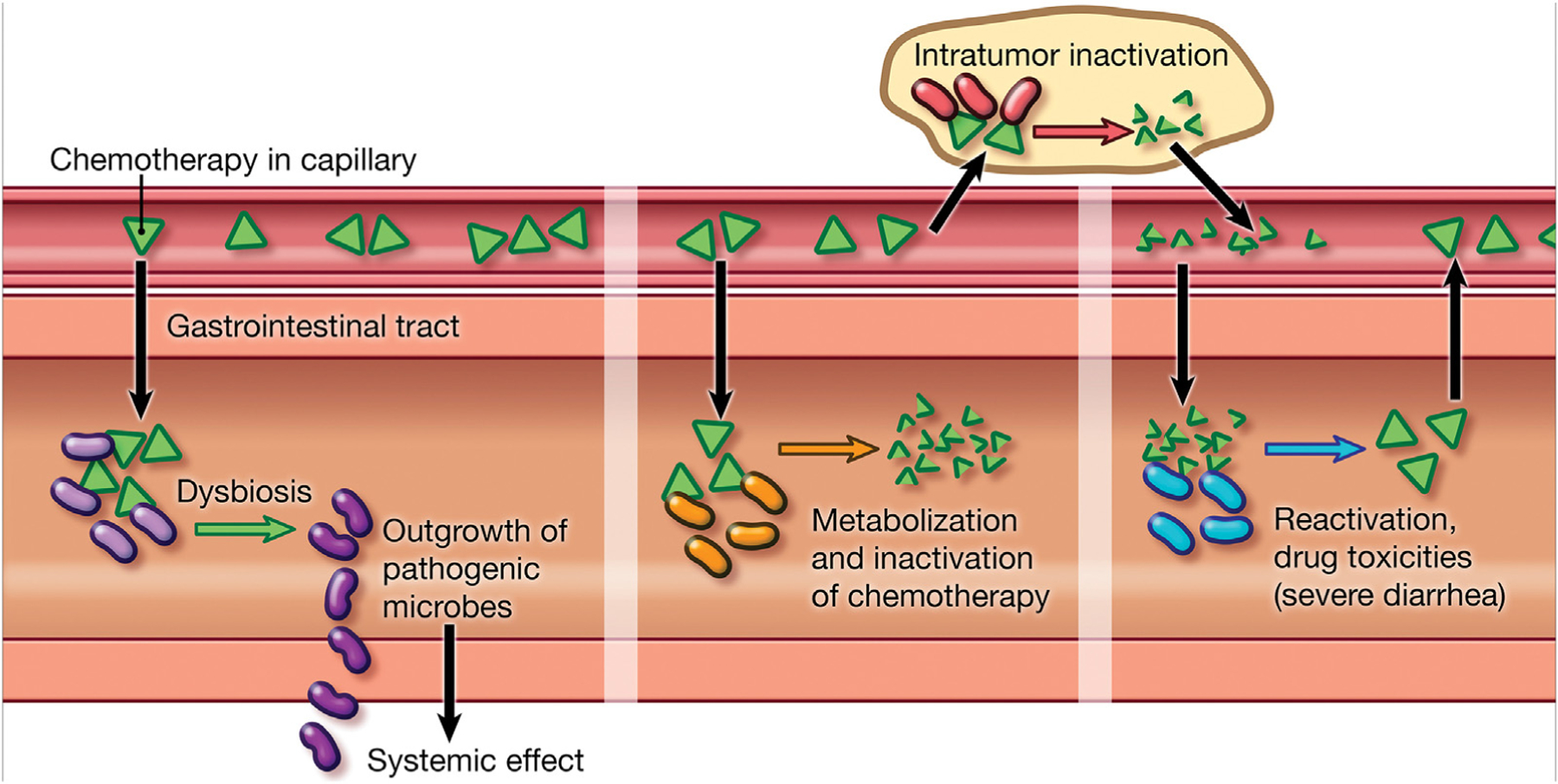
Context: The recent discovery of the existence of a human genitourinary microbiome has led to the investigation of its role in mediating the pathogenesis of genitourinary malignancies, including bladder, kidney, and prostate cancers. Furthermore, although it is largely recognized that members of the gastrointestinal microbiota are actively involved in drug metabolism, new studies demonstrate additional roles and the potential necessity of the gastrointestinal microbiota in dictating cancer treatment response.
Objective: To summarize the current evidence of a mechanistic role for the genitourinary and gastrointestinal microbiome in genitourinary cancer initiation and treatment response.
Evidence acquisition: We conducted a literature search up to October 2018. Search terms included microbiome, microbiota, urinary microbiome, bladder cancer, urothelial carcinoma, renal cell carcinoma, kidney cancer, testicular cancer, and prostate cancer.
Evidence synthesis: There is preliminary evidence to implicate the members of the genitourinary microbiota as causative factors or cofactors in genitourinary malignancy. Likewise, the current evidence for gastrointestinal microbes in dictating cancer treatment response is mainly correlative; however, we provide examples where therapeutic agents used for the treatment of genitourinary cancers are affected by the human-associated microbiota, or vice versa. Clinical trials, such as fecal microbiota transplant to increase the efficacy of immunotherapy, are currently underway.
Conclusions: The role of the microbiome in genitourinary cancer is an emerging field that merits further studies. Translating microbiome research into clinical action will require incorporation of microbiome surveillance into ongoing and future clinical trials as well as expansion of studies to include metagenomic sequencing and metabolomics.
Patient summary: This review covers recent evidence that microbial populations that reside in the genitourinary tract-and were previously not known to exist-may influence the development of genitourinary malignancies including bladder, kidney, and prostate cancers. Furthermore, microbial populations that exist at sites outside of the genitourinary tract, such as those that reside in our gut, may influence cancer development and/or treatment response.
Keywords: Bladder cancer; Immunotherapy; Kidney cancer; Microbiome; Prostate cancer.
Copyright © 2019 European Association of Urology. Published by Elsevier B.V. All rights reserved.
Conflict of interest statement
Figures

Comment in
-
The Microbiome: Another Dimension in the Pathophysiology of Urogenital Disease.Eur Urol. 2019 Apr;75(4):647-648. doi: 10.1016/j.eururo.2019.01.014. Epub 2019 Jan 18. Eur Urol. 2019. PMID: 30665810 No abstract available.
References
-
- Huttenhower C, Gevers D, Knight R, et al. Structure, function and diversity of the healthy human microbiome. Nature 2012; 486:207–14 http://www.nature.com/nature/journal/v486/n7402/abs/nature11234.html#sup... - PMC - PubMed
-
- Lloyd-Price J, Mahurkar A, Rahnavard G, et al. Strains, functions and dynamics in the expanded Human Microbiome Project. Nature 2017;550:61–6 https://www.nature.com/articles/nature23889#supplementary-information - PMC - PubMed
-
- Whiteside SA, Razvi H, Dave S, Reid G, Burton JP. The microbiome of the urinary tract—a role beyond infection. Nat Rev Urol 2015;12:81–90. - PubMed
Publication types
MeSH terms
Grants and funding
LinkOut - more resources
Full Text Sources
Medical
