. 2019 Jan;17(1):1115-1127.
doi: 10.3892/ol.2018.9714. Epub 2018 Nov 15.

Intestinal bacteria detected in cancer and adjacent tissue from patients with colorectal cancer

Affiliations

Intestinal bacteria detected in cancer and adjacent tissue from patients with colorectal cancer

Chen-Jian Liu et al. Oncol Lett. 2019 Jan.

Abstract

Intestinal bacteria are symbiotic microbiota within the human gut and are implicated in the occurrence and development of colorectal cancer (CRC). The current study investigated the changes in bacterial composition prior to and following surgery, as well as the differences in the bacterial community structure between cancer tissue and adjacent normal tissue. The diversity of the bacterial community and the composition of the bacteria were assessed. In addition, phylogenetic analysis and principle component analysis (PCA) were performed. The results revealed that cancer tissue and adjacent normal tissue exhibited similar bacterial compositions. However, a significant difference was identified in the composition of intestinal bacteria in stool samples collected from patients following surgery compared with stool samples collected prior to surgery. Each patient had their own unique intestinal bacterial community, likely due to a number of factors, including diet, genetic factors and health status. In addition, phylogenetic trees revealed that the most abundant operational taxonomic unit, 0001, was associated with Escherichia coli in all samples. Finally, PCA suggested that the bacterial community structure in all patient stools was similar following surgery. The current study provides information regarding the diversity of the intestinal bacterial community of patients with CRC and provides a basis for postoperative intestinal assessments.

Keywords: bacterial composition; colorectal cancer; stool; surgery; tissue.


Figures
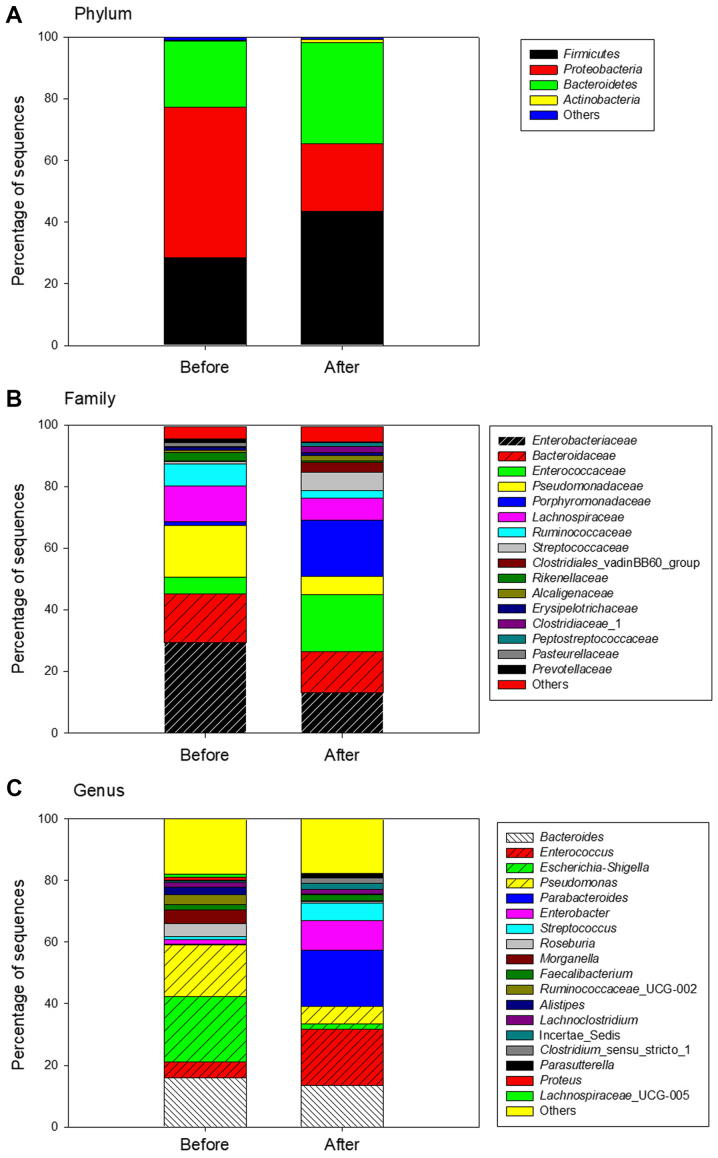
Figure 1.
Figure 1.
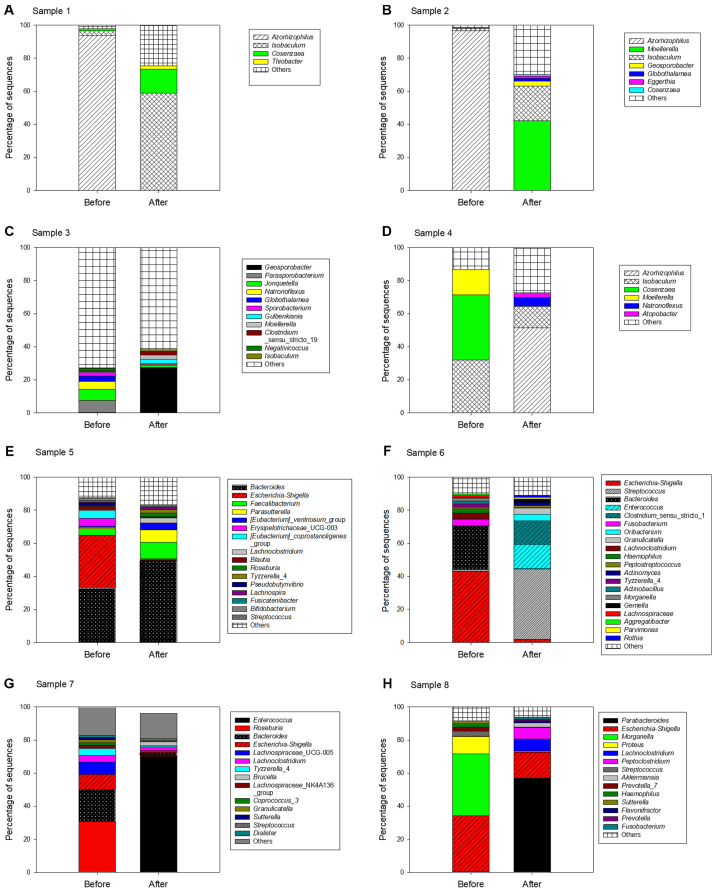
Bacterial composition of all stool samples obtained from patients prior to and following surgery. The bacterial community structures of stool samples were analyzed at the (A) phylum level, (B) family level and (C) genus level.
Figure 2.
Figure 2.
Bacterial compositions of stool samples obtained from each patient prior to and following surgery. (A-H) The bacterial composition of stool samples from every patient was analyzed at the genus level.
Figure 3.
Figure 3.
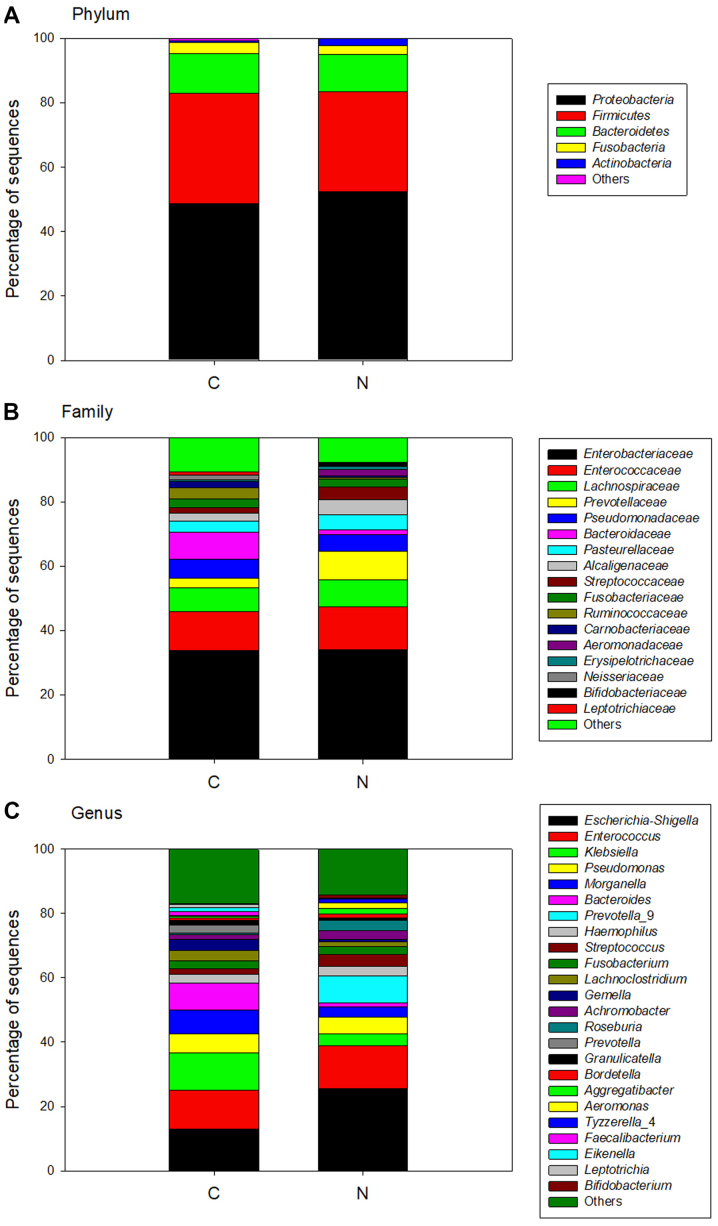
Bacterial composition of all tissue samples obtained from the patients. All sequences were analyzed at the (A) phylum level, (B) family level and (C) genus level. C, cancerous tissue; N, adjacent normal tissue.
Figure 4.
Figure 4.
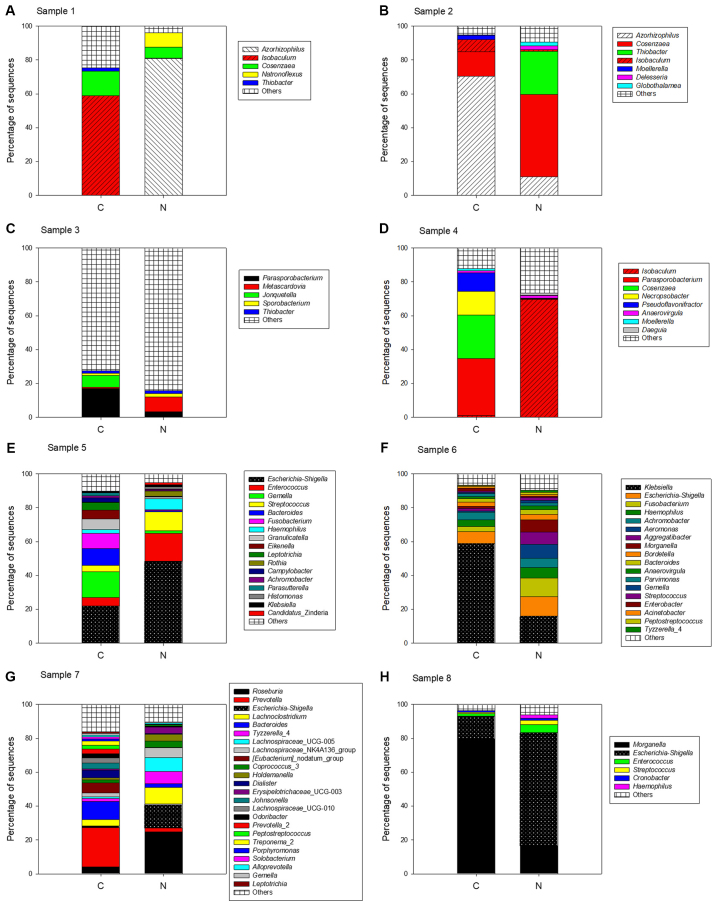
Bacterial compositions of all tissue samples obtained from each patient. (A-H) All sequences of every patient were analyzed at the genus level. C, cancerous tissue; N, adjacent normal tissue.
Figure 5.
Figure 5.
Phylogenetic tree of 16S ribosomal RNA gene sequences based on a cut-off value of 0.03. A total of 44 OTUs were used to construct a phylogenetic tree. The OTU names were based on the number of sequences, therefore, the lower the number, the higher its abundance. OTU, operational taxonomic unit.
Figure 6.
Figure 6.
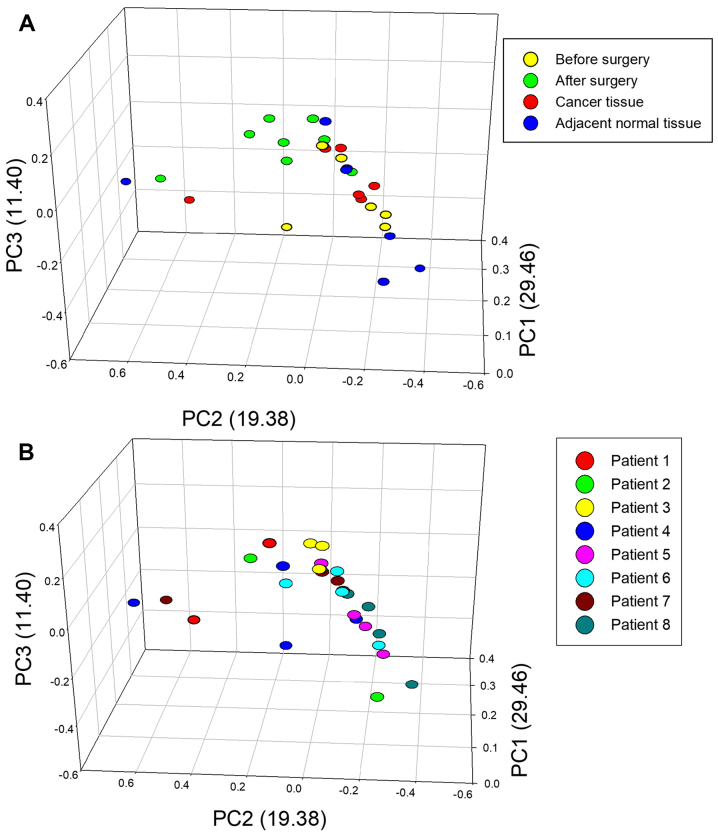
PCA based on different sample sources and different patients. PCA was performed based on (A) different sample sources, including cancer tissue, adjacent normal tissue and stool samples obtained prior to and following surgery, and (B) different patients. PCA, principle component analysis; PC, principle component.

References

    1. Bäckhed F, Ley RE, Sonnenburg JL, Peterson DA, Gordon JI. Host-bacterial mutualism in the human intestine. Science. 2005;307:1915–1920. doi: 10.1126/science.1104816. - DOI - PubMed
    1. Qin J, Li R, Raes J, Arumugam M, Burgdorf KS, Manichanh C, Nielsen T, Pons N, Levenez F, Yamada T, et al. A human gut microbial gene catalogue established by metagenomic sequencing. Nature. 2010;464:59–65. doi: 10.1038/nature08821. - DOI - PMC - PubMed
    1. Gao Z, Guo B, Gao R, Zhu Q, Qin H. Microbiota disbiosis is associated with colorectal cancer. Front Microbiol. 2015;6:20. doi: 10.3389/fmicb.2015.00020. - DOI - PMC - PubMed
    1. Sobhani I, Tap J, Roudot-Thoraval F, Roperch JP, Letulle S, Langella P, Corthier G, Van Nhieu Tran J, Furet JP. Microbial dysbiosis in colorectal cancer (CRC) patients. PLoS One. 2011;6:e16393. doi: 10.1371/journal.pone.0016393. - DOI - PMC - PubMed
    1. Larsen N, Vogensen FK, van den Berg FW, Nielsen DS, Andreasen AS, Pedersen BK, Al-Soud WA, Sørensen SJ, Hansen LH, Jakobsen M. Gut microbiota in human adults with type 2 diabetes differs from non-diabetic adults. PLoS One. 2010;5:e9085. doi: 10.1371/journal.pone.0009085. - DOI - PMC - PubMed