


Complication Management following Rejuvenation Procedures with Hyaluronic Acid Fillers-an Algorithm-based Approach
- PMID: 30656127
- PMCID: PMC6326607
- DOI: 10.1097/GOX.0000000000002061
Complication Management following Rejuvenation Procedures with Hyaluronic Acid Fillers-an Algorithm-based Approach
Abstract
Background: Hyaluronic acid is an ideal facial filler, however, although established as both safe and effective, complications do occur. Treatment recommendations that combine both expert opinions and clinical trial data are currently lacking, partly due to difficulties with diagnoses, nonspecific diagnostic investigations, and certain disorders presenting with similar symptoms, thereby confounding diagnosis and treatment.
Methods: The purpose of this article was to provide the aesthetic clinician with practical recommendations regarding complication diagnosis arising as a consequence of hyaluronic acid filler rejuvenation treatment. It also provides recommendations for their management using step-wise treatment algorithms that are based on published expert opinions, as well as the author's clinical experience.
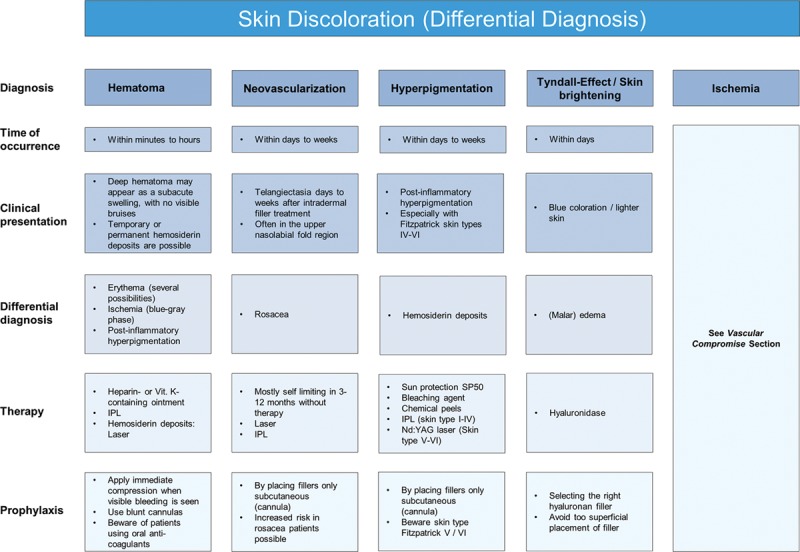
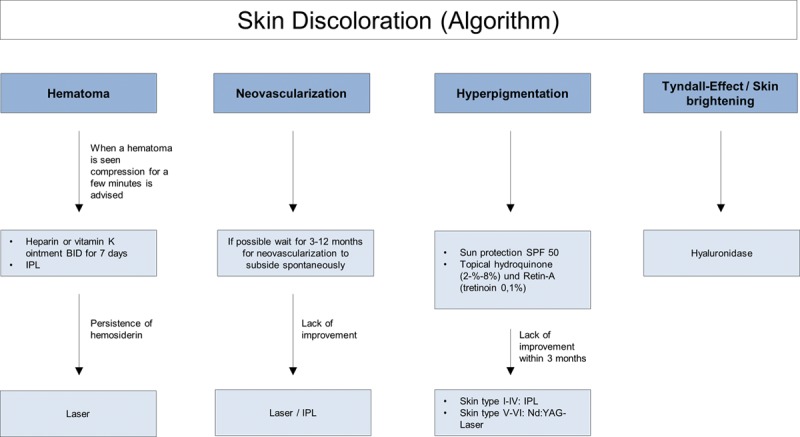
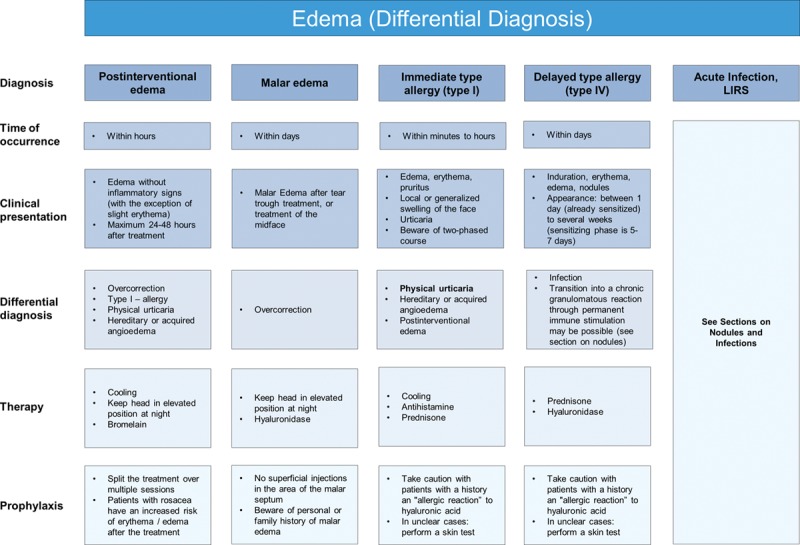
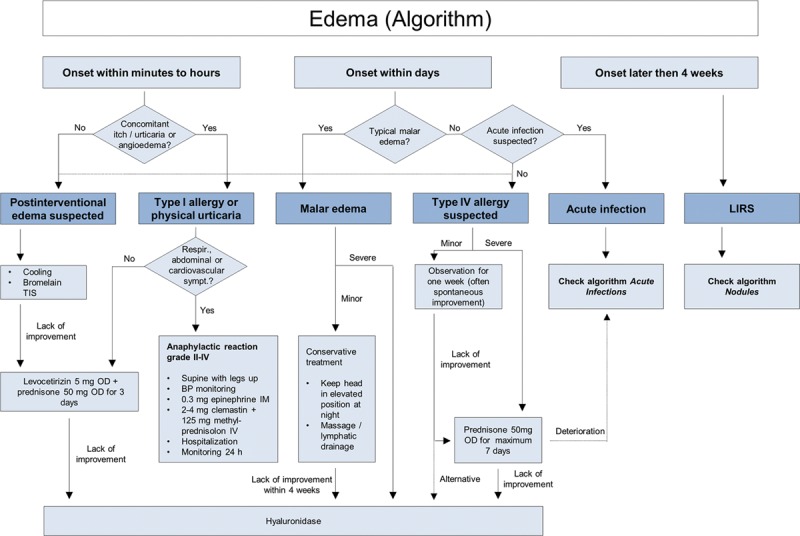
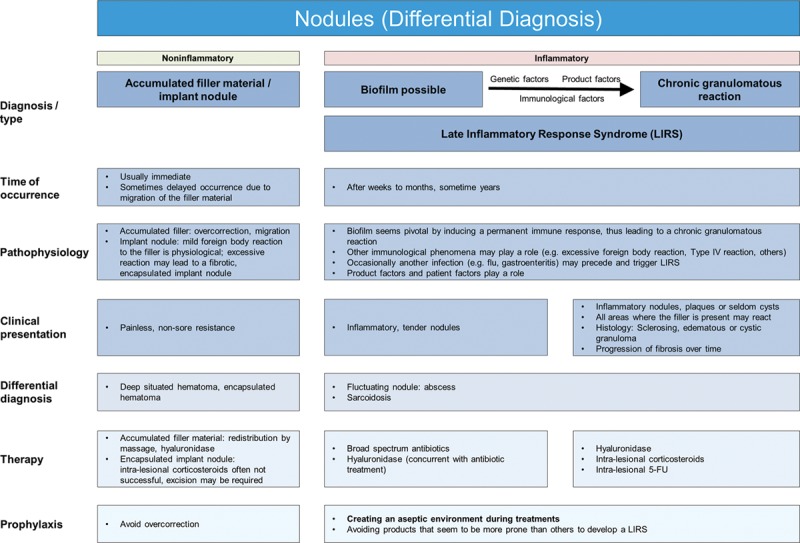
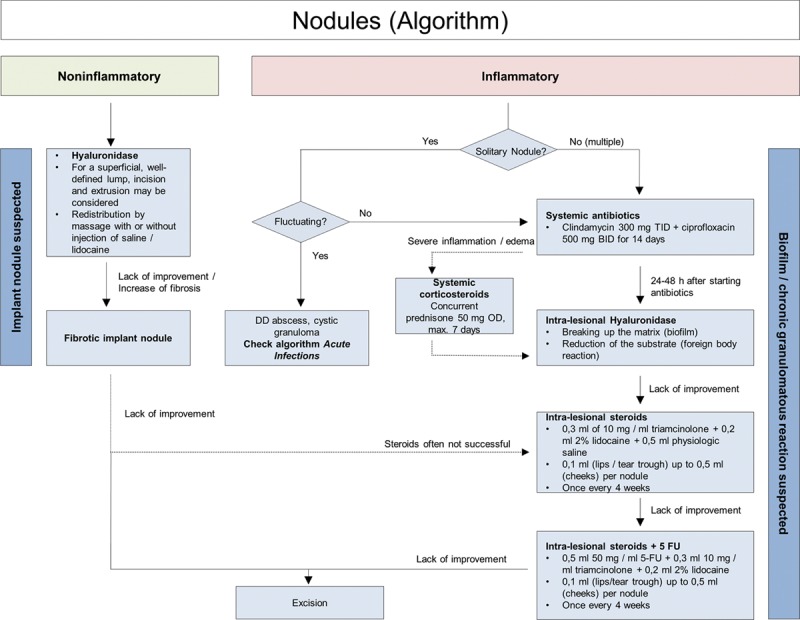
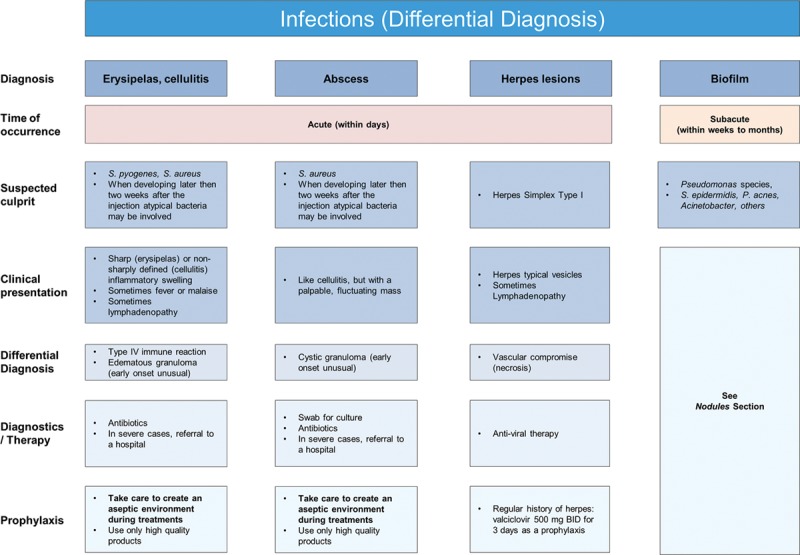
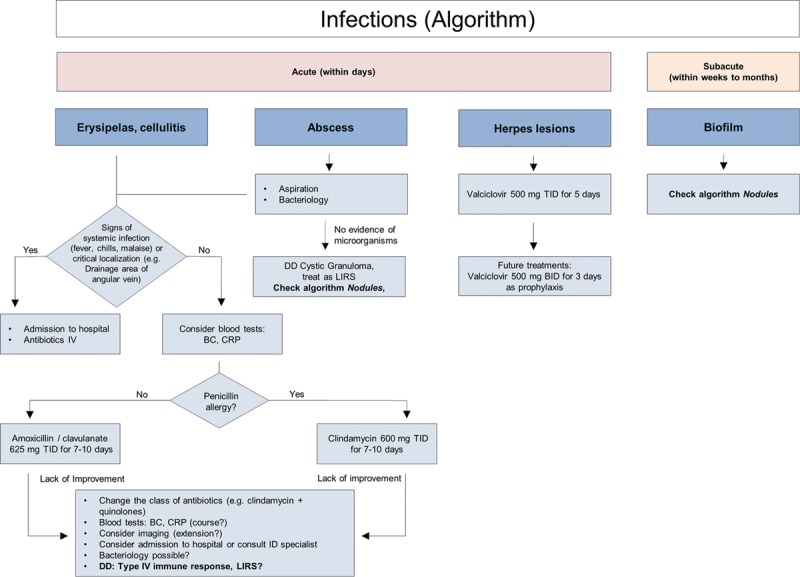
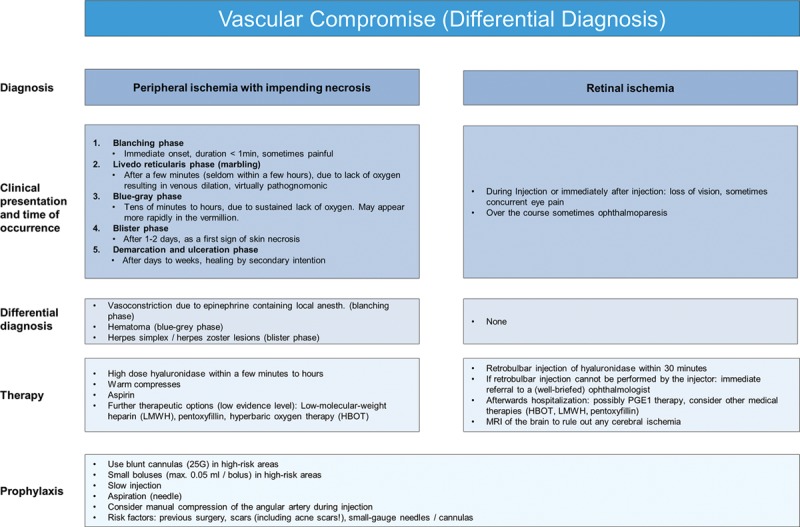
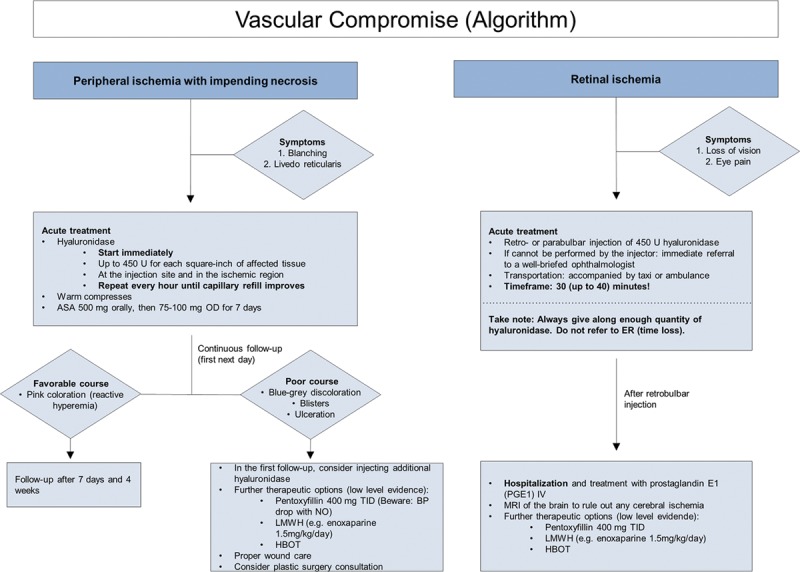
Results: Algorithms are provided for the most common categories of complication associated with hyaluronic acid filler treatment, that is, skin discoloration, edema, nodules, infection, and vascular compromise.
Conclusions: These guidelines are not intended to be complete or exhaustive but may prove informative for aesthetic clinicians who are responsible for treating patients with hyaluronic acid fillers. It may help to guide them on recognizing potential complications and it provides clear guidance on optimum treatment pathways.
Figures
References
-
- DeLorenzi C. Complications of injectable fillers, part I. Aesthet Surg J. 2013;33:561. - PubMed
-
- International Society of Aesthetic Plastic Surgeons (ISAPS). International study on aesthetic/cosmetic procedures performed in 2017 worldwide. Available at https://na01.safelinks.protection.outlook.com/?url=https%3A%2F%2Fwww.isa.... Accessed 7 November 2018.
-
- American Society for Aesthetic Plastic Surgery (ASAPS). Cosmetic surgery national data bank statistics. Available at media@surgery.org. Accessed May 2018. - PubMed
-
- Philipp-Dormston WG, Bergfeld D, Sommer BM, et al. Consensus statement on prevention and management of adverse effects following rejuvenation procedures with hyaluronic acid-based fillers. J Eur Acad Dermatol Venereol. 2017;31:1088. - PubMed
LinkOut - more resources
Full Text Sources