


Induced pluripotent stem cell-based modeling of mutant LRRK2-associated Parkinson's disease
- PMID: 30656775
- PMCID: PMC7114274
- DOI: 10.1111/ejn.14345
Induced pluripotent stem cell-based modeling of mutant LRRK2-associated Parkinson's disease
Abstract
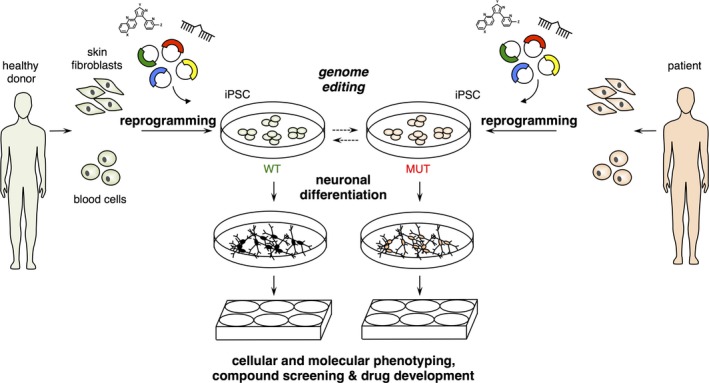
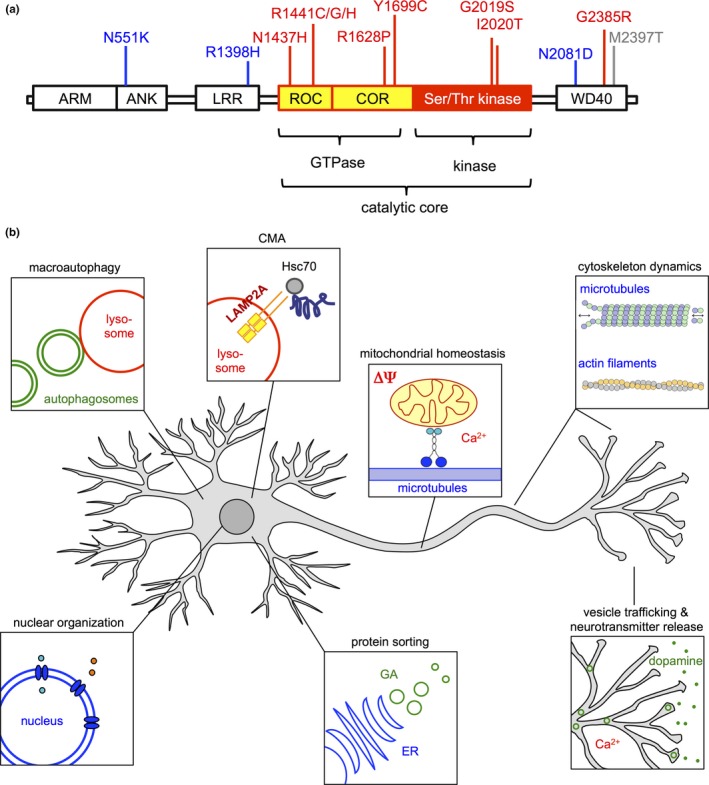
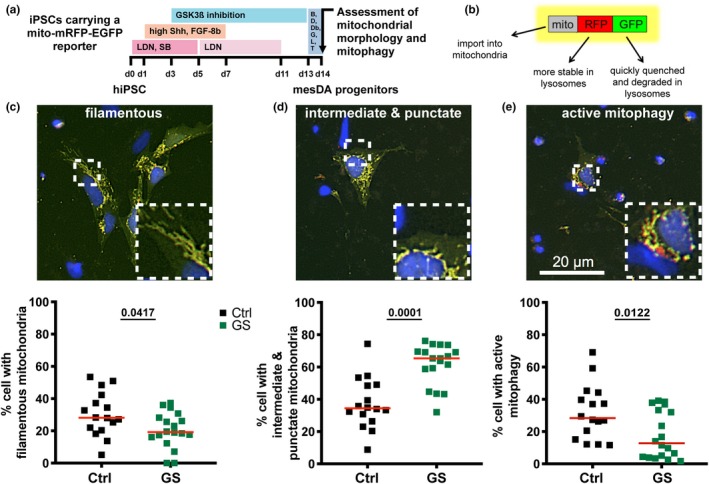
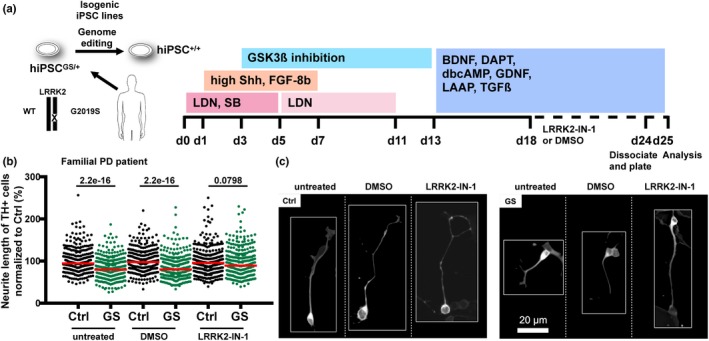
Recent advances in cell reprogramming have enabled assessment of disease-related cellular traits in patient-derived somatic cells, thus providing a versatile platform for disease modeling and drug development. Given the limited access to vital human brain cells, this technology is especially relevant for neurodegenerative disorders such as Parkinson's disease (PD) as a tool to decipher underlying pathomechanisms. Importantly, recent progress in genome-editing technologies has provided an ability to analyze isogenic induced pluripotent stem cell (iPSC) pairs that differ only in a single genetic change, thus allowing a thorough assessment of the molecular and cellular phenotypes that result from monogenetic risk factors. In this review, we summarize the current state of iPSC-based modeling of PD with a focus on leucine-rich repeat kinase 2 (LRRK2), one of the most prominent monogenetic risk factors for PD linked to both familial and idiopathic forms. The LRRK2 protein is a primarily cytosolic multi-domain protein contributing to regulation of several pathways including autophagy, mitochondrial function, vesicle transport, nuclear architecture and cell morphology. We summarize iPSC-based studies that contributed to improving our understanding of the function of LRRK2 and its variants in the context of PD etiopathology. These data, along with results obtained in our own studies, underscore the multifaceted role of LRRK2 in regulating cellular homeostasis on several levels, including proteostasis, mitochondrial dynamics and regulation of the cytoskeleton. Finally, we expound advantages and limitations of reprogramming technologies for disease modeling and drug development and provide an outlook on future challenges and expectations offered by this exciting technology.
Keywords: LRRK2; Parkinson's disease; disease modeling; iPSC; mitophagy.
© 2019 Federation of European Neuroscience Societies and John Wiley & Sons Ltd.
Conflict of interest statement
The authors declare no conflict of interests.
Figures
References
-
- Aflaki, E. , Borger, D. K. , Moaven, N. , Stubblefield, B. K. , Rogers, S. A. , Patnaik, S. , … Sidransky, E. (2016). A new glucocerebrosidase chaperone reduces alpha‐synuclein and glycolipid levels in iPSC‐derived dopaminergic neurons from patients with Gaucher Disease and Parkinsonism. Journal of Neuroscience, 36, 7441–7452. 10.1523/JNEUROSCI.0636-16.2016 - DOI - PMC - PubMed
-
- Anglade, P. , Vyas, S. , Javoy‐Agid, F. , Herrero, M. T. , Michel, P. P. , Marquez, J. , … Agid, Y. (1997). Apoptosis and autophagy in nigral neurons of patients with Parkinson's disease. Histology and Histopathology, 12, 25–31. - PubMed
Publication types
MeSH terms
Substances
Grants and funding
- FP7-HEALTH-F4-2013-602278-Neurostemcellrepair/European Union/International
- BL 767/3-1/Deutsche Forschungsgemeinschaft/International
- BL 767/4-1/Deutsche Forschungsgemeinschaft/International
- 01EK1603A-Neuro2D3/German Ministry for Education and Research (BMBF)/International
- EFRE-0800977/European Regional Development Fund/International
LinkOut - more resources
Full Text Sources
Medical
