


Risk of hypertension following perinatal adversity: IUGR and prematurity
- PMID: 30657741
- PMCID: PMC6594910
- DOI: 10.1530/JOE-18-0687
Risk of hypertension following perinatal adversity: IUGR and prematurity
Abstract
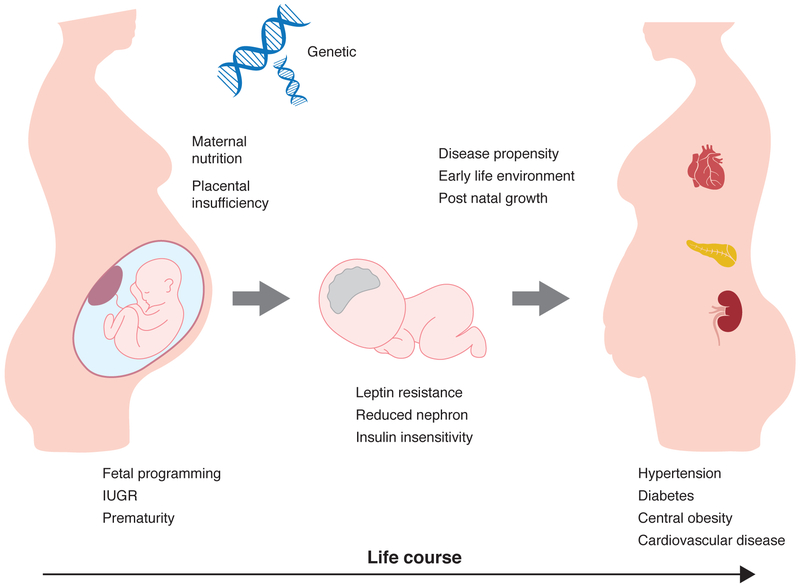
Consistent with the paradigm shifting observations of David Barker and colleagues that revealed a powerful relationship between decreased weight through 2 years of age and adult disease, intrauterine growth restriction (IUGR) and preterm birth are independent risk factors for the development of subsequent hypertension. Animal models have been indispensable in defining the mechanisms responsible for these associations and the potential targets for therapeutic intervention. Among the modifiable risk factors, micronutrient deficiency, physical immobility, exaggerated stress hormone exposure and deficient trophic hormone production are leading candidates for targeted therapies. With the strong inverse relationship seen between gestational age at delivery and the risk of hypertension in adulthood trumping all other major cardiovascular risk factors, improvements in neonatal care are required. Unfortunately, therapeutic breakthroughs have not kept pace with rapidly improving perinatal survival, and groundbreaking bench-to-bedside studies are urgently needed to mitigate and ultimately prevent the tsunami of prematurity-related adult cardiovascular disease that may be on the horizon. This review highlights our current understanding of the developmental origins of hypertension and draws attention to the importance of increasing the availability of lactation consultants, nutritionists, pharmacists and physical therapists as critical allies in the battle that IUGR or premature infants are waging not just for survival but also for their future cardiometabolic health.
Keywords: developmental origins; insulin; leptin; multidisciplinary; preterm; therapy.
Conflict of interest statement
Declaration of interest
There are no conflicts of interest that could be perceived as prejudicing the impartiality of this review or the research reported.
Figures
References
-
- Abe H, Yamada N, Kamata K, Kuwaki T, Shimada M, Osuga J, Shionoiri F, Yahagi N, Kadowaki T, Tamemoto H, et al. 1998. Hypertension, hypertriglyceridemia, and impaired endothelium-dependent vascular relaxation in mice lacking insulin receptor substrate-1. Journal of Clinical Investigation 101 1784–1788. - PMC - PubMed
-
- Acosta W, Meek TH, Schutz H, Dlugosz EM, Vu KT & Garland T Jr 2015. Effects of early-onset voluntary exercise on adult physical activity and associated phenotypes in mice. Physiology & Behavior 149 279–286. - PubMed
Publication types
MeSH terms
Grants and funding
LinkOut - more resources
Full Text Sources
