


Lipoxidation and cancer immunity
- PMID: 30658904
- PMCID: PMC6859558
- DOI: 10.1016/j.redox.2019.101103
Lipoxidation and cancer immunity
Abstract
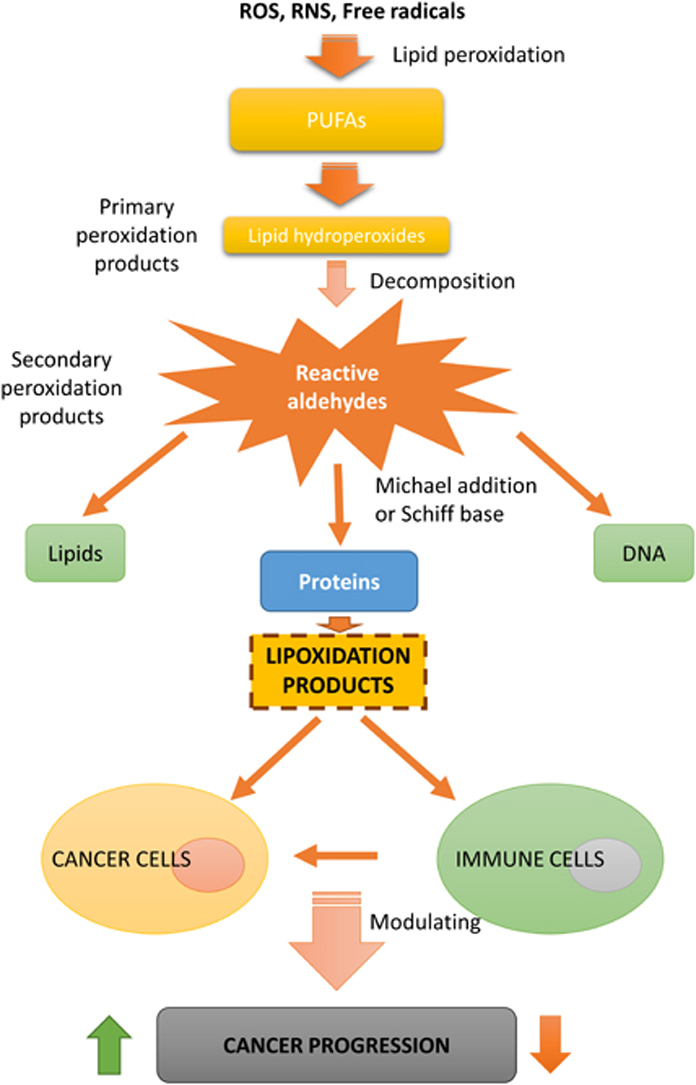
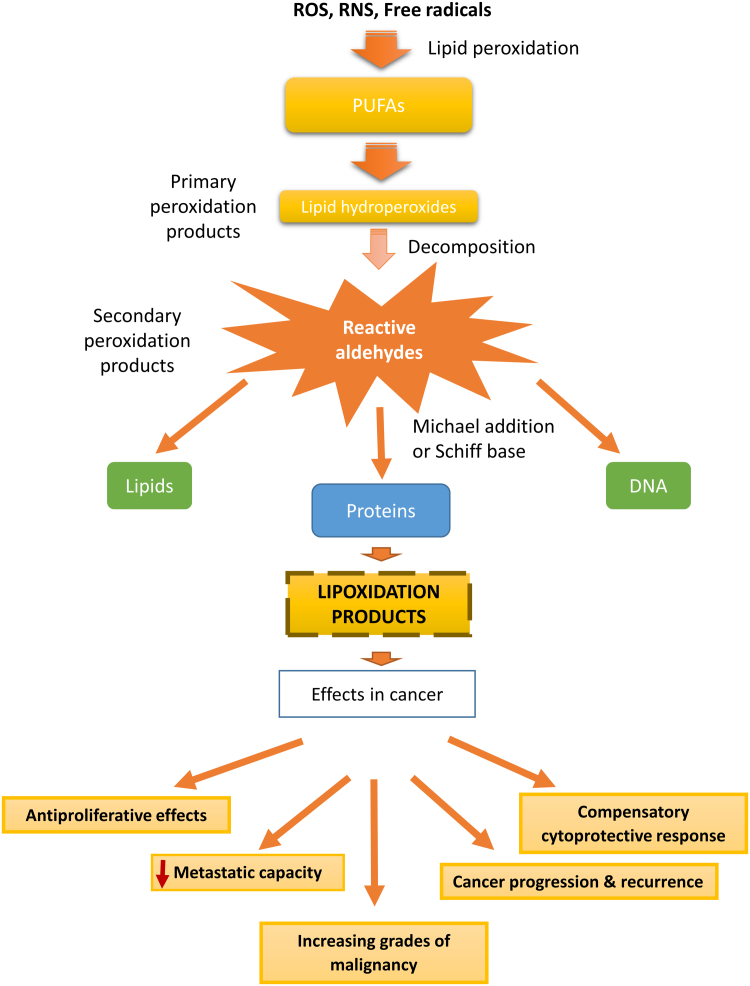
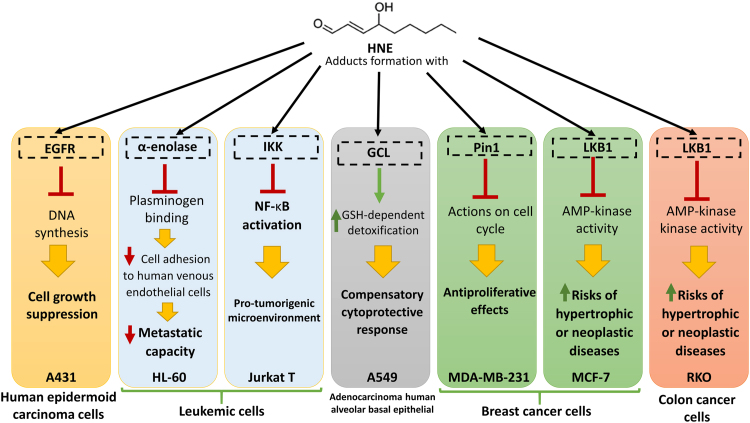
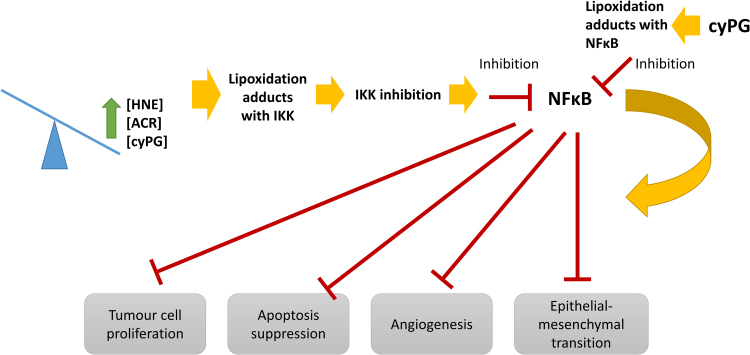
Lipoxidation is a well-known reaction between electrophilic carbonyl species, formed during oxidation of lipids, and specific proteins that, in most cases, causes an alteration in proteins function. This can occur under physiological conditions but, in many cases, it has been associated to pathological process, including cancer. Lipoxidation may have an effect in cancer development through their effects in tumour cells, as well as through the alteration of immune components and the consequent modulation of the immune response. The formation of protein adducts affects different proteins in cancer, triggering different mechanism, such as proliferation, cell differentiation and apoptosis, among others, altering cancer progression. The divergent results obtained documented that the formation of lipoxidation adducts can have either anti-carcinogenic or pro-carcinogenic effects, depending on the cell type affected and the specific adduct formed. Moreover, lipoxidation adducts may alter the immune response, consequently causing either positive or negative alterations in cancer progression. Therefore, in this review, we summarize the effects of lipoxidation adducts in cancer cells and immune components and their consequences in the evolution of different types of cancer.
Keywords: Cancer; Immune system; Lipoxidation; Protein adducts.
Copyright © 2019 The Authors. Published by Elsevier B.V. All rights reserved.
Figures
References
-
- Esterbauer H., Schaur R.J., Zollner H. Chemistry and biochemistry of 4-hydroxynonenal, malonaldehyde and related aldehydes. Free Radic. Biol. Med. 1991;11:81–128. - PubMed
-
- Zarkovic K., Jakovcevic A., Zarkovic N. Contribution of the HNE-immunohistochemistry to modern pathological concepts of major human diseases. Free Radic. Biol. Med. 2017;111:110–126. - PubMed
-
- Petersen D.R., Doorn J.A. Reactions of 4-hydroxynonenal with proteins and cellular targets. Free Radic. Biol. Med. 2004;37:937–945. - PubMed
Publication types
MeSH terms
Substances
LinkOut - more resources
Full Text Sources
