


Absence of an osteopetrosis phenotype in IKBKG (NEMO) mutation-positive women: A case-control study
- PMID: 30659980
- PMCID: PMC6457251
- DOI: 10.1016/j.bone.2019.01.014
Absence of an osteopetrosis phenotype in IKBKG (NEMO) mutation-positive women: A case-control study
Abstract
Background: NF-κB essential modulator (NEMO), encoded by IKBKG, is necessary for activation of the ubiquitous transcription factor nuclear factor kappa-light-chain-enhancer of activated B cells (NF-κB). Animal studies suggest NEMO is required for NF-κB mediated bone homeostasis, but this has not been thoroughly studied in humans. IKBKG loss-of-function mutation causes incontinentia pigmenti (IP), a rare X-linked disease featuring linear hypopigmentation, alopecia, hypodontia, and immunodeficiency. Single case reports describe osteopetrosis (OPT) in boys carrying hypomorphic IKBKG mutations.
Method: We studied the bone phenotype in women with IP with evaluation of radiographs of the spine and non-dominant arm and leg; lumbar spine and femoral neck aBMD using DXA; μ-CT and histomorphometry of trans-iliac crest biopsy specimens; bone turnover markers; and cellular phenotype in bone marrow skeletal (stromal) stem cells (BM-MSCs) in a cross-sectional, age-, sex-, and BMI-matched case-control study. X-chromosome inactivation was measured in blood leucocytes and BM-MSCs using a PCR method with methylation of HpaII sites. NF-κB activity was quantitated in BM-MSCs using a luciferase NF-κB reporter assay.
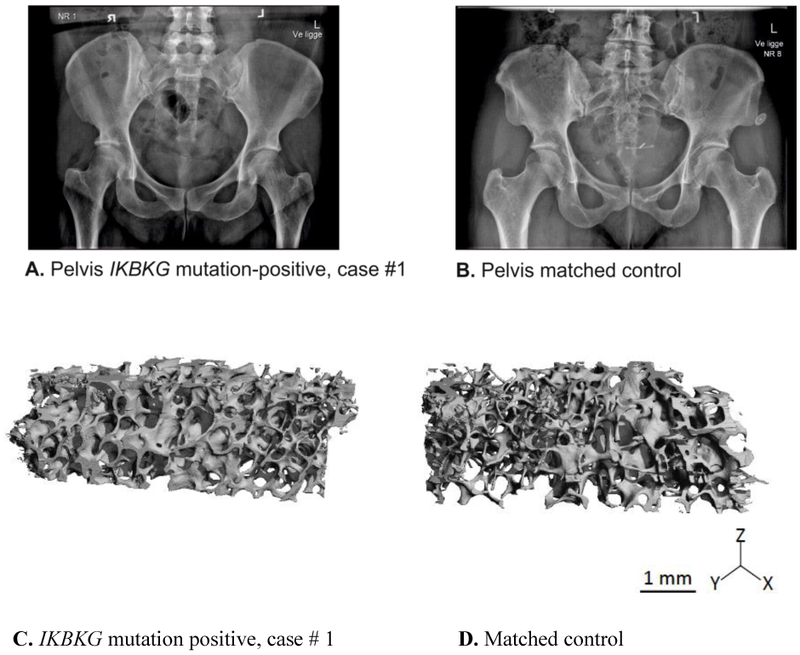
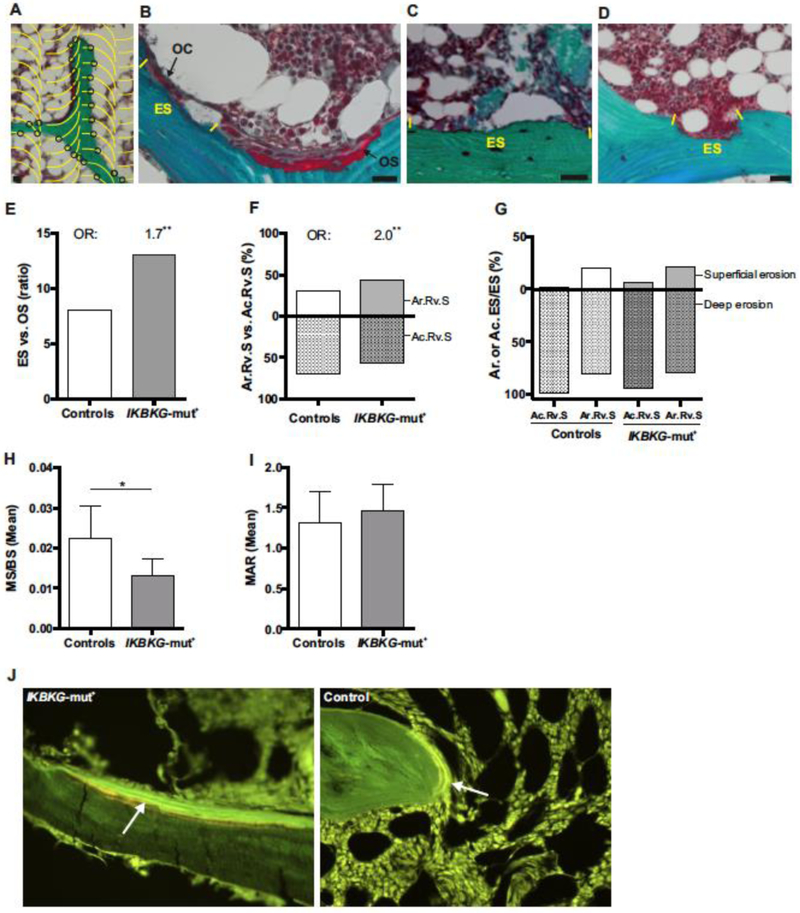
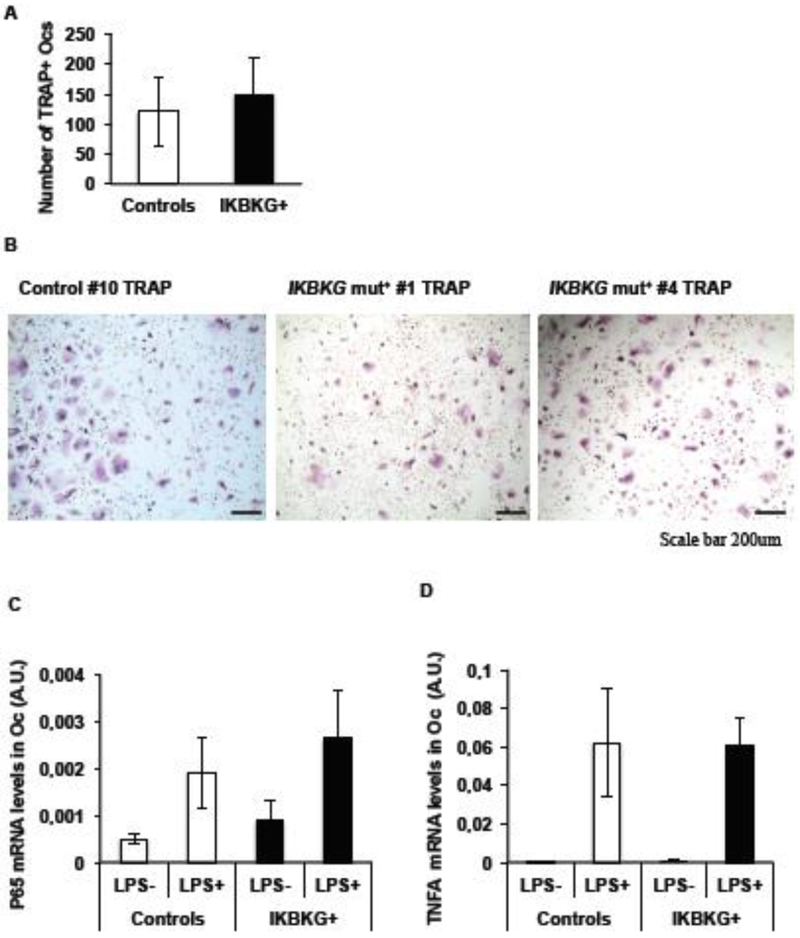
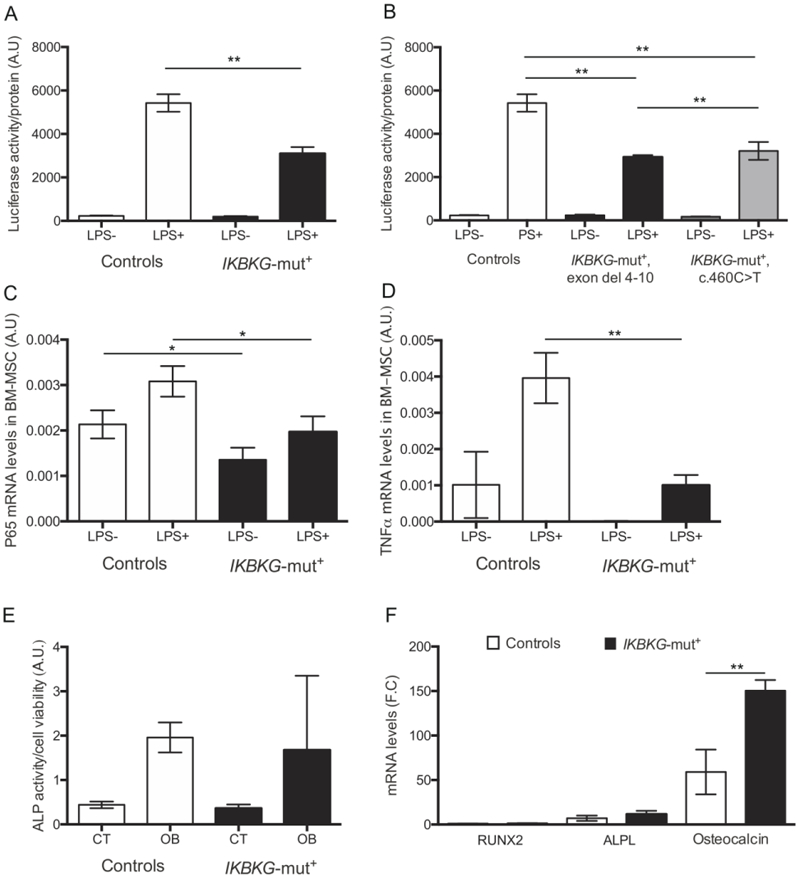
Results: Seven Caucasian women with IP (age: 24-67 years and BMI: 20.0-35.2 kg/m2) and IKBKG mutation (del exon 4-10 (n = 4); c.460C>T (n = 3)) were compared to matched controls. The IKBKG mutation carriers had extremely skewed X-inactivation (>90:10%) in blood, but not in BM-MSCs. NF-κB activity was lower in BM-MSCs from IKBKG mutation carriers (n = 5) compared to controls (3094 ± 679 vs. 5422 ± 1038/μg protein, p < 0.01). However, no differences were identified on skeletal radiographics, aBMD, μ-architecture of the iliac crest, or bone turnover markers. The IKBKG mutation carriers had a 1.7-fold greater extent of eroded surfaces relative to osteoid surfaces (p < 0.01), and a 2.0-fold greater proportion of arrested reversal surface relative to active reversal surface (p < 0.01).
Conclusion: Unlike mutation-positive males, the IKBKG mutation-positive women did not manifest OPT.
Keywords: IKBKG; Incontinentia pigmenti; NEMO; NF-κB; Osteopetrosis; X-chromosome inactivation.
Copyright © 2019 Elsevier Inc. All rights reserved.
Figures
References
-
- Baldwin AS, "The NF-kappa B and I kappa B proteins: new discoveries and insights," Annu Rev Immunol, vol. 14, pp. 649–83, 1996. - PubMed
-
- Crockett JC, Mellis DJ, Scott DI, and Helfrich MH, "New knowledge on critical osteoclast formation and activation pathways from study of rare genetic diseases of osteoclasts: focus on the RANK/RANKL axis," Osleoporos Int, vol. 22, no. 1, pp. 1–20, January 2011. - PubMed
-
- Ghosh G, van Duyne G, Ghosh S, and Sigler PB, "Structure of NF-kappa B p50 homodimer bound to a kappa B site," Nature, vol. 373, no. 6512, pp. 303–10, January 1995. - PubMed
-
- Iotsova V, Caamaño J, Loy J, Yang Y, Lewin A, and Bravo R, "Osteopetrosis in mice lacking NF-kappaB1 and NF-kappaB2," Nat Med, vol. 3, no. 11, pp. 1285–9, November 1997. - PubMed
Publication types
MeSH terms
Substances
Grants and funding
LinkOut - more resources
Full Text Sources
Research Materials
Miscellaneous
