


Ginsenoside Rk1 ameliorates paracetamol-induced hepatotoxicity in mice through inhibition of inflammation, oxidative stress, nitrative stress and apoptosis
- PMID: 30662289
- PMCID: PMC6323149
- DOI: 10.1016/j.jgr.2017.07.003
Ginsenoside Rk1 ameliorates paracetamol-induced hepatotoxicity in mice through inhibition of inflammation, oxidative stress, nitrative stress and apoptosis
Abstract
Background: Frequent overdose of paracetamol (APAP) has become the major cause of acute liver injury. The present study was designed to evaluate the potential protective effects of ginsenoside Rk1 on APAP-induced hepatotoxicity and investigate the underlying mechanisms for the first time.
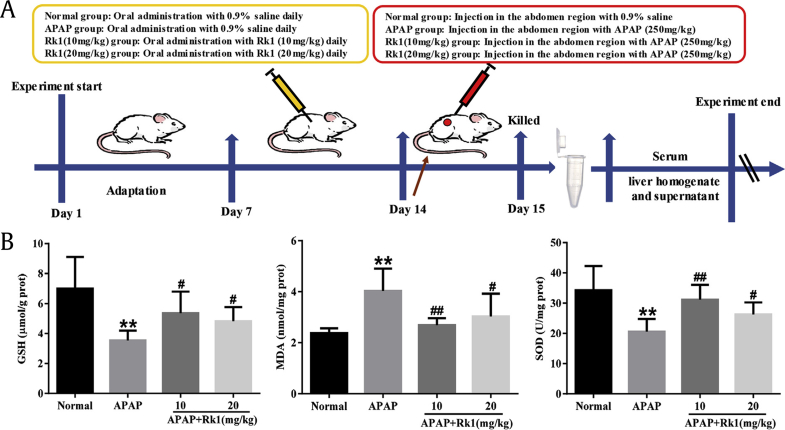
Methods: Mice were treated with Rk1 (10 mg/kg or 20 mg/kg) by oral gavage once per d for 7 d. On the 7th d, all mice treated with 250 mg/kg APAP exhibited severe liver injury after 24 h, and hepatotoxicity was assessed.
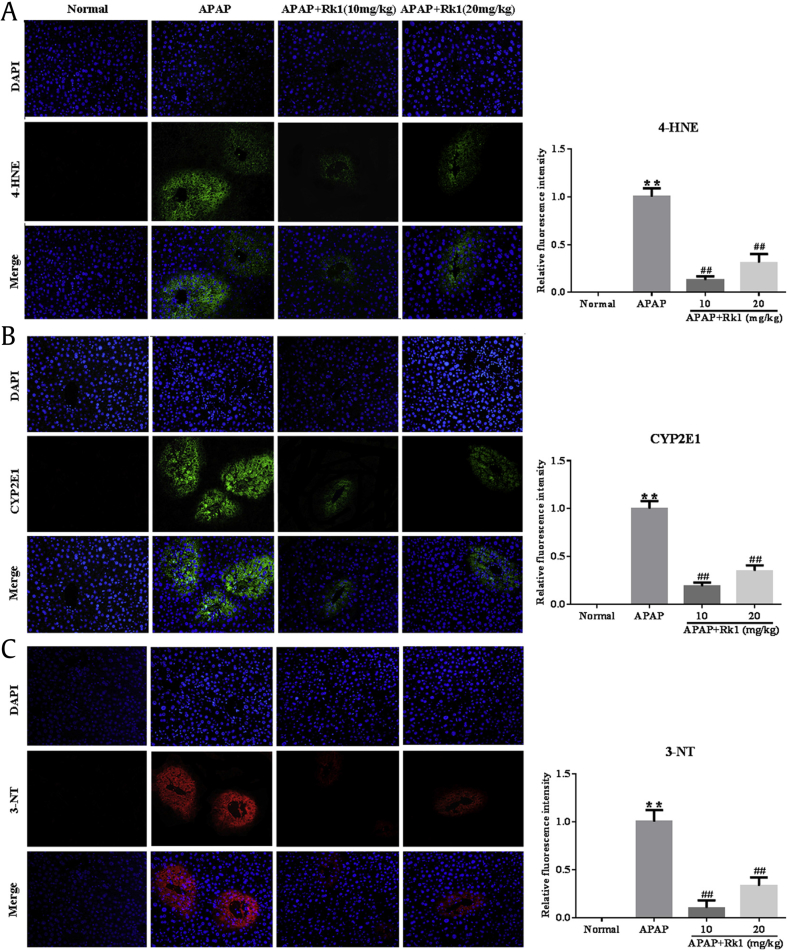
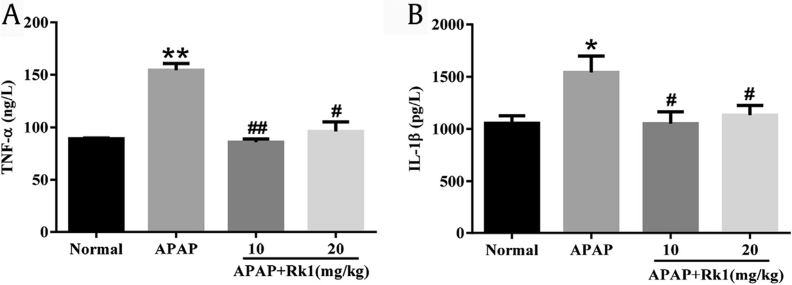
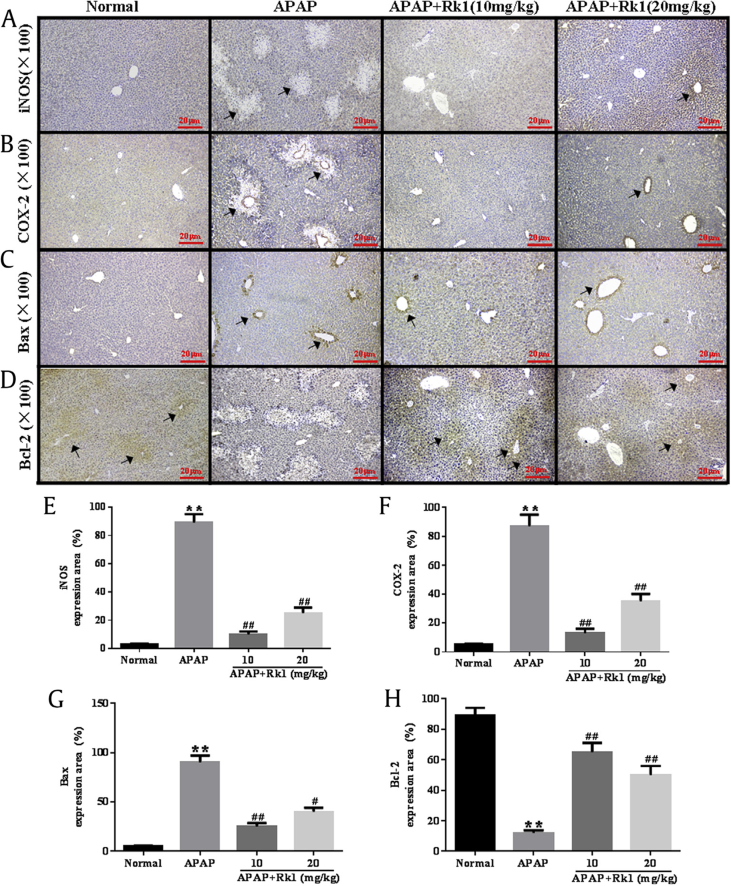
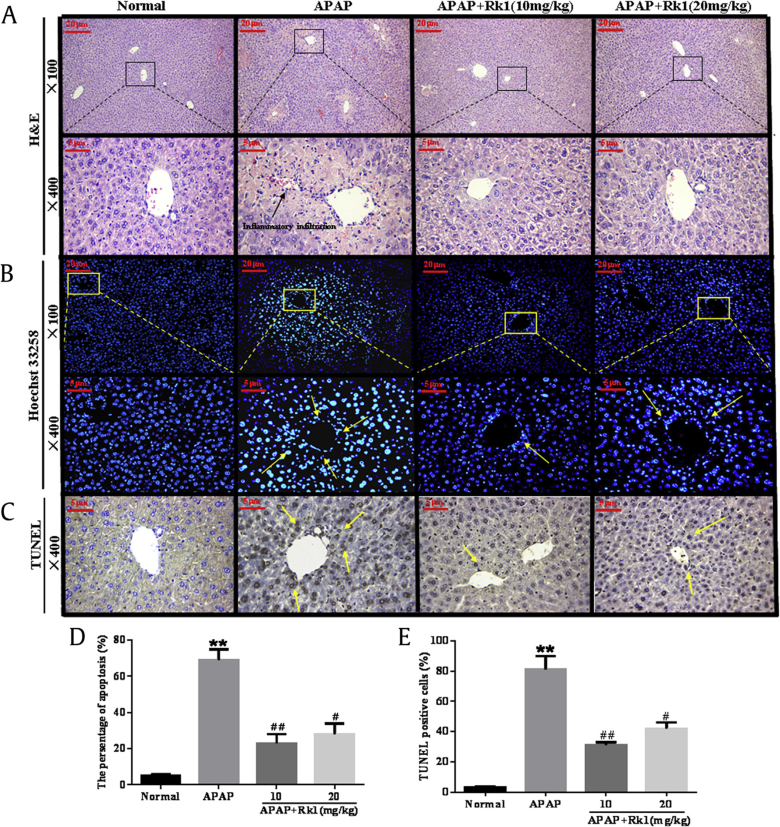
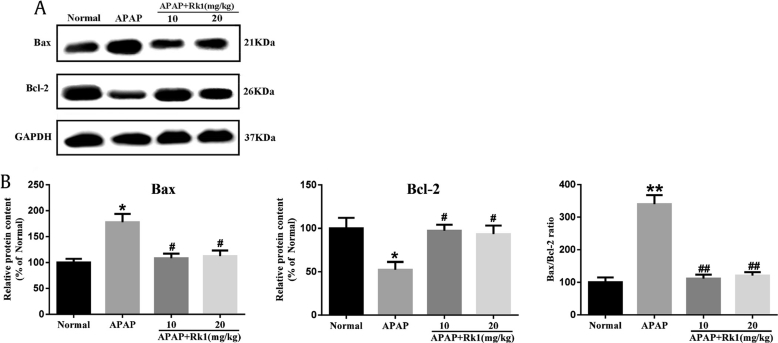
Results: Our results showed that pretreatment with Rk1 significantly decreased the levels of serum alanine aminotransferase, aspartate aminotransferase, tumor necrosis factor, and interleukin-1β compared with the APAP group. Meanwhile, hepatic antioxidants, including superoxide dismutase and glutathione, were elevated compared with the APAP group. In contrast, a significant decrease in levels of the lipid peroxidation product malondialdehyde was observed in the ginsenoside Rk1-treated group compared with the APAP group. These effects were associated with a significant increase of cytochrome P450 E1 and 4-hydroxynonenal levels in liver tissues. Moreover, ginsenoside Rk1 supplementation suppressed activation of apoptotic pathways by increasing Bcl-2 and decreasing Bax protein expression levels, which was shown using western blotting analysis. Histopathological observation also revealed that ginsenoside Rk1 pretreatment significantly reversed APAP-induced necrosis and inflammatory infiltration in liver tissues. Biological indicators of nitrative stress, such as 3-nitrotyrosine, were also inhibited after pretreatment with Rk1 compared with the APAP group.
Conclusion: The results clearly suggest that the underlying molecular mechanisms in the hepatoprotection of ginsenoside Rk1 in APAP-induced hepatotoxicity may be due to its antioxidation, antiapoptosis, anti-inflammation, and antinitrative effects.
Keywords: APAP-induced hepatotoxicity; anti-apoptosis; anti-inflammation; ginsenoside Rk1; oxidative stress.
Figures
References
-
- Sun H., Chen L., Zhou W., Hu L., Li L., Tu Q., Chang Y., Liu Q., Sun X., Wu M. The protective role of hydrogen-rich saline in experimental liver injury in mice. J Hepatol. 2011;54:471–480. - PubMed
-
- Dargan P., Jones A. Paracetamol: balancing risk against benefit. QJM. 2002;95:831–832. - PubMed
-
- He M., Zhang S., Jiao Y., Lin X., Huang J., Chen C., Chen Z., Huang R. Effects and mechanisms of rifampin on hepatotoxicity of acetaminophen in mice. Food Chem Toxicol. 2012;50:3142–3149. - PubMed
-
- Larson A.M. Acetaminophen hepatotoxicity. Clin Liver Dis. 2007;11:525–548. vi. - PubMed
LinkOut - more resources
Full Text Sources
Other Literature Sources
Research Materials
