Laboratory Administration of Transcutaneous Auricular Vagus Nerve Stimulation (taVNS): Technique, Targeting, and Considerations
- PMID: 30663712
- PMCID: PMC6867597
- DOI: 10.3791/58984
Laboratory Administration of Transcutaneous Auricular Vagus Nerve Stimulation (taVNS): Technique, Targeting, and Considerations
Abstract
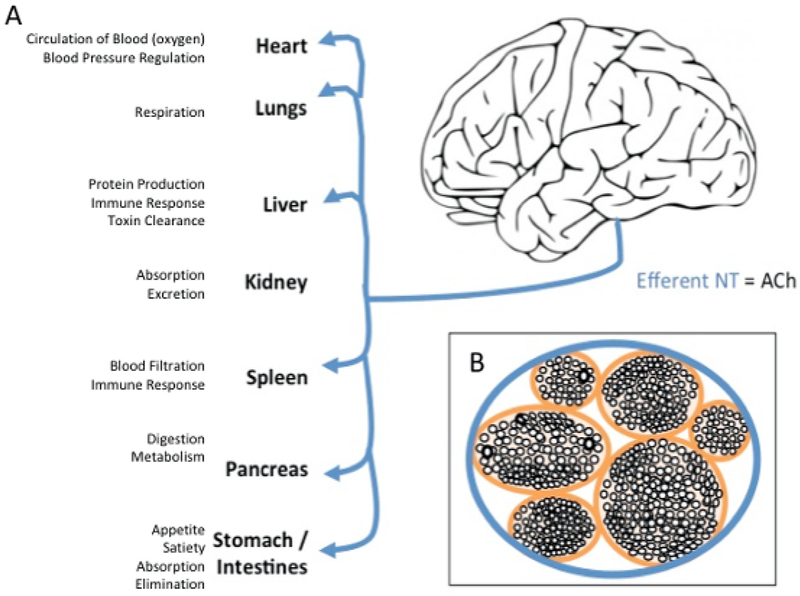
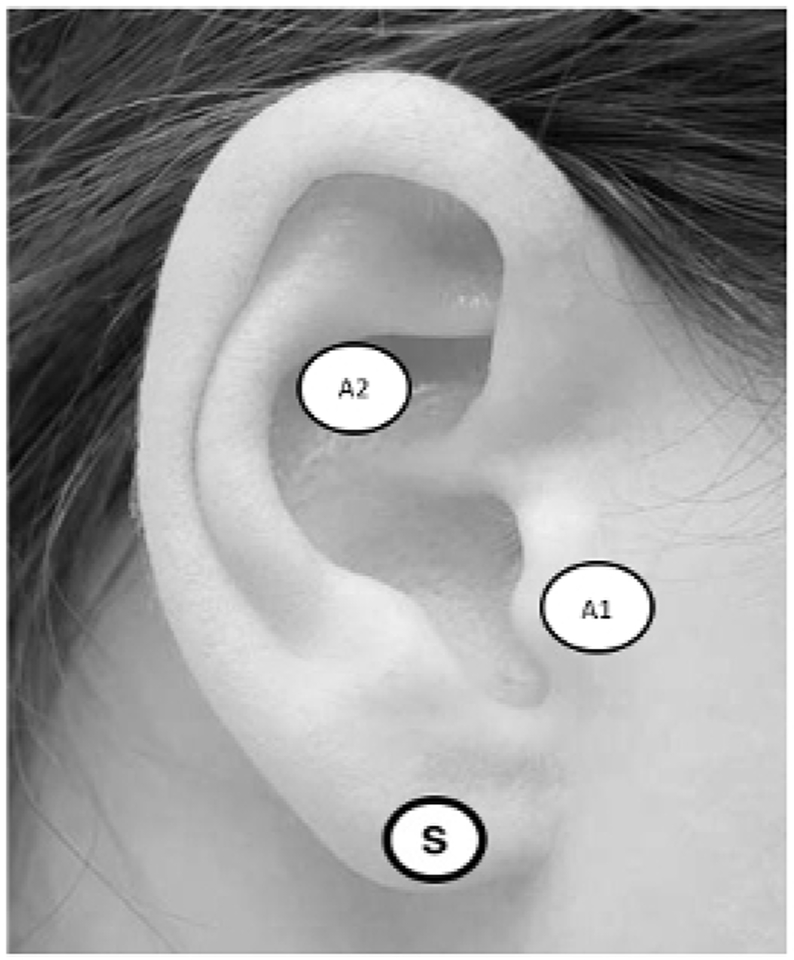
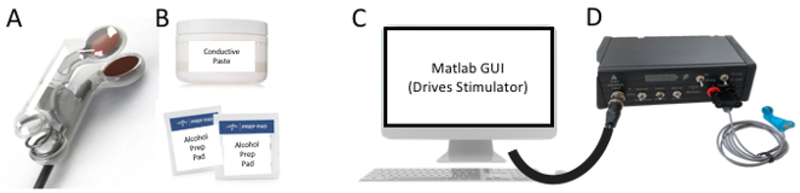
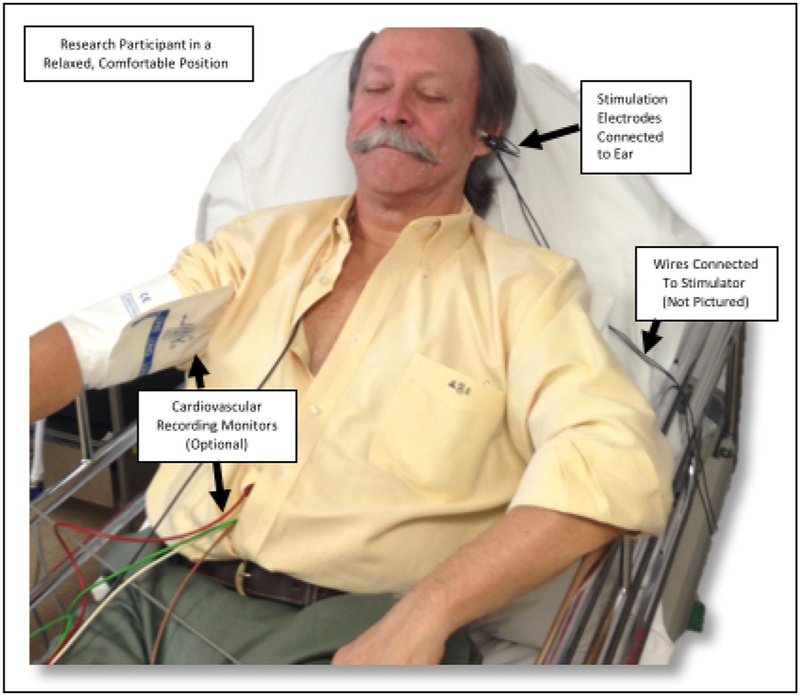
Non-invasive vagus nerve stimulation (VNS) may be administered via a novel, emerging neuromodulatory technique known as transcutaneous auricular vagus nerve stimulation (taVNS). Unlike cervically-implanted VNS, taVNS is an inexpensive and non-surgical method used to modulate the vagus system. taVNS is appealing as it allows for rapid translation of basic VNS research and serves as a safe, inexpensive, and portable neurostimulation system for the future treatment of central and peripheral disease. The background and rationale for taVNS is described, along with electrical and parametric considerations, proper ear targeting and attachment of stimulation electrodes, individual dosing via determination of perception threshold (PT), and safe administration of taVNS.
Figures
References
-
- Berthoud HR, & Neuhuber WL Functional and chemical anatomy of the afferent vagal system. Autonomic Neuroscience. 85 (1–3), 1–17 (2000). - PubMed
-
- George MS et al. Vagus nerve stimulation: a new form of therapeutic Brain Stimulation. CNS Spectrums. 5 (11), 43–52 (2000). - PubMed
-
- Nemeroff CB et al. VNS therapy in treatment-resistant depression: clinical evidence and putative neurobiological mechanisms. Neuropsychopharmacology. 31 (7), 1345–1355 (2006). - PubMed
-
- Ventureyra EC Transcutaneous vagus nerve stimulation for partial onset seizure therapy. Child’s Nervous System. 16 (2), 101–102 (2000). - PubMed
-
- Peuker ET, & Filler TJ The nerve supply of the human auricle. Clinical Anatomy. 15 (1), 35–37 (2002). - PubMed
Publication types
MeSH terms
Grants and funding
LinkOut - more resources
Full Text Sources
Medical