


Racial and ethnic differences in knowledge and attitudes about genetic testing in the US: Systematic review
- PMID: 30663831
- PMCID: PMC8081647
- DOI: 10.1002/jgc4.1078
Racial and ethnic differences in knowledge and attitudes about genetic testing in the US: Systematic review
Abstract
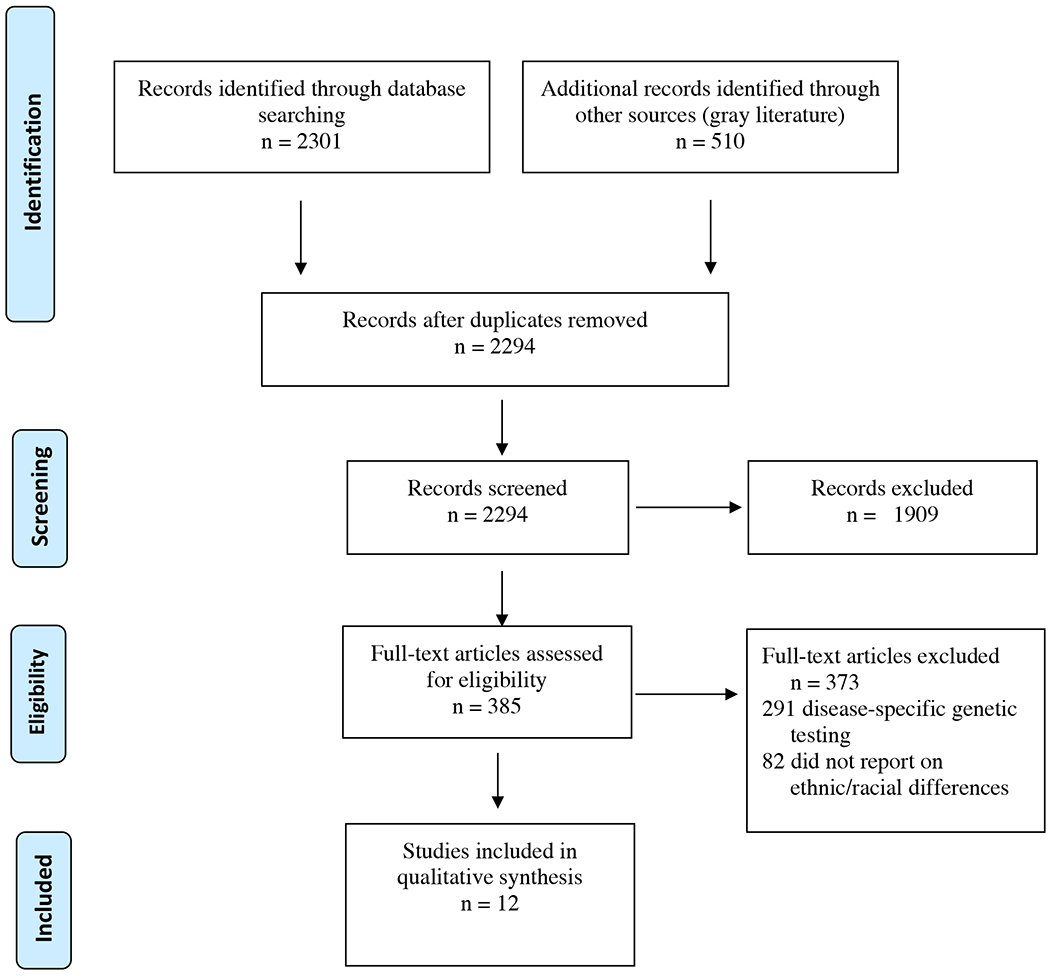
Precision medicine has grown over the past 20 years with the availability of genetic tests and has changed the one-size-fits-all paradigm in medicine. Precision medicine innovations, such as newly available genetic tests, could potentially widen racial and ethnic disparities if access to them is unequal and if interest to use them differs across groups. The objective of this systematic review was to synthesize existing evidence on racial and ethnic differences in knowledge of and attitudes toward genetic testing among adult patients and the general public in the US, focusing on research about the use of genetic testing in general, not disease-specific tests. Twelve articles published in 1997-2017 met inclusion and exclusion criteria, with 10 including knowledge variables and seven including attitude variables. Studies found consistent patterns of lower awareness of genetic testing in general among non-Whites compared to Whites, lower factual knowledge scores among Blacks and Hispanics/Latinos, and mixed findings of differences in awareness of direct-to-consumer (DTC) genetic testing or the term precision medicine. Blacks, Hispanics/Latinos, and non-Whites generally had more concerns about genetic testing than Whites. The findings suggest that patients and the general public need access to culturally appropriate educational material about the use of genetic testing in precision medicine.
Keywords: awareness; direct-to-consumer; ethnic; genetic testing; health disparities; knowledge; minorities; pharmacogenomics; precision medicine; racial.
© 2019 National Society of Genetic Counselors.
Conflict of interest statement
Juan R. Canedo, Stephania T. Miller, Hector Myers, Maureen Sanderson declare that they have no conflict of interest.
References
-
- Agurs-Collins T, Ferrer R, Ottenbacher A, Waters EA, O’Connell ME, & Hamilton JG (2015). Public Awareness of Direct-to-Consumer Genetic Tests: Findings from the 2013 U.S. Health Information National Trends Survey. Journal of Cancer Education: The Official Journal of the American Association for Cancer Education, 30(4), 799–807. 10.1007/s13187-014-0784-x - DOI - PMC - PubMed
-
- Avilés-Santa ML, Heintzman J, Lindberg NM, Guerrero-Preston R, Ramos K, Abraído-Lanza AL,… Vázquez MA (2017). Personalized medicine and Hispanic health: improving health outcomes and reducing health disparities — a National Heart, Lung, and Blood Institute workshop report. BMC Proceedings, 11(11), 11. 10.1186/s12919-017-0079-4 - DOI - PMC - PubMed
Publication types
MeSH terms
Grants and funding
LinkOut - more resources
Full Text Sources
Medical
Miscellaneous
