


Investigating the virulence genes and antibiotic susceptibility patterns of Vibrio cholerae O1 in environmental and clinical isolates in Accra, Ghana
- PMID: 30665342
- PMCID: PMC6341726
- DOI: 10.1186/s12879-019-3714-z
Investigating the virulence genes and antibiotic susceptibility patterns of Vibrio cholerae O1 in environmental and clinical isolates in Accra, Ghana
Abstract
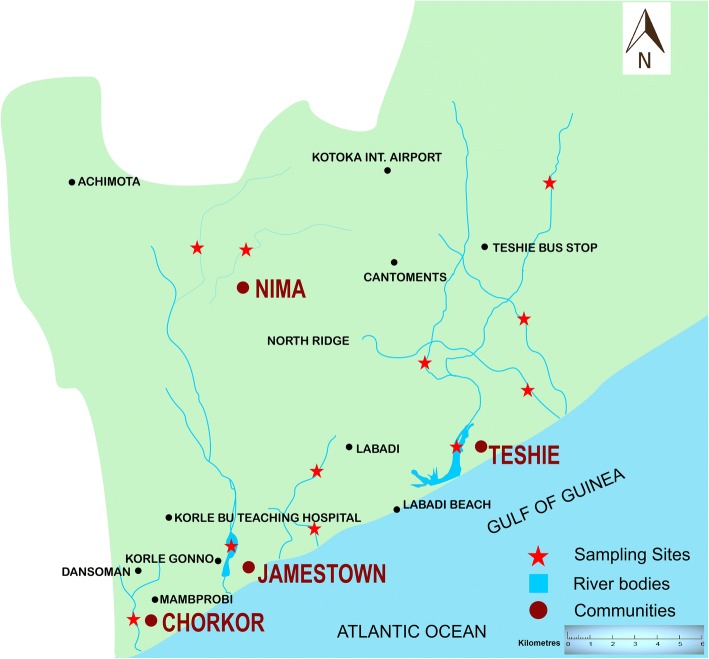
Background: Cholera has been endemic in Ghana since its detection in 1970. It has been shown that long-term survival of the bacteria may be attained in aquatic environments. Consequently, cholera outbreaks may be triggered predominantly in densely populated urban areas. We investigated clinical and environmental isolates of Vibrio cholerae O1 in Accra to determine their virulence genes, antibiotic susceptibility patterns and environmental factors maintaining their persistence in the environment.
Methods: Water samples from various sources were analyzed for the presence of V. cholerae O1 using culture methods. Forty clinical isolates from a previous cholera outbreak were included in the study for comparison. Antibiotic susceptibility patterns of the bacteria were determined by disc diffusion. Virulence genes were identified by analyzing genes for ctx, tcpA (tcpAEl Tor tcpACl), zot, ompW, rbfO1 and attRS using PCR. Physicochemical characteristics of water were investigated using standard methods. One-way ANOVA and student t - test were employed to analyze the relationship between physicochemical factors and the occurrence of V. cholerae O1.
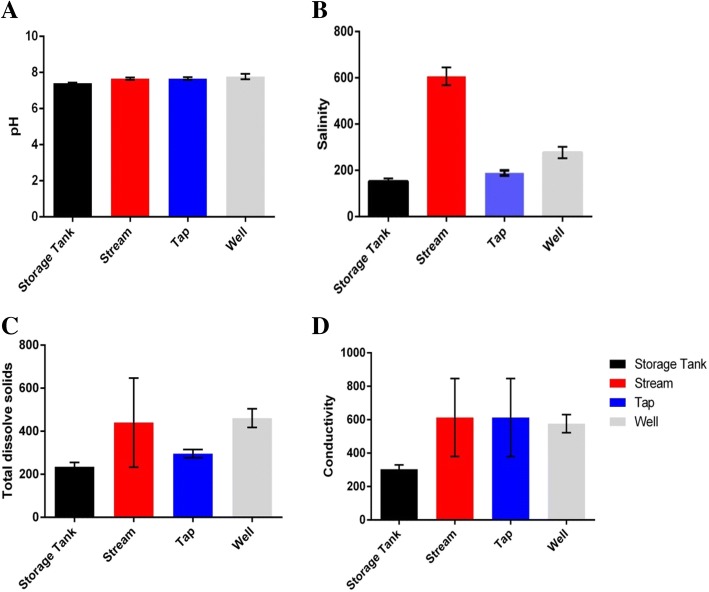
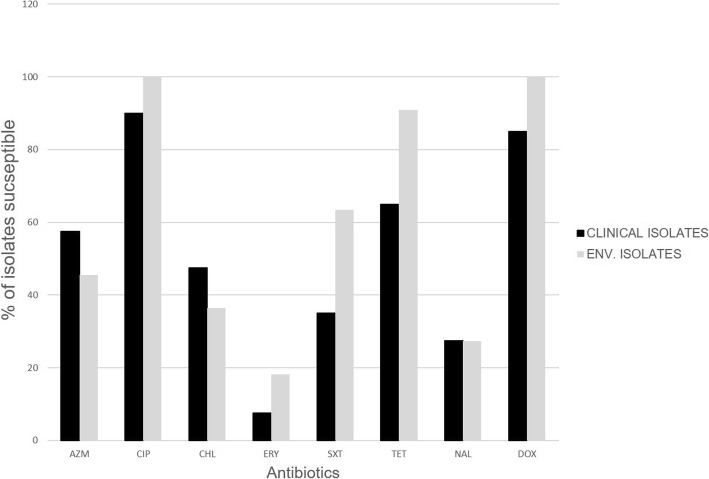
Results: Eleven V. cholerae O1 strains were successfully isolated from streams, storage tanks and wells during the study period. All isolates were resistant to one or more of the eight antibiotics used. Multidrug resistance was observed in over 97% of the isolates. All isolates had genes for at least one virulence factor. Vibrio cholerae toxin gene was detected in 82.4% of the isolates. Approximately 81.8% of the isolates were positive for tcpAEl Tor gene, but also harbored the tcpAcl gene. Isolates were grouped into thirteen genotypes based on the genes analyzed. High temperature, salinity, total dissolved solids and conductivity was found to significantly correlate positively with isolation of V. cholerae O1. V. cholerae serotype Ogawa biotype El tor is the main biotype circulating in Ghana with the emergence of a hybrid strain.
Conclusions: Multidrug resistant V. cholerae O1 with different genotypes and pathogenicity are present in water sources and co-exist with non O1/O139 in the study area.
Keywords: Accra; Cholera; Environmental factors; Genotypes; Multidrug resistance; Vibrio cholerae O1; Virulence genes.
Conflict of interest statement
Ethics approval and consent to participate
The local scientific and technical committee of the West African Center for Cell Biology of Infectious Pathogens (WACCBIP) ruled that no formal ethics approval was required for this particular study.
Consent for publication
Not applicable.
Competing interests
The authors declare that they have no competing interests.
Publisher’s Note
Springer Nature remains neutral with regard to jurisdictional claims in published maps and institutional affiliations.
Figures
References
-
- Feng Y, Jadhav A, Rodighiero C, Fujinaga Y, Kirchhausen T, Lencer W. Retrograde transport of cholera toxin from the plasma membrane to the endoplasmic reticulum requires the trans-Golgi network but not the Golgi apparatus in Exo2-treated cells. EMBO Rep. 2004;5(6):596–601. doi: 10.1038/sj.embor.7400152. - DOI - PMC - PubMed
MeSH terms
Substances
Grants and funding
LinkOut - more resources
Full Text Sources
Medical
