


Endometrial resection and ablation techniques for heavy menstrual bleeding
- PMID: 30667064
- PMCID: PMC7057272
- DOI: 10.1002/14651858.CD001501.pub5
Endometrial resection and ablation techniques for heavy menstrual bleeding
Abstract
Background: Heavy menstrual bleeding (HMB) is a significant health problem in premenopausal women; it can reduce their quality of life and can cause social disruption and physical problems such as iron deficiency anaemia. First-line treatment has traditionally consisted of medical therapy (hormonal and non-hormonal), but this is not always successful in reducing menstrual bleeding to acceptable levels. Hysterectomy is a definitive treatment, but it is more costly and carries some risk. Endometrial ablation may be an alternative to hysterectomy that preserves the uterus. Many techniques have been developed to 'ablate' (remove) the lining of the endometrium. First-generation techniques require visualisation of the uterus with a hysteroscope during the procedure; although it is safe, this procedure requires specific technical skills. Newer techniques for endometrial ablation (second- and third-generation techniques) have been developed that are quicker than previous approaches because they do not require hysteroscopic visualisation during the procedure.
Objectives: To compare the efficacy, safety, and acceptability of endometrial destruction techniques to reduce heavy menstrual bleeding (HMB) in premenopausal women.
Search methods: We searched the Cochrane Gynaecology and Fertility Group Specialised Register of controlled trials, the Cochrane Central Register of Controlled Trials (CENTRAL) in the Cochrane Library, MEDLINE, Embase, CINAHL, and PsycInfo (from inception to May 2018). We also searched trials registers, other sources of unpublished or grey literature, and reference lists of retrieved studies, and we made contact with experts in the field and with pharmaceutical companies that manufacture ablation devices.
Selection criteria: Randomised controlled trials (RCTs) comparing different endometrial ablation or resection techniques for women reporting HMB without known uterine pathology, other than fibroids outside the uterine cavity and smaller than 3 centimetres, were eligible. Outcomes included improvement in HMB and in quality of life, patient satisfaction, operative outcomes, complications, and the need for further surgery, including hysterectomy.
Data collection and analysis: Two review authors independently selected trials for inclusion, assessed trials for risk of bias, and extracted data. We contacted study authors for clarification of methods or for additional data. We assessed adverse events only if they were separately measured in the included trials. We undertook comparisons with individual techniques as well as an overall comparison of first- and second-generation ablation methods.
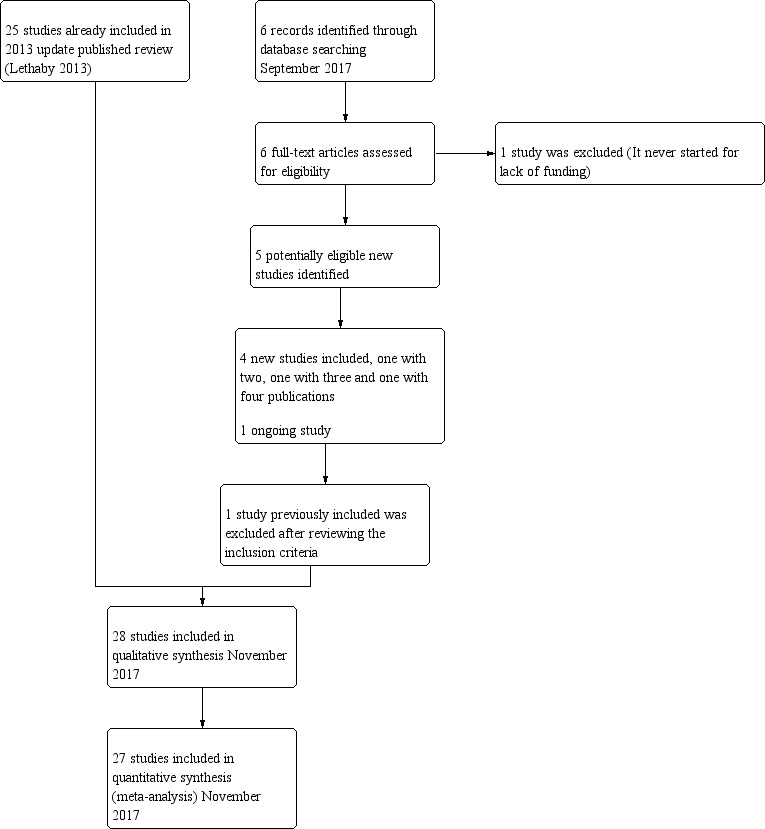
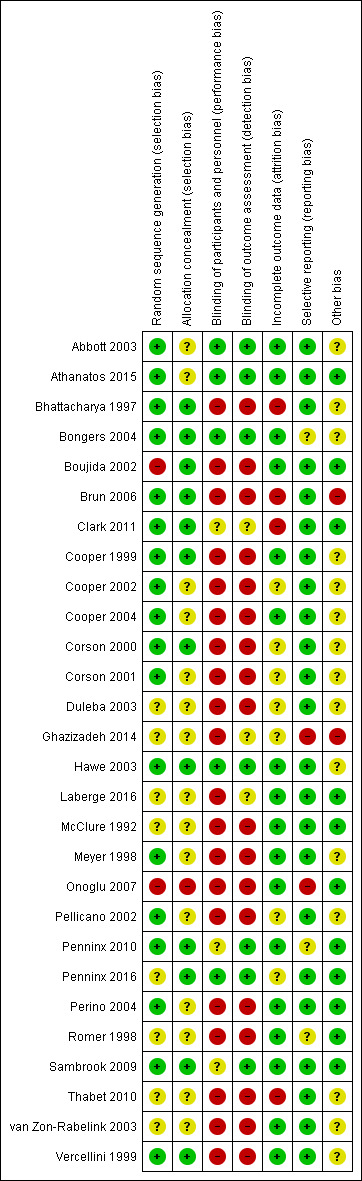
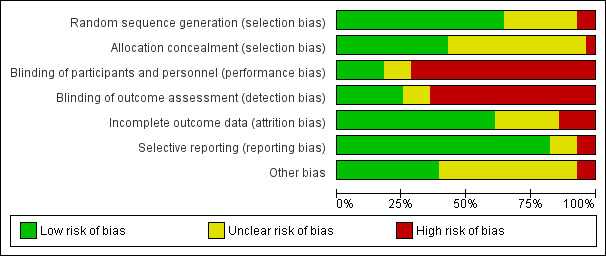
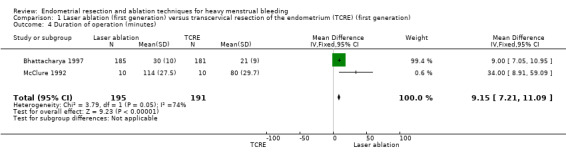
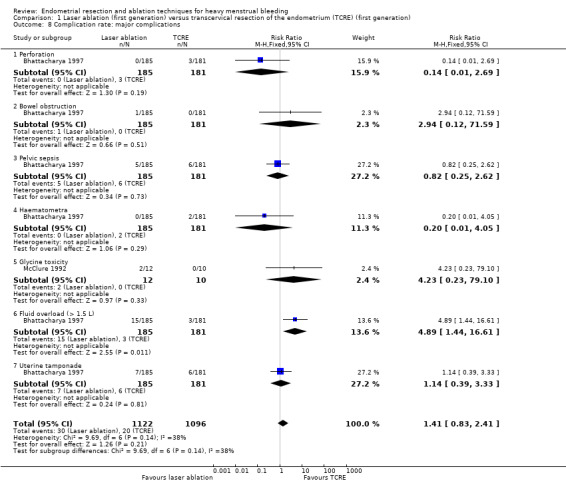
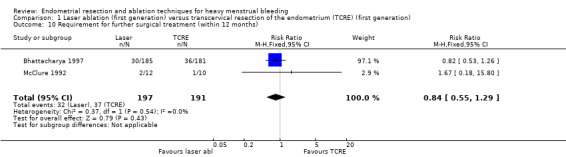
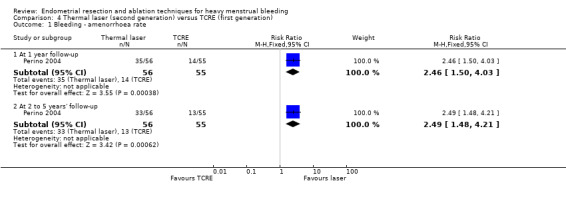
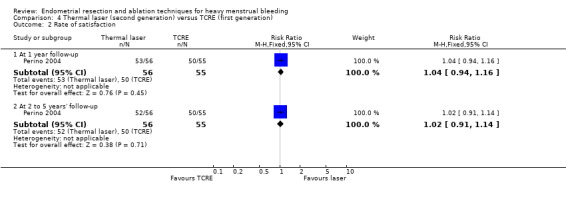
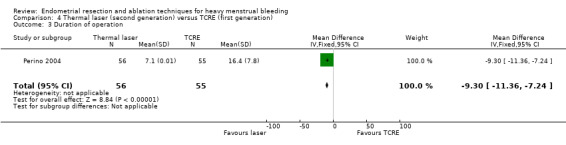
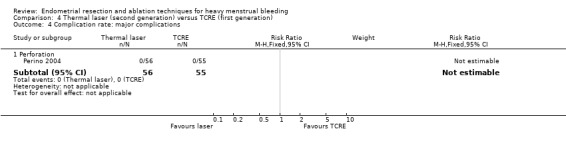
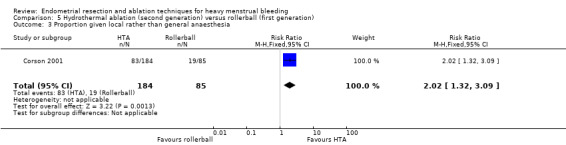
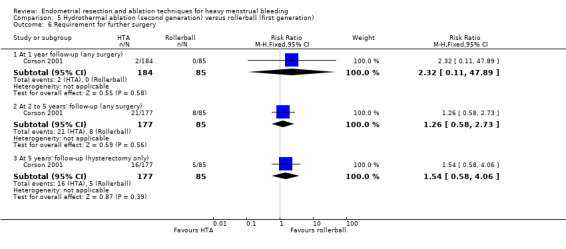
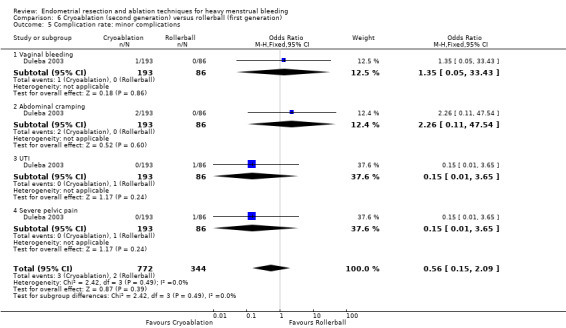
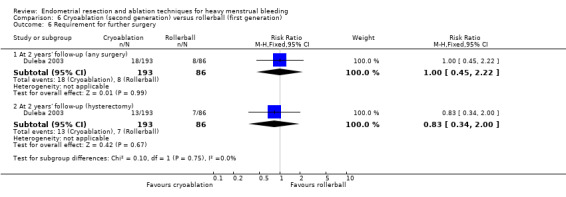
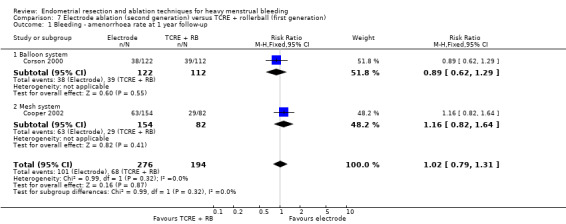
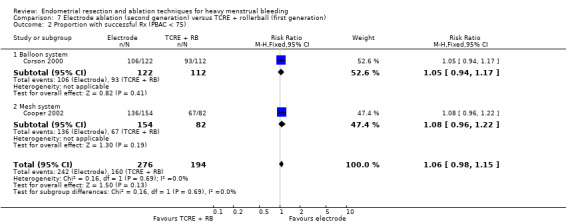
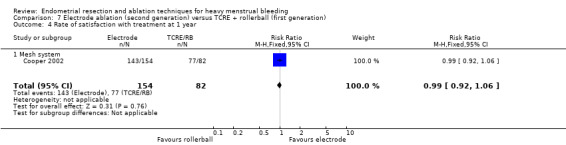
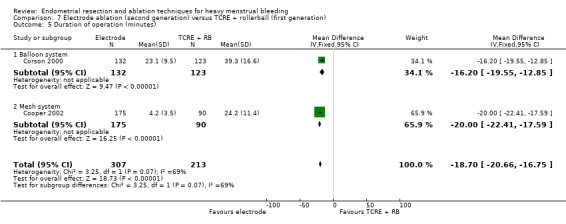
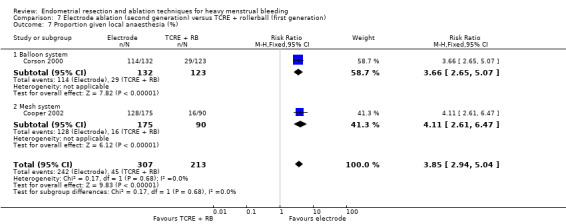
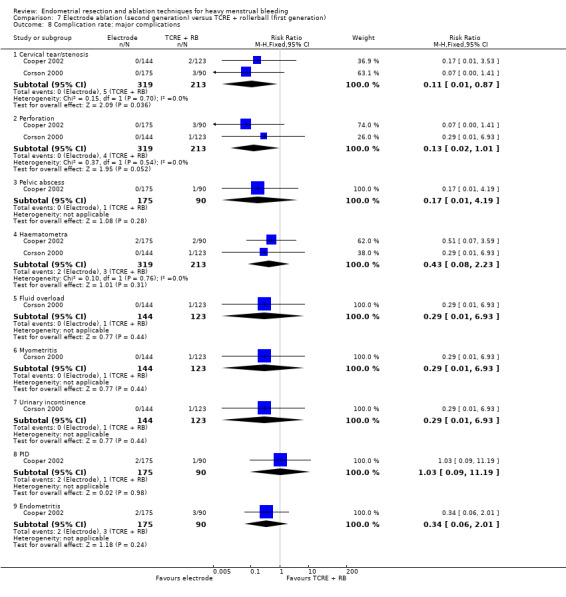
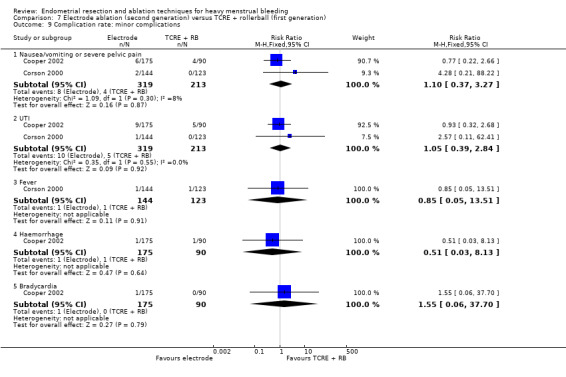
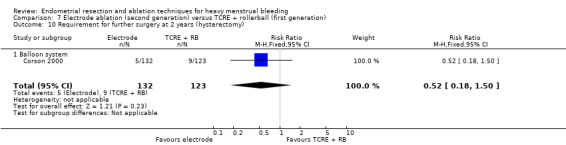
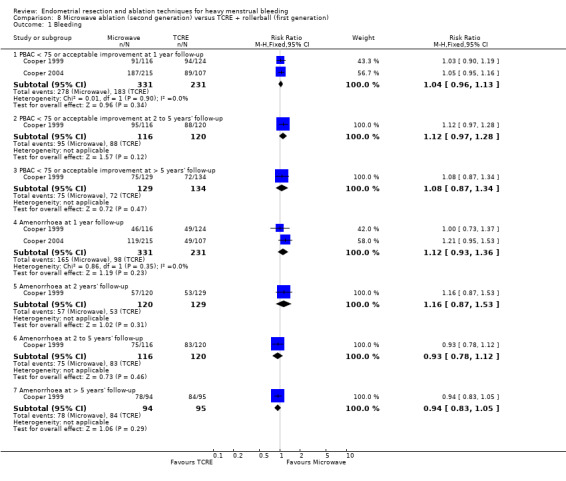
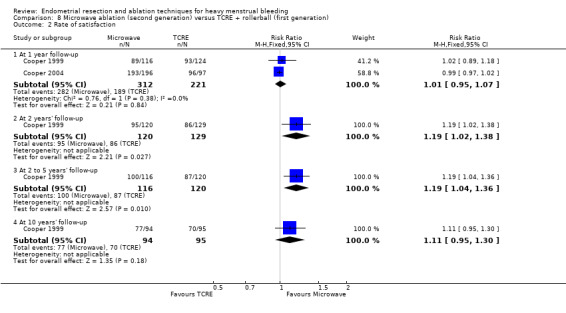
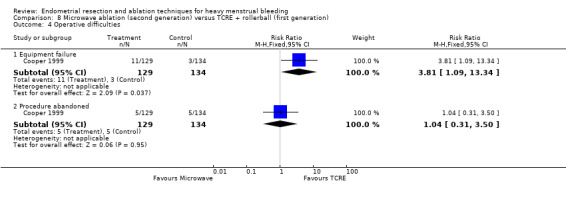
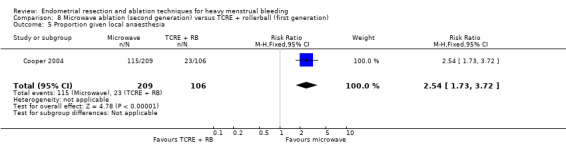
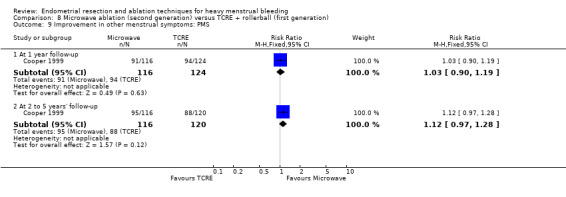
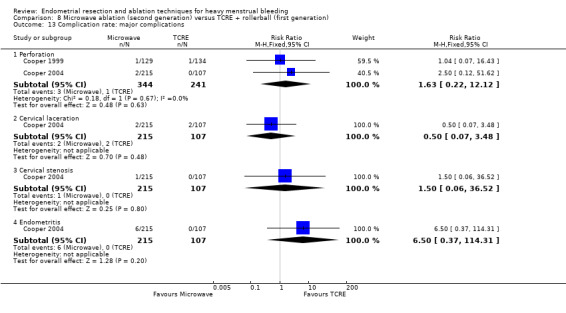
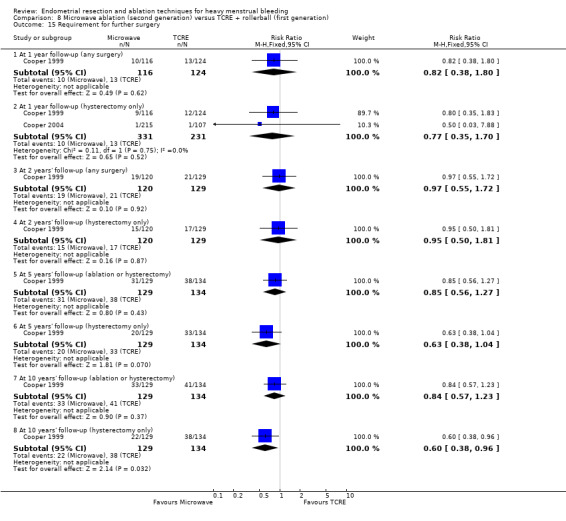
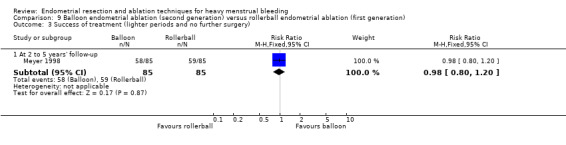
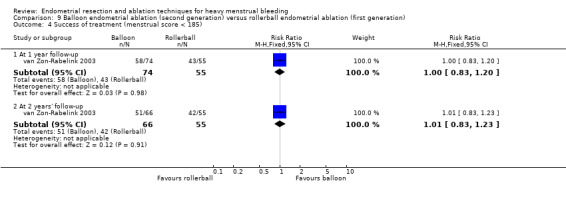
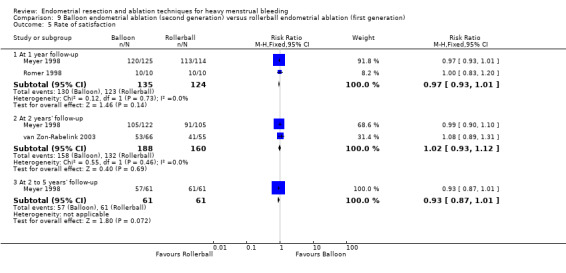
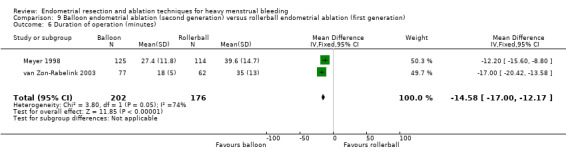
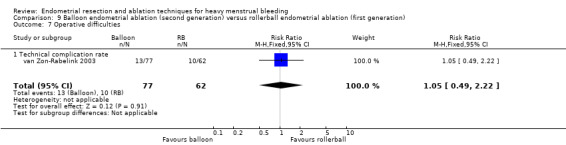
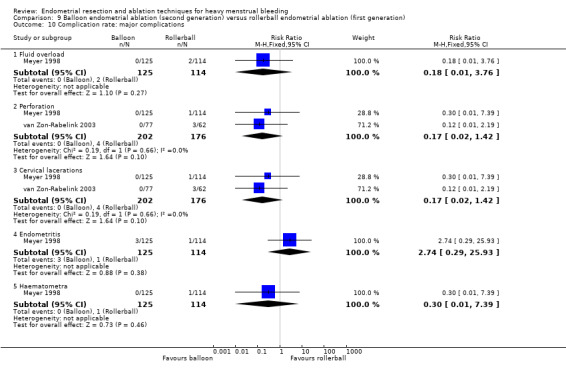
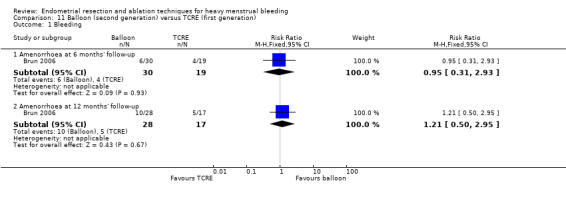
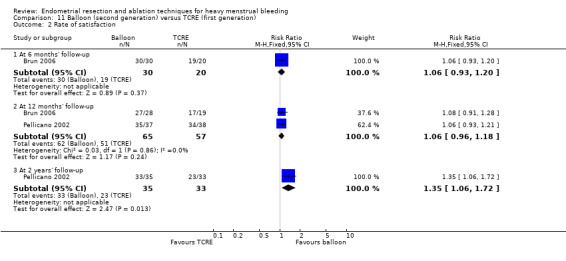
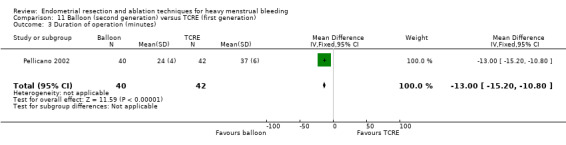
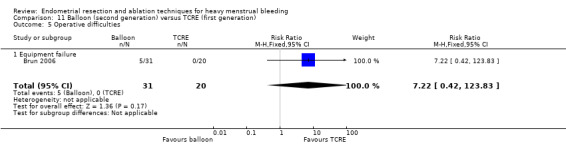
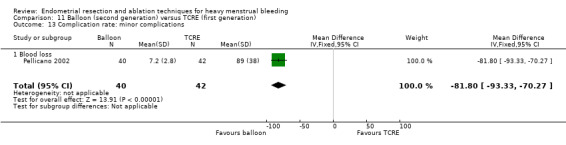
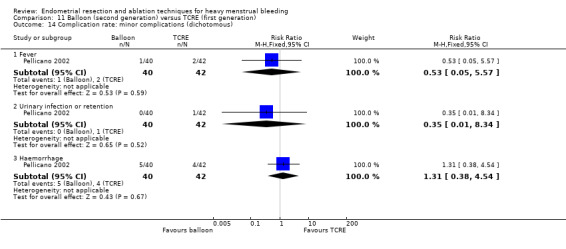
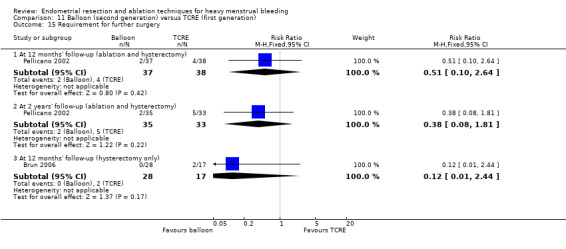
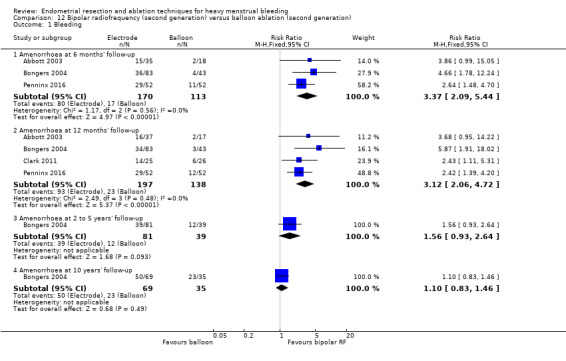
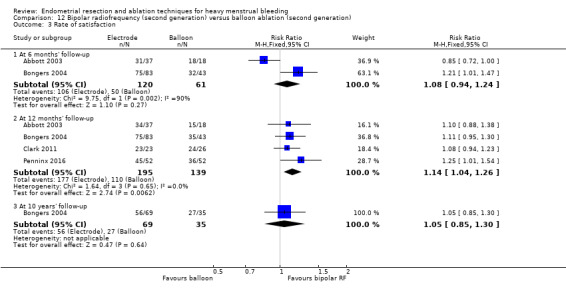
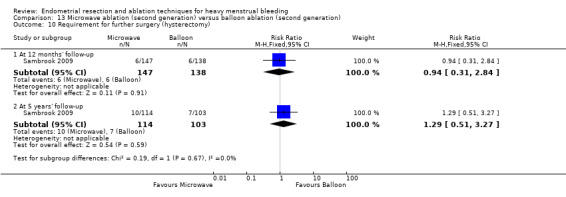
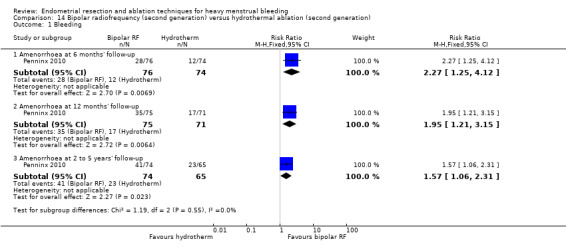
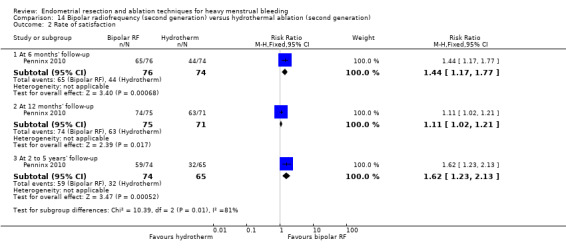
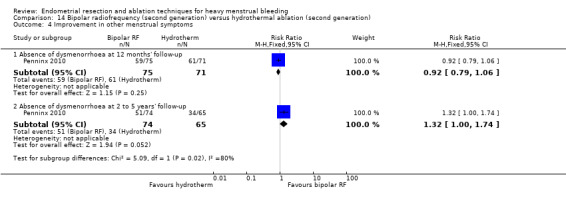
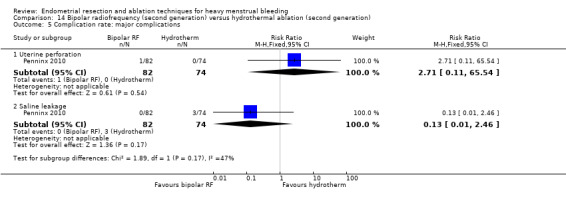
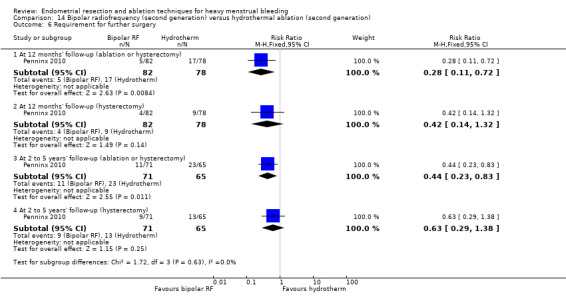
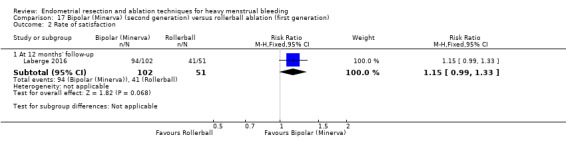
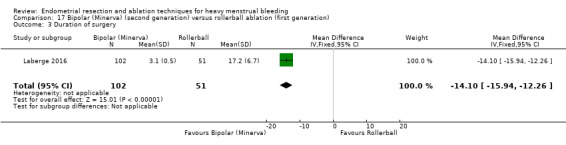
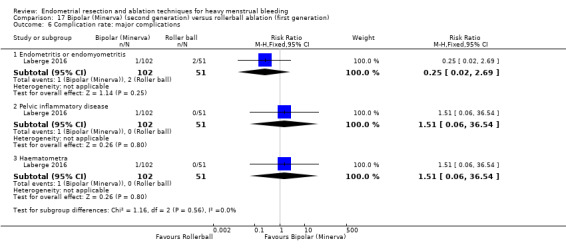
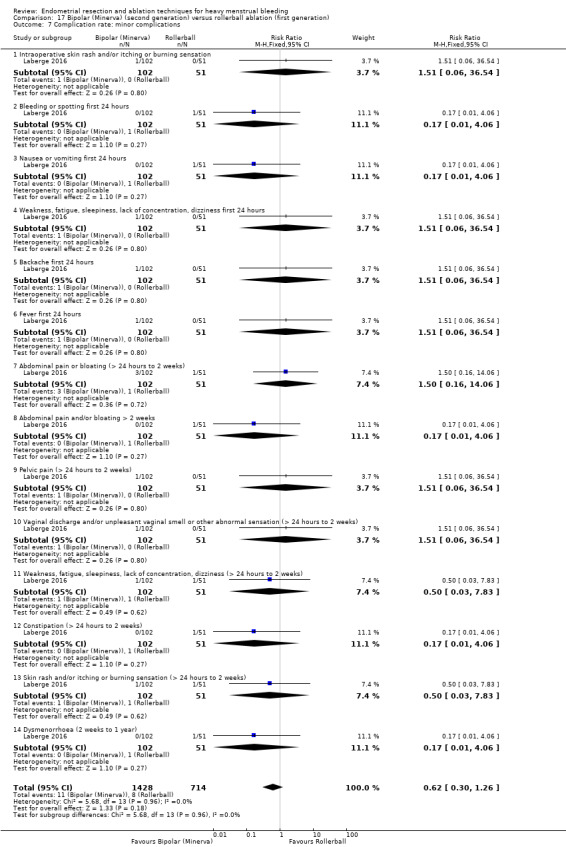
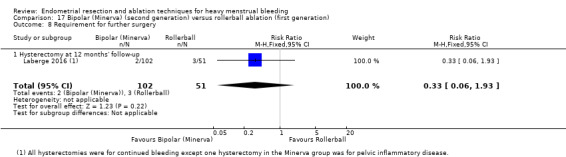
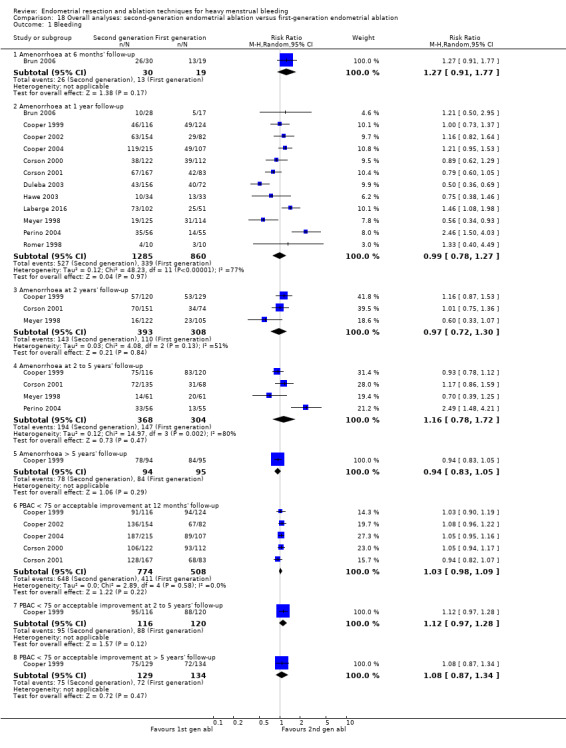
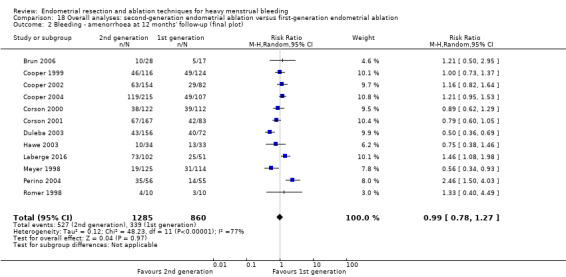
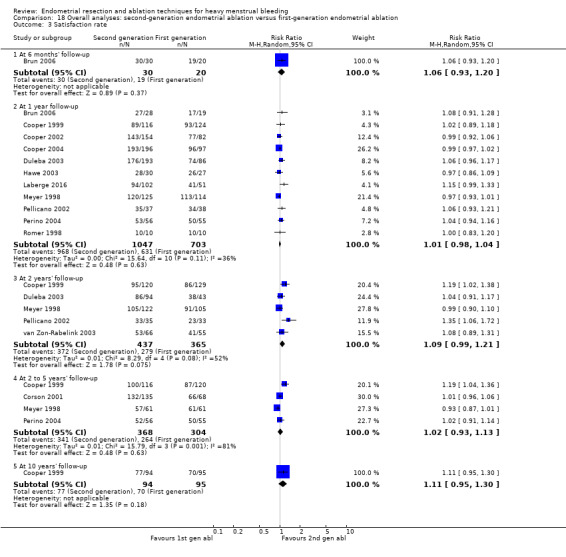
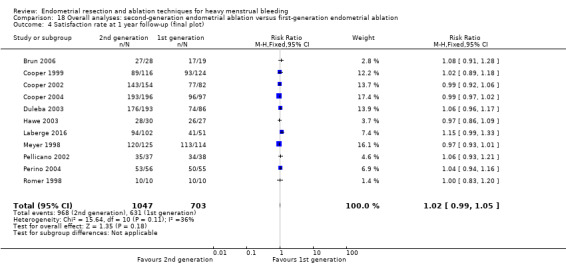
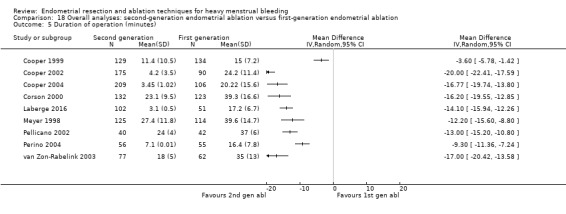
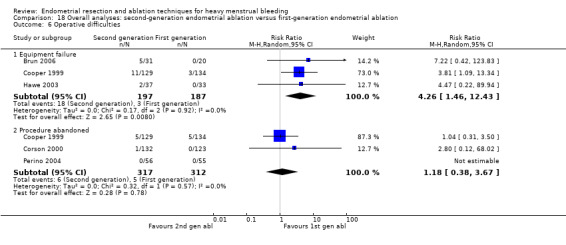
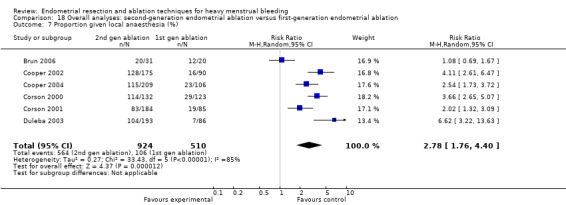
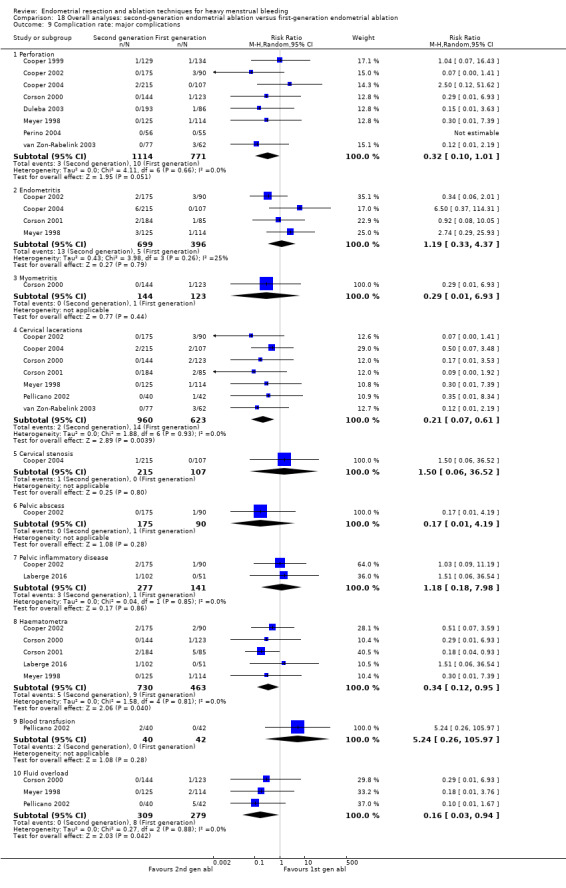
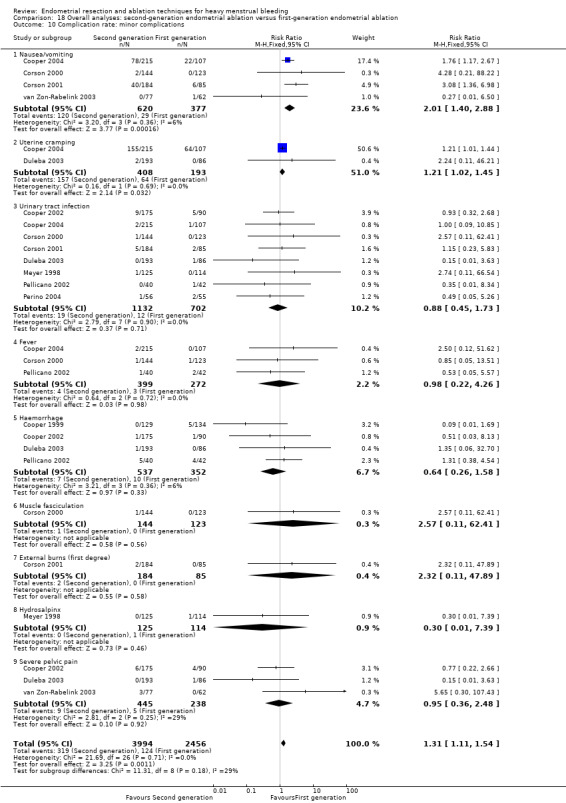
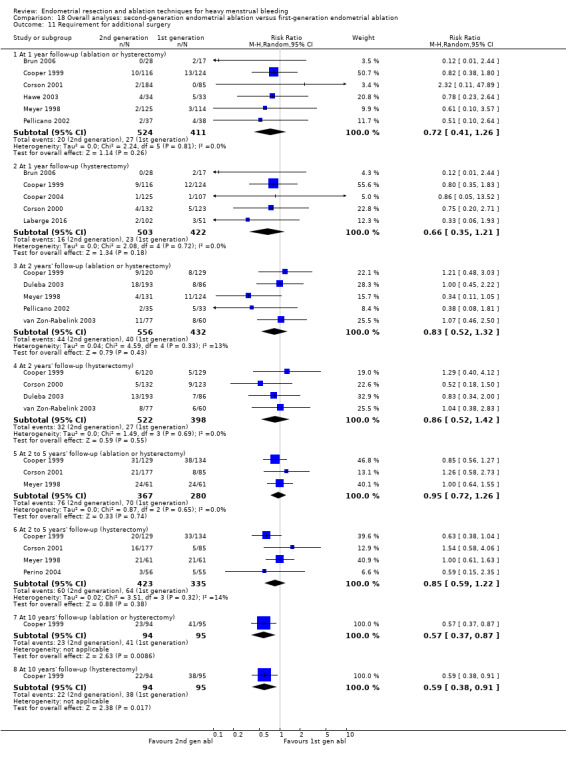
Main results: We included in this update 28 studies (4287 women) with sample sizes ranging from 20 to 372. Most studies had low risk of bias for randomisation, attrition, and selective reporting. Less than half of these studies had adequate allocation concealment, and most were unblinded. Using GRADE, we determined that the quality of evidence ranged from moderate to very low. We downgraded evidence for risk of bias, imprecision, and inconsistency.Overall comparison of second-generation versus first-generation (i.e. gold standard hysteroscopic ablative) techniques revealed no evidence of differences in amenorrhoea at 1 year and 2 to 5 years' follow-up (risk ratio (RR) 0.99, 95% confidence interval (CI) 0.78 to 1.27; 12 studies; 2145 women; I² = 77%; and RR 1.16, 95% CI 0.78 to 1.72; 672 women; 4 studies; I² = 80%; very low-quality evidence) and showed subjective improvement at 1 year follow-up based on a Pictorial Blood Assessment Chart (PBAC) (< 75 or acceptable improvement) (RR 1.03, 95% CI 0.98 to 1.09; 5 studies; 1282 women; I² = 0%; and RR 1.12, 95% CI 0.97 to 1.28; 236 women; 1 study; low-quality evidence). Study results showed no difference in patient satisfaction between second- and first-generation techniques at 1 year follow-up (RR 1.01, 95% CI 0.98 to 1.04; 11 studies; 1750 women; I² = 36%; low-quality evidence) nor at 2 to 5 years' follow-up (RR 1.02, 95% CI 0.93 to 1.13; 672 women; 4 studies; I² = 81%).Compared with first-generation techniques, second-generation endometrial ablation techniques were associated with shorter operating times (mean difference (MD) -13.52 minutes, 95% CI -16.90 to -10.13; 9 studies; 1822 women; low-quality evidence) and more often were performed under local rather than general anaesthesia (RR 2.8, 95% CI 1.8 to 4.4; 6 studies; 1434 women; low-quality evidence).We are uncertain whether perforation rates differed between second- and first-generation techniques (RR 0.32, 95% CI 0.10 to 1.01; 1885 women; 8 studies; I² = 0%).Trials reported little or no difference between second- and first-generation techniques in requirement for additional surgery (ablation or hysterectomy) at 1 year follow-up (RR 0.72, 95% CI 0.41 to 1.26; 6 studies: 935 women; low-quality evidence). At 5 years, results showed probably little or no difference between groups in the requirement for hysterectomy (RR 0.85, 95% CI 0.59 to 1.22; 4 studies; 758 women; moderate-quality evidence).
Authors' conclusions: Approaches to endometrial ablation have evolved from first-generation techniques to newer second- and third-generation approaches. Current evidence suggests that compared to first-generation techniques (endometrial laser ablation, transcervical resection of the endometrium, rollerball endometrial ablation), second-generation approaches (thermal balloon endometrial ablation, microwave endometrial ablation, hydrothermal ablation, bipolar radiofrequency endometrial ablation, endometrial cryotherapy) are of equivalent efficacy for heavy menstrual bleeding, with comparable rates of amenorrhoea and improvement on the PBAC. Second-generation techniques are associated with shorter operating times and are performed more often under local rather than general anaesthesia. It is uncertain whether perforation rates differed between second- and first-generation techniques. Evidence was insufficient to show which second-generation approaches were superior to others and to reveal the efficacy and safety of third-generation approaches versus first- and second-generation techniques.
Conflict of interest statement
MB, AL, CF, MG and JB did not report any conflicts of interest.
Figures
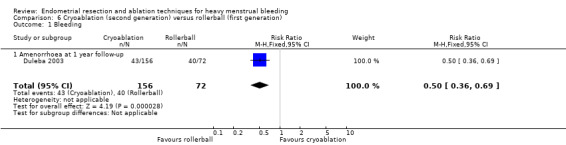
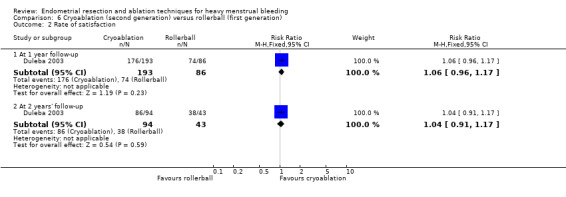
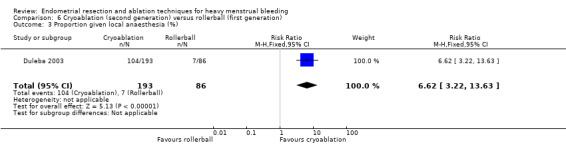
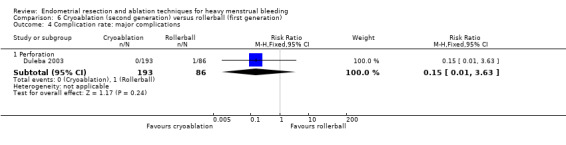
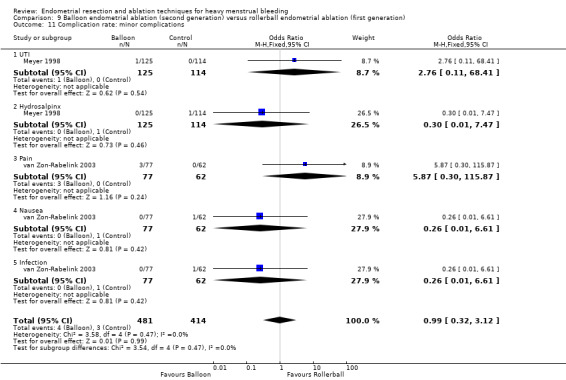
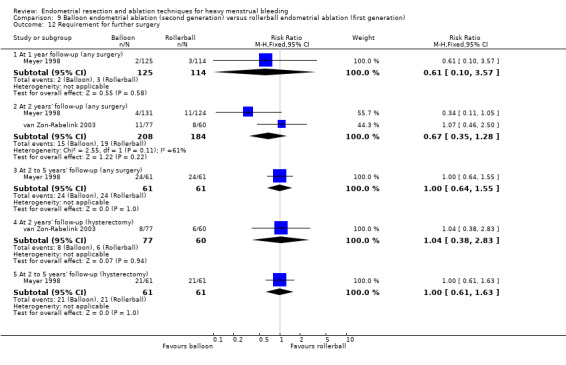
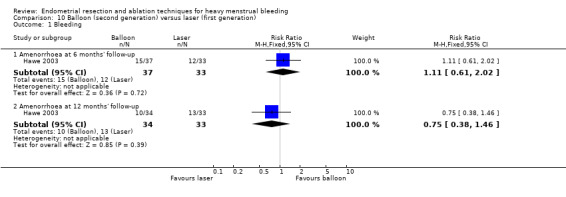
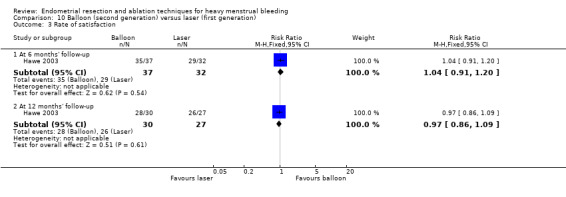
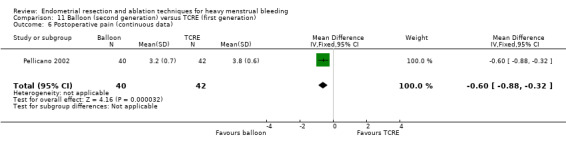
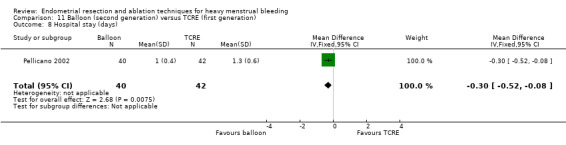
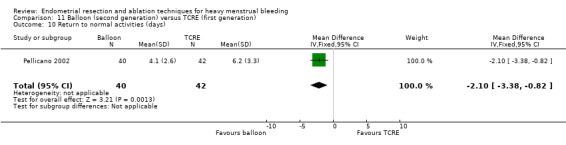
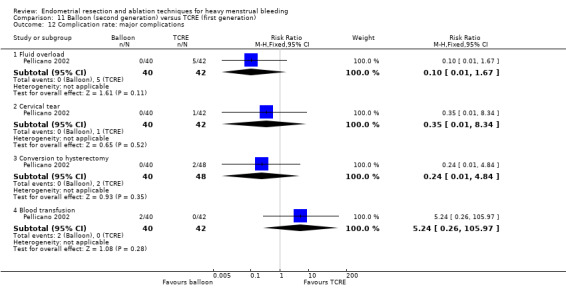
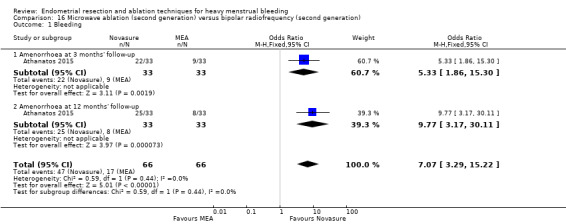
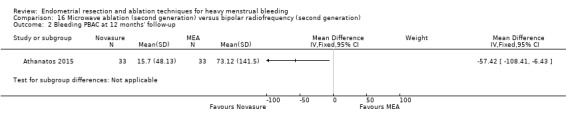
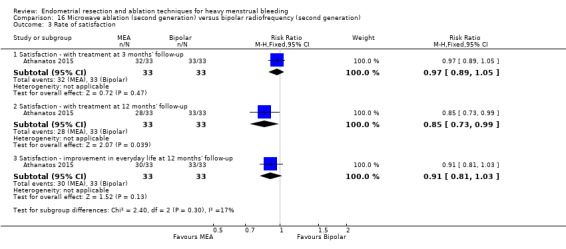
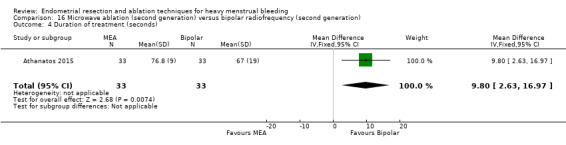
Update of
-
Endometrial resection and ablation techniques for heavy menstrual bleeding.Cochrane Database Syst Rev. 2013 Aug 30;(8):CD001501. doi: 10.1002/14651858.CD001501.pub4. Cochrane Database Syst Rev. 2013. Update in: Cochrane Database Syst Rev. 2019 Jan 22;1:CD001501. doi: 10.1002/14651858.CD001501.pub5. PMID: 23990373 Updated.
References
References to studies included in this review
Abbott 2003 {published data only}
-
- Abbott J, Hawe J, Hunter D, Garry R. A double‐blind randomized trial comparing the Cavaterm and the Novasure endometrial ablation systems for the treatment of dysfunctional uterine bleeding. Fertility and Sterility 2003;80(1):203‐8. - PubMed
Athanatos 2015 {published data only}
-
- Athanatos D, Pados G, Venetis C, Stamatopoulos P, Rousso D, Tsolakidis D, et al. Novasure impedance control system versus microwave endometrial ablation for the treatment of dysfunctional uterine bleeding: a double‐blind, randomized controlled trial. Clinical and Experimental Obstetrics & Gynecology 2015;42(3):347‐51. [PMID: 26152008] - PubMed
-
- Pados G. Treatment of dysfunctional uterine bleeding with second generation ablation devices: microwaves (MEAA) vs Bipolar Impedance Control System (Novasure). http://clinicaltrials.gov/show/NCT01173965.
Bhattacharya 1997 {published data only}
-
- Bhattacharya S, Cameron IM, Parkin DE, Abramovich DR, Mollison J, Pinion SB, et al. A pragmatic randomised comparison of transcervical resection of the endometrium with endometrial laser ablation for the treatment of menorrhagia. British Journal of Obstetrics and Gynaecology 1997;104:601‐7. - PubMed
Bongers 2004 {published data only}
-
- Bongers M, Herman M, Josien P, Mol BW. Ten‐year follow‐up of a randomized controlled trial comparing NovaSure and Thermachoice in endometrial ablation for dysfunctional uterine bleeding. Journal of Minimally Invasive Gynecology 2011;18(6 Suppl 1):S127.
-
- Bongers MY, Bourdrez P, Heintz PM, Brolmann HAM, Mol BWJ. Bipolar radio frequency endometrial ablation compared with balloon endometrial ablation in dysfunctional uterine bleeding: impact on patients' health‐related quality of life. Fertility and Sterility 2005;83(3):724‐34. - PubMed
-
- Bongers MY, Bourdrez P, Mol BWJ, Heintz APM, Brolmann HAM. Randomised controlled trial of bipolar radio‐frequency endometrial ablation and balloon endometrial ablation. British Journal of Obstetrics and Gynaecology 2004;111:1095‐102. - PubMed
-
- Kleijn JH, Engels R, Bourdrez P, Mol BWJ, Bongers MY. Five‐year follow up of a randomised controlled trial comparing NovaSure and ThermaChoice endometrial ablation. British Journal of Obstetrics and Gynaecology 2008;115:193‐8. - PubMed
Boujida 2002 {published data only}
-
- Boujida VH, Philipsen T, Pelle J, Joergensen JC. Five‐year follow‐up of endometrial ablation: endometrial coagulation versus endometrial resection. Obstetrics and Gynecology 2002;99:988‐92. - PubMed
-
- Furst SN, Philipsen T, Joergensen JC. Ten‐year follow‐up of endometrial ablation. Acta Obstetricia et Gynecologica 2007;86:334‐8. - PubMed
Brun 2006 {published data only}
-
- Brun J‐L, Raynal J, Burlet G, Galand B, Quereux C, Bernard P. Cavaterm thermal balloon endometrial ablation versus hysteroscopic endometrial resection to treat menorrhagia: the French, multicenter, randomized study. Journal of Minimally Invasive Gynecology 2006;13:424‐30. - PubMed
Clark 2011 {published data only}
-
- Clark TJ, Samuel N, Malick S, Middleton LJ, Daniels J, Gupta JK. Bipolar radiofrequency compared with thermal balloon endometrial ablation in the office. Obstetrics and Gynecology 2011;117:109‐18. - PubMed
Cooper 1999 {published data only}
-
- Bain C, Cooper KG, Parkin DE. Microwave endometrial ablation versus endometrial resection: a randomized controlled trial. Obstetrics and Gynecology 2002;99:983‐7. - PubMed
-
- Cooper KG, Bain C, Lawrie L, Parkin DE. A randomised comparison of microwave endometrial ablation with transcervical resection of the endometrium: follow up at a minimum of five years. British Journal of Obstetrics and Gynaecology 2005;112:470‐5. - PubMed
-
- Cooper KG, Bain C, Parkin DE. Comparison of microwave endometrial ablation and transcervical resection of the endometrium for treatment of heavy menstrual loss: a randomised trial. Lancet 1999;354:1859‐63. - PubMed
-
- Sambrook AM, Bain C, Parkin DE, Cooper KG. A randomised comparison of microwave endometrial ablation with transcervical resection of the endometrium: follow up at a minimum of 10 years. British Journal of Obstetrics and Gynaecology 2009;116:1033‐7. - PubMed
Cooper 2002 {published data only}
-
- Cooper J, Gimpelson R, Laberge P, Galen D, Garza‐Leal JG, Scott J, et al. A randomized, multicenter trial of safety and efficacy of the NovaSure system in the treatment of menorrhagia. Journal of the American Association of Gynecologic Laparoscopists 2002;9(4):418‐28. - PubMed
Cooper 2004 {published data only}
-
- Cooper JM, Anderson TL, Fortin CA, Jack SA, Plentl MB. Microwave endometrial ablation vs rollerball electroablation for menorrhagia: a multicenter randomized trial. Journal of the American Association of Gynecologic Laparoscopists 2004;11(3):394‐403. - PubMed
Corson 2000 {published data only}
-
- Corson SL, Brill AI, Brooks PG, Cooper JM, Indman PD, Liu JH, et al. Interim results of the American Vesta trial of endometrial ablation. Journal of the American Association of Gynecologic Laparoscopists 1999;6(1):45‐9. - PubMed
-
- Corson SL, Brill AI, Brooks PG, Cooper JM, Indman PD, Liu JH, et al. One‐year results of the Vesta system for endometrial ablation. Journal of the American Association of Gynecologic Laparoscopists 2000;7(4):489‐97. - PubMed
Corson 2001 {published data only}
-
- Corson SL. A multicenter evaluation of endometrial ablation by hydrothermablator and rollerball for treatment of menorrhagia. Journal of the American Association of Gynecologic Laparoscopists 2001;8(3):359‐67. - PubMed
-
- Goldrath MH. Evaluation of hydrothermablator and rollerball endometrial ablation for menorrhagia 3 years after treatment. Journal of the American Association of Gynecologic Laparoscopists 2003;10(4):505‐11. - PubMed
-
- Loffer F. A clinical comparison of hydrothermablation (HTA) and rollerball for endometrial ablation to treat menorrhagia: a randomized multicenter clinical trial. XVI FIGO World Congress of Obstetrics & Gynecology. 2000; Vol. Abstract Book 2:95.
Duleba 2003 {published data only}
-
- Duleba AJ, Heppard MC, Soderstrom RM, Townsend DE. A randomized study comparing endometrial cryoablation and rollerball electroablation for treatment of dysfunctional uterine bleeding. Journal of the American Association of Gynecologic Laparoscopists 2003;10(1):17‐26. - PubMed
-
- Townsend DE, Duleba AJ, Wilkes MM, et al. Durability of treatment effects after cryoablation versus rollerball electroablation for abnormal uterine bleeding: two‐year results of a multicenter randomized trial. American Journal of Obstetrics and Gynecology 2003;188:699‐701. - PubMed
Ghazizadeh 2014 {published data only}
-
- Ghazizadeh S, Panahi Z, Ghanbari Z, Tarafdari Menshadi A, Farahmandian T, Javadian P. Comparative efficacy of NovaSure, the levonorgestrel‐releasing intrauterine system, and hysteroscopic endometrial resection in the treatment of menorrhagia: a randomized clinical trial. Journal of Gynecologic Surgery 2014;30(4):215‐8. [DOI: 10.1089/gyn.2012.0041] - DOI
Hawe 2003 {published data only}
-
- Hawe J, Abbott J, Hunter D, Phillips G, Garry R. A randomised controlled trial comparing the Cavaterm endometrial ablation system with the Nd:YAG laser for the treatment of dysfunctional uterine bleeding. British Journal of Obstetrics and Gynaecology 2003;110:350‐7. - PubMed
Laberge 2016 {published data only}
-
- Laberge P, Garza‐Leal J, Fortin C, Basinski C, Thiel J, Leyland N, et al. A prospective, randomized, multi‐center, controlled, international clinical study of the safety and efficacy of the Minerva endometrial ablation system: 6 and 12‐month follow‐up results. Journal of Minimally Invasive Gynecology. 2014. - PubMed
-
- Laberge P, Garza‐Leal J, Fortin C, Grainger D, Johns DA, Adkins RT, et al. A randomized controlled multicenter US Food and Drug Administration trial of the safety and efficacy of the Minerva Endometrial Ablation System: one‐year follow‐up results. Journal of Minimally Invasive Gynecology 2017;24(1):124‐32. [DOI: 10.1016/j.jmig.2016.09.009] - DOI - PubMed
-
- Laberge P, Garza‐Leal J, Fortin C, Thiel J, Johns D, Grainger D, et al. A randomized, controlled, multi‐center trial of the safety and efficacy of the Minerva Endometrial Ablation System: one‐year follow‐up results. Journal of Minimally Invasive Gynecology. 2016; Vol. 23:S1‐S252. - PubMed
McClure 1992 {published data only}
-
- McClure N, Marners M, Healy DL, Hill DJ, Lawrence AS, Wingfield M, et al. A quantitative assessment of endometrial electrocautery in the management of menorrhagia and a comparative report of argon laser endometrial ablation. Gynaecological Endoscopy 1992;1:199‐202.
Meyer 1998 {published data only}
-
- Grainger DA, Tjaden DO, Rowland C, Meyer WR. Thermal balloon and rollerball ablation to treat menorrhagia: two‐year results of a multicenter, prospective, randomized clinical trial. Journal of the American Association of Gynecologic Laparoscopists 2000;7(2):175‐9. - PubMed
-
- Loffer FD. Five year post‐procedure follow‐up of patients participating in a randomised trial of uterine balloon therapy vs rollerball ablation for the treatment of menorrhagia. Journal of the American Association of Gynecologic Laparoscopy 2001;8(1):48‐54.
-
- Loffer FD. Three‐year comparison of thermal balloon and rollerball ablation in treatment of menorrhagia. Journal of the American Association of Gynecologic Laparoscopists 2001;8(1):48‐54. - PubMed
-
- Meyer WR, Walsh BW, Grainger DA, Peacock LM, Loffer FD, Steege JF. Thermal balloon and rollerball ablation to treat menorrhagia: a multicenter comparison. Obstetrics and Gynecology 1998;92:98‐103. - PubMed
Onoglu 2007 {published data only}
-
- Onoglu A, Taskin O, Inal M, Sadik S, Simsek M, Akar M, et al. Comparison of the long‐term histopathologic and morphologic changes after endometrial rollerball ablation and resection: a prospective randomized trial. Journal of Minimally Invasive Gynecology 2007;14:39‐42. - PubMed
Pellicano 2002 {published data only}
-
- Pellicano M, Guida M, Acunzo G, Cirillo D, Bifulco G, Nappi C. Hysteroscopic transcervical endometrial resection versus thermal destruction for menorrhagia: a prospective randomized trial on satisfaction rate. American Journal of Obstetrics and Gynecology 2002;187:545‐50. - PubMed
Penninx 2010 {published data only}
-
- Bongers M, Herman M, Penninx J, Mol BW. Longterm follow‐up of a randomized controlled trial comparing NovaSure and hydrothermablation for dysfunctional uterine bleeding. Journal of Minimally Invasive Gynecology 2011;18(6 Suppl 1):S34.
-
- Penninx JPM, Herman MC, Mol BW, Bongers MY. Five‐year follow‐up after comparing bipolar endometrial ablation with hydrothermablation for menorrhagia. Obstetrics and Gynecology 2011;118:1287‐92. - PubMed
-
- Penninx JPM, Mol BW, Engels R, Rumste MME, Kleijn C, Koks CAM, et al. Bipolar radiofrequency endometrial ablation compared with hydrothermablation for dysfunctional uterine bleeding. Obstetrics and Gynecology 2010;116:819‐26. - PubMed
Penninx 2016 {published data only}
-
- Penninx J, Bongers M. Bipolar radiofrequency endometrial ablation versus thermablate balloon ablation for dysfunctional bleeding in the outpatient clinic: a randomized controlled trial. www.controlled‐trials.com/ISRCTN17974690.
-
- Penninx J, Herman M, Mol B, Kruitwagen R, Bongers M. Bipolar radiofrequency endometrial ablation versus Thermablate balloon ablation for dysfunctional bleeding in the outpatient clinic: a randomized controlled trial. Journal of Minimally Invasive Gynecology 2012;19(6):S21‐S22. [DOI: 10.1016/j.jmig.2012.08.076] - DOI
-
- Penninx JPM, Herman MC, Mol BW, Bongers MY. Bipolar radiofrequency endometrial ablation versus thermablate balloon ablation for dysfunctional bleeding in the outpatient clinic: a randomized controlled trial. Journal of Minimally Invasive Gynecology 2012;19(6 Suppl 1):S21‐2.
Perino 2004 {published data only}
-
- Perino A, Castelli A, Cucinella G, Biondo A, Pane A, Venezia R. A randomized comparison of endometrial laser intrauterine thermotherapy and hysteroscopic endometrial resection. Fertility and Sterility 2004;82:731‐4. - PubMed
Romer 1998 {published data only}
-
- Romer T. The treatment of recurrent menorrhagias ‐ Cavaterm‐balloon‐coagulation versus Rollerball‐endometrial ablation ‐ a prospective randomized comparative study [Die therapie rezidivierender Menorrhagien ‐ Cavaterm‐Ballon‐Koagulatioon versus Roller‐Ball‐Endometriumkoagulation ‐ eine prospektive randomisierte Vergleichsstudie]. Zentralblatt fur Gynakologie 1998;120(10):511‐4. - PubMed
Sambrook 2009 {published data only}
-
- Sambrook AM, Cooper KG, Campbell MK, Cook JA. Clinical outcomes from a randomised comparison of microwave endometrial ablation with thermal balloon endometrial ablation for the treatment of heavy menstrual bleeding. British Journal of Obstetrics and Gynaecology 2009;116:1038‐45. - PubMed
Thabet 2010 {published data only}
-
- Thabet SMA. New attempt using ablative curettage technique for managing benign premenopausal uterine bleeding. Obstetrics and Gynaecology Research 2010;36(4):803‐9. - PubMed
van Zon‐Rabelink 2003 {published data only}
-
- Zon‐Rabelink IAA, Vleugels MPH. Treating menorrhagia with endometrial ablation: rollerball electrocoagulation versus thermal ablation with the uterine balloon. Gynaecological Endoscopy Abstract from the 6th Annual Congress of the European Society for Gynaecological Endoscopy 1997;6 Suppl 2:41.
-
- Zon‐Rabelink IAA, Vleugels MPH, Merkus HMWM, Graaf R. Efficacy and satisfaction rate comparing endometrial ablation by rollerball electrocoagulation to uterine balloon thermal ablation in a randomised controlled trial. European Journal of Obstetrics, Gynecology, and Reproductive Biology 2004;114(1):97‐103. - PubMed
-
- Zon‐Rabelink IAA, Vleugels MPH, Merkus HMWM, Graaf R. Endometrial ablation by rollerball electrocoagulation compared to uterine balloon thermal ablation. Technical and safety aspects. European Journal of Obstetrics, Gynecology, and Reproductive Biology 2003;110:220‐3. - PubMed
Vercellini 1999 {published data only}
-
- Vercellini P, Oldani S, Yaylayan L, Zaina B, Giorgi O, Crosignani PG. Randomised comparison of vaporising electrode and cutting loop for endometrial ablation. Obstetrics and Gynecology 1999;94:521‐7. - PubMed
References to studies excluded from this review
Abd Ek Hameed 2012 {published data only}
-
- Abd Ek Hammeed AA. Endometrial thermal balloon ablation by a simple technique using Foley’s catheter with or without pre ablation endometrial curettage to treat cases with intractable menorrhagia. Middle East Fertility Society Journal 2012;17(2):116‐21.
Cash 2012 {published data only}
-
- Cash C, Garza‐Leal J, Donovan A, Guidry C, Romanowski C, Patel B. Clinical evaluation of long‐term safety and effectiveness of a third‐generation thermal uterine balloon therapy system for heavy menstrual bleeding. Journal of Minimally Invasive Gynecology 2012;19(4):469‐76. - PubMed
Chang 2009 {published data only}
-
- Chang P, Vilos G, Abu‐Rafea B, Hollett‐Caines J, Abyaneh Z, Edris F. Comparison of clinical outcomes with low‐voltage (cut) versus high‐voltage (coag) waveforms during hysteroscopic endometrial ablation with the rollerball: a pilot study. Journal of Minimally Invasive Gynecology 2009;1:350‐4. - PubMed
Cooper 2012 {unpublished data only}
-
- Cooper K. Blind versus visual endometrial ablation: a randomised controlled trial. http://www.controlled‐trials.com/mrct/trial/2292665/. [this trial did not take place due to lack of funding]
El‐Nashar 2009 {published data only}
Feng 2006 {published data only}
-
- Feng LM, Gao WL. Clinical analysis of abnormal uterine bleeding treatment with Thermablate EAS. Beijing da Xue Xue Bao 2006;38(4):432‐5. - PubMed
Shokeir 2013 {published data only}
-
- Shokeir T, Eid M, Abdel‐Hady ES. Does adjuvant long‐acting gestagen therapy improve the outcome of hysteroscopic endometrial resection in women of low‐resource settings with heavy menstrual bleeding?. Journal of Minimally Invasive Gynecology 2013;201(2):222‐6. - PubMed
Soysal 2001 {published data only}
-
- Soysal ME, Soysal SK, Vicdan K. Thermal balloon ablation in myoma‐induced menorrhagia under local anaesthesia. Gynecologic and Obstetric Investigation 2001;51:128‐33. - PubMed
Vihko 2003 {published data only}
-
- Vihko KK, Raitala R, Taina E. Endometrial thermoablation for treatment of menorrhagia: comparison of two methods in outpatient setting. Acta Obstetricia et Gynecologica Scandinavian 2003;82:269‐74. - PubMed
References to studies awaiting assessment
Feng 2014 {published data only}
-
- Feng L, Zhang Z, Yang Q, Chen Q. Preliminary results of a randomized controlled trial of the Cardea GEA System versus transcervical resection of the endometrium (TCRE) combined with roller‐ball ablation for the treatment of abnormal uterine bleeding. Journal of Minimally Invasive Gynecology 2014;21:S139.
Hamza 2005 {published data only}
-
- Hamza A, Ismail MT, Abu Shady Y, Hawas NG. Resection versus coagulation techniques of ablation in the management of dysfunctional uterine bleeding. Royal College of Obstetricians and Gynaecologists 6th International Scientific Meeting, Cairo Egypt. 27‐30 September 2005.
NCT00549159 {unpublished data only}
-
- Yu Y, Liu N. Multicenter randomized clinical trial to evaluate the safety and effectiveness of Cavaterm TM thermal balloon endometrial ablation in women with dysfunctional uterine bleeding compared to transcervical resection of the endometrium (TCRE). http://clinicaltrials.gov/show/NCT00549159 accessed May 2018.
References to ongoing studies
NCT02642926 {published data only}
-
- Nazac A. Comparison of the efficiency of bipolar energy versus monopolar energy in endometrial ablation in women having menorrhagia. Clinicaltrials.gov accessed May 2018. [https://clinicaltrials.gov/ct2/show/NCT02642926]
Additional references
Baggish 1995
-
- Baggish MS, Paraiso M, Brexnock EM, Griffey S. A computer‐controlled, continuously circulating hot irrigating system for endometrial ablation. American Journal of Obstetrics and Gynecology 1995;173:1842‐8. [PMID: 8610773] - PubMed
Bridgman 2000
-
- Bridgman SA, Dunn KM. Has endometrial ablation replaced hysterectomy for the treatment of dysfunctional uterine bleeding? National figures. British Journal of Obstetrics and Gynaecology. 2000;107:531‐4. [PMID: 10759274] - PubMed
COMET 2018
-
- Cooper N, Khan K. Defining core outcomes for clinical trials of heavy menstrual bleeding: a Core Outcome Sets for Gynaecological conditions (COGS) project. COMET Initiative accessed May 2018. [http://www.comet‐initiative.org/studies/details/789]
Cooper 2011
-
- Cooper K, Lee AJ, Chien P, Raja EA, Timmaraju V, Bhattacharya S. Outcomes following hysterectomy or endometrial ablation for heavy menstrual bleeding: retrospective analysis of hospital episode statistics in Scotland. British Journal of Obstetrics and Gynaecology 2011;118(10):1171‐9. [DOI: 10.1111/j.1471-0528.2011.03011.x] - DOI - PubMed
Cooper 2000
-
- Cooper JM, Erickson ML. Global endometrial technologies. Obstetrics and Gynecology Clinics of North America 2000;27(2):385‐96. [PMID: 10857128] - PubMed
Cromwell 2009
Daniels 2012
-
- Daniels JP, Middleton LJ, Champaneria R, Khan KS, Cooper K, Mol BWJ, et al. on behalf of the International Heavy Menstrual Bleeding IPG Meta‐analysis Collaborative Group. Second generation endometrial ablation techniques for heavy menstrual bleeding: network meta‐analysis. British Medical Journal 2012;344:e2564. [PMID: 22529302] - PMC - PubMed
de Souza 2010
-
- Souza S, S.Camargos A, Rezende C, Pereira F, Araujo C, Silva Filho A. A randomized prospective trial comparing the levonorgestrel‐releasing intrauterine system with thermal balloon ablation for the treatment of heavy menstrual bleeding. Contraception 2010;81(3):226‐31. [DOI: 10.1016/j.contraception.2009.09.012] - DOI - PubMed
DeCherney 1983
-
- DeCherney AH, Polan ML. Hysteroscopic management of intrauterine lesions and intractable uterine bleeding. Obstetrics & Gynecology 1983;61:392‐7. [PMID: 6823383] - PubMed
DeCherney 1987
-
- DeCherney AH, Diamond MP, Lavey G, Polan ML. Endometrial ablation for intractable uterine bleeding: hysteroscopic resection. Obstetrics and Gynecology 1987;70:668‐70. [PMID: 3627634] - PubMed
Donnez 1996
-
- Donnez J, Polet R, Mathieu PE, Konwitz E, Nisolle M, Casanas‐Roux F. Endometrial laser interstitial hyperthermy: a potential modality for endometrial ablation. Obstetrics and Gynecology 1996;87:459‐64. [PMID: 8598976] - PubMed
Ergun 2012
-
- Ergun B, Kuru O, Sen S, Kilic Y, Bastu E. Rollerball endometrial ablation versus levonorgestrel releasing intrauterine system in the management of abnormal uterine bleeding. Journal Romanian Society of Ultrasonography in Obstetrics and Gynecology 2012;8(30):199‐201. [CRSREF 3289369]
Fehr 1995
-
- Fehr MK, Madsen SJ, Svaasand LO, Tromberg BJ, Eusebio J, Berns MW, et al. Intrauterine light delivery for photodynamic therapy of the human endometrium. Human Reproduction 1995;10:3067‐72. [PMID: 8747076] - PubMed
Fraser 2015
-
- Fraser I, Mansour S, Breymann D, Hoffman C, Mezzacasa C, Petraglia A. Prevalence of heavy menstrual bleeding and experiences of affected women in a European patient survey [Prevalence of heavy menstrual bleeding and experiences of affected women in a European patient survey]. International Journal of Gynaecology & Obstetrics 2015;128(3):196‐200. [DOI: 10.1016/j.ijgo.2014.09.027] - DOI - PubMed
Garside 2004
-
- Garside R, Stein K, Wyatt K, Round A, Price A. The effectiveness and cost‐effectiveness of microwave and thermal balloon endometrial ablation for heavy menstrual bleeding: a systematic review and economic modelling. Health Technology Assessment 2004; Vol. 8, issue 3:1‐155. [PMID: 14754561] - PubMed
Garside 2005
-
- Garside R, Stein K, Wyatt K, Round A. Microwave and thermal balloon ablation for heavy menstrual bleeding: a systematic review. British Journal of Obstetrics and Gynaecology 2005;112:12‐23. [PMID: 15663392] - PubMed
Goldrath 1981
-
- Goldrath MH, Fuller TA, Segal S. Laser photo‐vaporization of endometrium for the treatment of menorrhagia. American Journal of Obstetrics and Gynecology 1981;140:14‐9. [PMID: 7223809] - PubMed
Grant 2000
Hallberg 1964
-
- Hallberg L, Nilsson L. Determination of menstrual blood loss. Scandinavian Journal of Clinical and Laboratory Investigation 1964;16:244‐8. [PMID: 14161862] - PubMed
Hallberg 1966
-
- Hallberg L, Hogdahl AM, Nilsson L, Rybo G. Menstrual blood loss ‐ a population study. Acta Obstetricia et Gynecologica Scandinavian 1966;45:320‐51. [PMID: 5922481] - PubMed
Higgins 2011
-
- Higgins JPT, Green S (editors). Cochrane Handbook for Systematic Reviews of Interventions Version 5.1.0 (updated March 2011). The Cochrane Collaboration, 2011, 2011. [http://training.cochrane.org/handbook]
Higham 1990
-
- Higham JM, O'Brien PMS, Shaw RW. Assessment of menstrual blood loss using a pictorial chart. British Journal of Obstetrics and Gynaecology 1990;97:734‐9. [PMID: 2400752] - PubMed
Irvine 1998
-
- Irvine GA, Campbell‐Brown MB, Lumsden MA, Heikkila A, Walker JJ, Cameron IT. Randomised comparative trial of the levonorgestrel intrauterine system and norethisterone for the treatment of idiopathic menorrhagia. British Journal of Obstetrics and Gynaecology 1998;105:592‐8. [PMID: 9647148] - PubMed
Kalampokas 2017
Lethaby 2009
Lin 1988
-
- Lin BL, Miyamoto N, Tomomatu M. The development of a new hysteroscopic resectoscope and its clinical applications on transcervical resection and endometrial ablation. Japanese Journal of Gynecologic and Obstetric Endoscopy 1988;4:56‐9.
Madhu 2009
Maresh 2002
-
- Maresh MJA, Metcalfe MA, McPherson K, Overton C, Hall V, Hargreaves J. The VALUE national hysterectomy study: description of the patients and their surgery. British Journal of Obstetrics and Gynaecology 2002;109:302‐12. [PMID: 11950186] - PubMed
Marjoribanks 2010
-
- Marjoribanks J, Lethaby A, Farquhar C. Surgery versus medical therapy for heavy menstrual bleeding. Cochrane Database of Systematic Reviews 2010, Issue 9. [DOI: 10.1002/14651858.CD003855.pub2] - DOI
Matteson 2015
-
- Matteson K, Scott D, Raker C, Clark M. The menstrual bleeding questionnaire: development and validation of a comprehensive patient‐reported outcome instrument for heavy menstrual bleeding. British Journal of Obstetrics and Gynaecology 2015;122(5):681‐9. [DOI: 10.1111/1471-0528.13273] - DOI - PMC - PubMed
McGurgan 2007
Middleton 2010
-
- Middleton LJ, Champaneria R, Daniels JP, Bhattacharya S, Cooper KG, Hilken NH, et al. for the International Heavy Menstrual Bleeding Individual Patient Data Meta‐analysis Collaborative Group. Hysterectomy, endometrial destruction, and levonorgestrel releasing intrauterine system (Mirena) for heavy menstrual bleeding: systematic review and meta‐analysis of data from individual patients. British Medical Journal 2010;341:c3929. [DOI: 10.1136/bmj.c3929] - DOI - PMC - PubMed
Munro 2012
Munroe 2006
Nagele 1998
-
- Nagele F, Rubinger T, Magos A. Why do women choose endometrial ablation rather than hysterectomy?. Fertility and Sterility 1998;69(6):1063‐6. [PMID: 9627293] - PubMed
Newton 1977
-
- Newton J, Barnard G, Collins W. A rapid method for measuring menstrual blood loss using automatic extraction. Contraception 1977;16:269‐82. [DOI: 10.1016/0010-7824(77)90026-9] - DOI
NHS 2011
-
- NHS Information Centre. Hospital episode statistics 2011. NHS 2011.
NICE 2018
-
- National Institute of Health and Care Excellence (NICE). Heavy menstrual bleeding. National Institute for Health and Care Excellence (2018) Heavy menstrual bleeding (NICE Guideline 88). Available at: https://www.nice.org.uk/guidance/conditions‐and‐diseases/gynaecological‐... [Accessed 22 May 2018]. [https://www.nice.org.uk/guidance/conditions‐and‐diseases/gynaecological‐...
NZ HMB Guideline 1998
-
- Working Party on behalf of the National Health Committee of New Zealand. Guidelines for the management of heavy menstrual bleeding. Guidelines for the management of heavy menstrual bleeding in New Zealand. Available at file:///P:/Cochrane/various%20cochrane/guidelines‐management‐heavy‐menstrual‐bleeding%20NZ%201998.pdf accessed Nov 2017 1998.
Overton 1997
-
- Overton C, Hargreaves J, Maresh M. A national survey of the complications of endometrial destruction for menstrual disorders: the MISTLETOE study. British Journal of Obstetrics and Gynaecology 1997;104(12):1351‐9. - PubMed
Papadopoulos 2007
Pitroff 1993
-
- Pitroff R, Majia S, Murray A. Initial experience with transcervical cryoablation using saline as a uterine distension medium. Minimally Invasive Therapy 1993;2:69‐73. [DOI: 10.3109/13645709309152670] - DOI
RCOG 1995
-
- RCOG Medical Audit Unit. Mistletoe Report for the Fifth Bulletin. Manchester: RCOG, 1995.
Reid 2005
-
- Reid PC, Mukri F. Trends in number of hysterectomies performed in England for menorrhagia: examination of health episode statistics, 1989 to 2002‐3. British Medical Journal 2005;330:938‐9. [DOI: 10.1136/bmj.38376.505382.AE; PMCID: PMC556338 ] - DOI - PMC - PubMed
Roberts 2011
-
- Roberts TE, Tsourapas A, Middleton LJ, Champaneria R, Daniels JP, Cooper KG, et al. Hysterectomy, endometrial ablation, and levonorgestrel releasing intrauterine system (Mirena) for treatment of heavy menstrual bleeding: cost effectiveness analysis. British Medical Journal 2011;342:d2202. [PMCID: PMC3082380] - PMC - PubMed
Sharp 1995
-
- Sharp NC, Cronin N, Feldberg I, Evans M, Hodgson D, Ellis S. Microwaves for menorrhagia: a new fast technique for endometrial ablation. Lancet 1995;346(8981):1003‐4. [PMID: 7475547] - PubMed
Shavell 2012
-
- Shavell V, Diamond M, Senter J, Kruger M, Johns A. Hysterectomy subsequent to endometrial ablation. Journal of Minimally Invasive Gynecology 2012;19(4):459‐64. [DOI: ] - PubMed
Shaw 2007
-
- Shaw RW, Symonds IM, Tamizian O, Chaplain J, Mukhopadhyay S. Randomised comparative trial of thermal balloon ablation and levonorgestrel intrauterine system in patients with idiopathic menorrhagia. Australia and New Zealand Journal of Obstetrics and Gynaecology 2007;47(4):335‐40. [DOI: 10.1111/j.1479-828X.2007.00747.x] - DOI - PubMed
Singer 1994
-
- Singer A, Almanza R, Gutierrez A, Haber G, Bolduc L, Neuwirth R. Preliminary clinical experience with thermal balloon endometrial ablation method to treat menorrhagia. Obstetrics and Gynecology 1994;83:732‐7. [PMID: 8164933] - PubMed
Vaincaillie 1989
-
- Vaincaillie TG. Electrocoagulation of the endometrium with the ball‐ended resectoscope. Obstetrics and Gynecology 1989;74:425‐7. [PMID: 2761921] - PubMed
Publication types
MeSH terms
LinkOut - more resources
Full Text Sources
