Suicide among veterinarians in the United States from 1979 through 2015
- PMID: 30668293
- PMCID: PMC6417412
- DOI: 10.2460/javma.254.1.104
Suicide among veterinarians in the United States from 1979 through 2015
Abstract
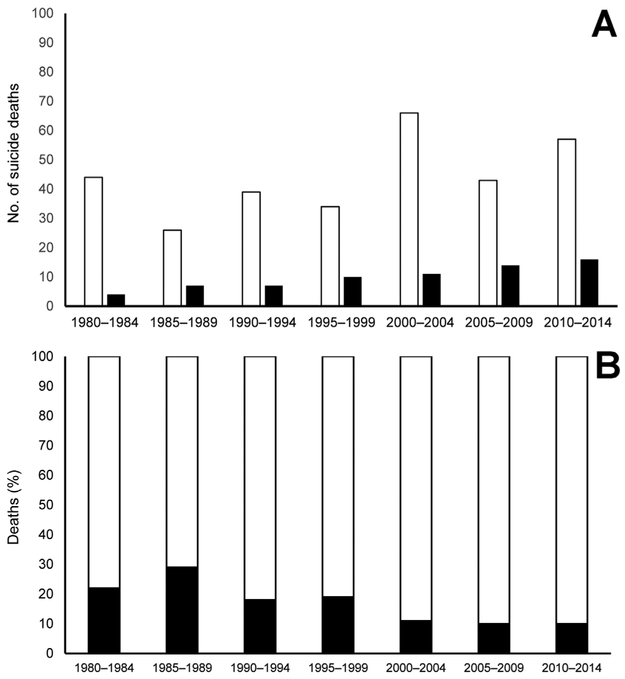
OBJECTIVE To assess proportionate mortality ratios (PMRs) for suicide among male and female US veterinarians from 1979 through 2015. DESIGN PMR study. SAMPLE Death records for 11,620 veterinarians. PROCEDURES Information for veterinarians who died during 1979 through 2015 was obtained from AVMA obituary and life insurance databases and submitted to a centralized database of US death records to obtain underlying causes of death. Decedent data that met records-matching criteria were imported into a software program for calculation of PMRs for suicide stratified by sex and indirectly standardized for age, race, and 5-year calendar period with 95% confidence intervals. RESULTS 398 deaths resulted from suicide; 326 (82%) decedents were male, 72 (18%) were female, and most (298 [75%]) were ≤ 65 years of age. The PMRs for suicide for all veterinarian decedents (2.1 and 3.5 for males and females, respectively), those in clinical positions (2.2 and 3.4 for males and females, respectively), and those in nonclinical positions (1.8 and 5.0 for males and females, respectively) were significantly higher than for the general US population. Among female veterinarians, the percentage of deaths by suicide was stable from 2000 until the end of the study, but the number of such deaths subjectively increased with each 5-year period. CONCLUSIONS AND CLINICAL RELEVANCE Results of the study indicated that PMRs for suicide of female as well as male veterinarians were higher than for the general population. These data may help to inform stakeholders in the creation and implementation of suicide prevention strategies designed for veterinarians.
Figures



References
-
- Bartram DJ, Baldwin DS. Veterinary surgeons and suicide: a structured review of possible influences on increased risk. Vet Rec 2010;166:388–397. - PubMed
-
- Faragher T Suicide in Australian veterinarians. Aust Vet J 2008;86:249. - PubMed
-
- Hem E, Haldorsen T, Aasland OG, et al. Suicide rates according to education with a particular focus on physicians in Norway 1960–2000. Psychol Med 2005;35:873–880. - PubMed
-
- Jones-Fairnie H, Ferroni P, Silburn S, et al. Suicide in Australian veterinarians. Aust Vet J 2008;86:114–116. - PubMed
-
- Kelly S, Bunting J. Trends in suicide in England and Wales, 1982–96. Popul Trends 1998;92:29–41. - PubMed
MeSH terms
Grants and funding
LinkOut - more resources
Full Text Sources
Medical
Miscellaneous