


Nanostructured Chitosan-Based Biomaterials for Sustained and Colon-Specific Resveratrol Release
- PMID: 30669264
- PMCID: PMC6359380
- DOI: 10.3390/ijms20020398
Nanostructured Chitosan-Based Biomaterials for Sustained and Colon-Specific Resveratrol Release
Abstract
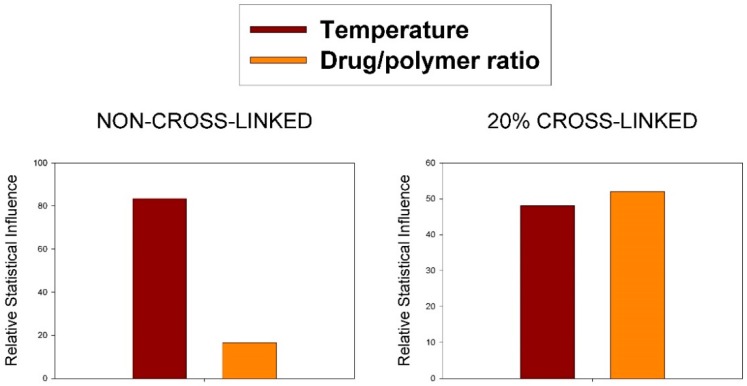
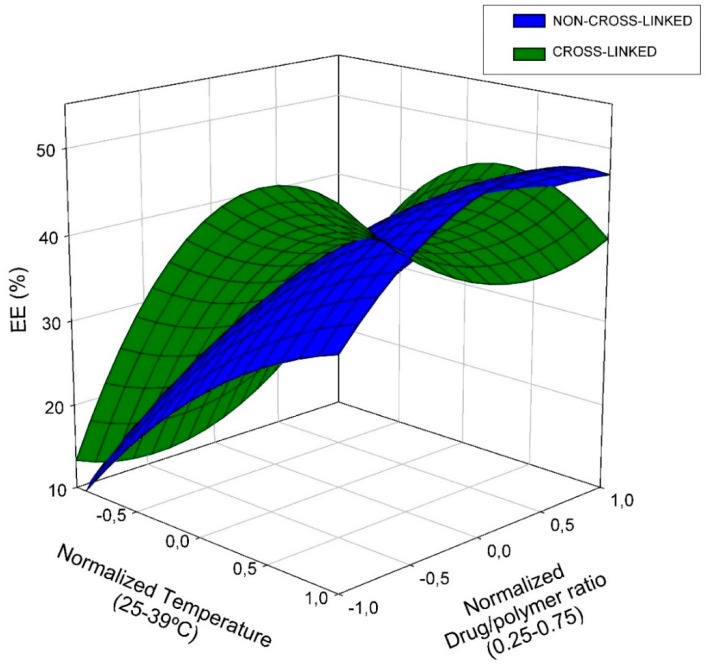
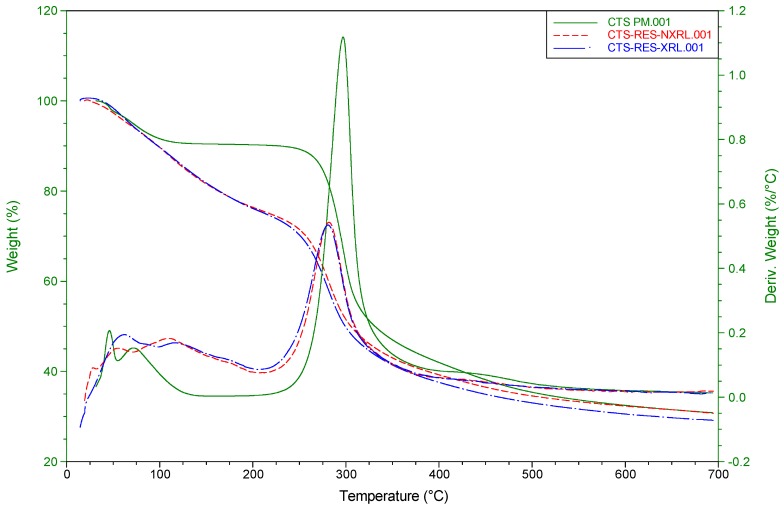
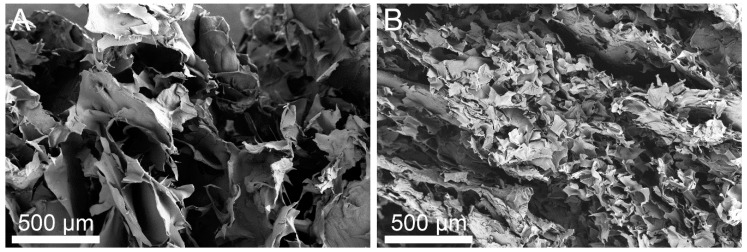
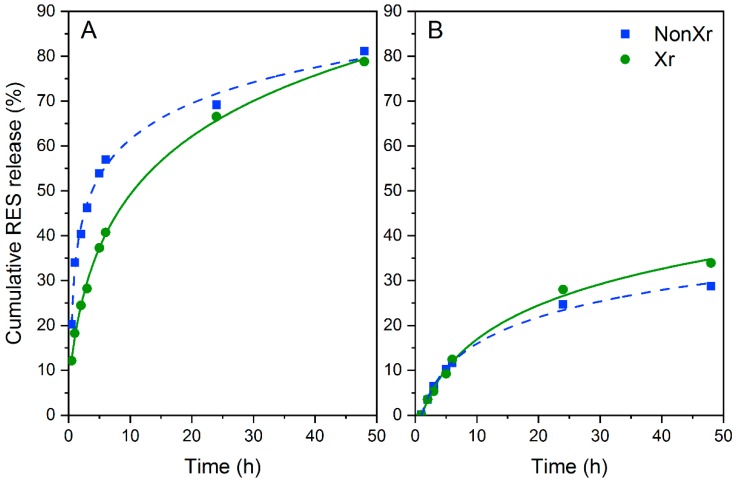
In the present work, we demonstrate the preparation of chitosan-based composites as vehicles of the natural occurring multi-drug resveratrol (RES). Such systems are endowed with potential therapeutic effects on inflammatory bowel diseases (IBD), such as Crohn's disease (CD) and ulcerative colitis, through the sustained colonic release of RES from long-lasting mucoadhesive drug depots. The loading of RES into nanoparticles (NPs) was optimized regarding two independent variables: RES/polymer ratio, and temperature. Twenty experiments were carried out and a Box⁻Behnken experimental design was used to evaluate the significance of these independent variables related to encapsulation efficiency (EE). The enhanced RES EE values were achieved in 24 h at 39 °C and at RES/polymer ratio of 0.75:1 w/w. Sizes and polydispersities of the optimized NPs were studied by dynamic light scattering (DLS). Chitosan (CTS) dispersions containing the RES-loaded NPs were ionically gelled with tricarballylic acid to yield CTS-NPs composites. Macro- and microscopic features (morphology and porosity studied by SEM and spreadability), thermal stability (studied by TGA), and release kinetics of the RES-loaded CTS-NPs were investigated. Release patterns in simulated colon conditions for 48 h displayed significant differences between the NPs (final cumulative drug release: 79⁻81%), and the CTS-NPs composites (29⁻34%).
Keywords: Crohn’s disease; IBD; colon; drug depot; hydrogels; inflammatory bowel disease; mucoadhesive; nanoparticles; ulcerative colitis.
Conflict of interest statement
The authors declare no conflict of interest.
Figures
References
MeSH terms
Substances
Grants and funding
LinkOut - more resources
Full Text Sources
Research Materials
