


A Proteome Approach Reveals Differences between Fertile Women and Patients with Repeated Implantation Failure on Endometrial Level⁻Does hCG Render the Endometrium of RIF Patients?
- PMID: 30669470
- PMCID: PMC6358950
- DOI: 10.3390/ijms20020425
A Proteome Approach Reveals Differences between Fertile Women and Patients with Repeated Implantation Failure on Endometrial Level⁻Does hCG Render the Endometrium of RIF Patients?
Abstract
Background: The molecular signature of endometrial receptivity still remains barely understood, especially when focused on the possible benefit of therapeutical interventions and implantation-related pathologies. Therefore, the protein composition of tissue and isolated primary cells (endometrial stromal cells, ESCs) from endometrial scratchings of ART (Assisted Reproductive Techniques) patients with repeated implantation failure (RIF) was compared to volunteers with proven fertility during the time of embryo implantation (LH + 7). Furthermore, an analysis of the endometrial tissue of fertile women infused with human chorionic gonadotropin (hCG) was conducted.
Methods: Endometrial samples (n = 6 RIF, n = 10 fertile controls) were split into 3 pieces: 1/3 each was frozen in liquid nitrogen, 1/3 fixed in PFA and 1/3 cultured. Protein lysates prepared from fresh frozen tissue were processed for mass spectrometric analysis.
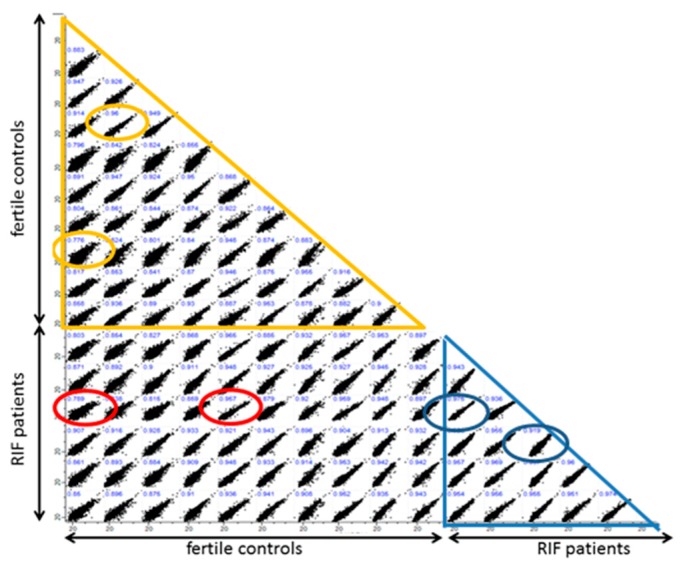
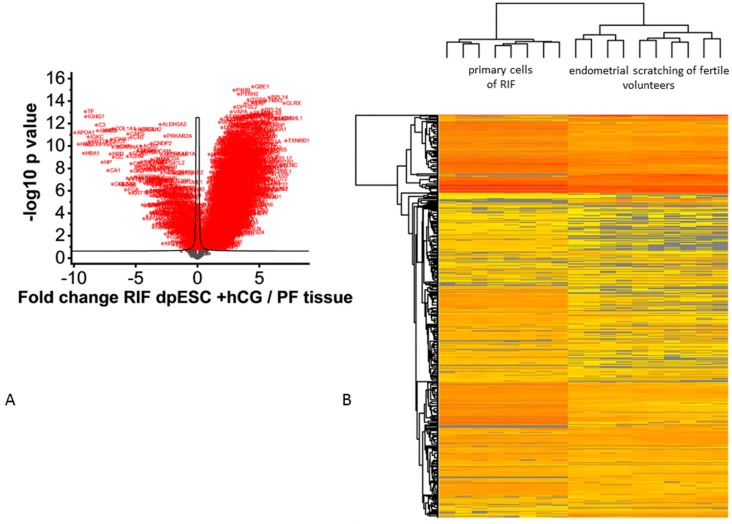
Results: Three proteins (EPPK1, BCLAF1 and PTMA) showed a statistically altered abundance in the endometrial tissue of RIF patients. Furthermore, pathways like metabolism, immune system, ferroptosis and the endoplasmic reticulum were altered in RIF patients. Remarkably, endometrial tissues of RIF patients showed a significantly higher (p-value = 9 × 10⁻⁸) protein intensity correlation (Pearson's correlation coefficient = 0.95) compared to fertile women (Pearson's correlation coefficient = 0.88). The in vivo infusion of hCG stimulated proteins of endocytosis, HIF1 signalling and chemokine production. Notably, patients suffering from RIF had a clinical pregnancy rate of 19% after the intrauterine infusion of hCG before embryo transfer (ET) compared to their failed previous cycles.
Conclusion: Our study showed for the first time that the endometrial proteome composition of RIF patients differs from fertile controls during the window of implantation. The intrauterine infusion of hCG prior to an embryo transfer might improve the chemokine triggered embryo-endometrial dialogue and intensify the angiogenesis and immune response. From a clinical point of view, the hCG infusion prior to an embryo transfer might increase the pregnancy rate of RIF patients.
Keywords: embryo transfer; endometrial receptivity; human chorionic gonadotropin; window of implantation.
Conflict of interest statement
The authors declare that there is no conflict of interest.
Figures



References
-
- Hess A.P., Hamilton A.E., Talbi S., Dosiou C., Nyegaard M., Nayak N., Genbecev-Krtolica O., Mavrogianis P., Ferrer K., Kruessel J., et al. Decidual stromal cell response to paracrine signals from the trophoblast: Amplification of immune and angiogenic modulators. Biol. Reprod. 2007;76:102–117. doi: 10.1095/biolreprod.106.054791. - DOI - PubMed
MeSH terms
Substances
Grants and funding
LinkOut - more resources
Full Text Sources
Other Literature Sources
