


Foam Rolling of the Calf and Anterior Thigh: Biomechanical Loads and Acute Effects on Vertical Jump Height and Muscle Stiffness
- PMID: 30669477
- PMCID: PMC6359537
- DOI: 10.3390/sports7010027
Foam Rolling of the Calf and Anterior Thigh: Biomechanical Loads and Acute Effects on Vertical Jump Height and Muscle Stiffness
Abstract
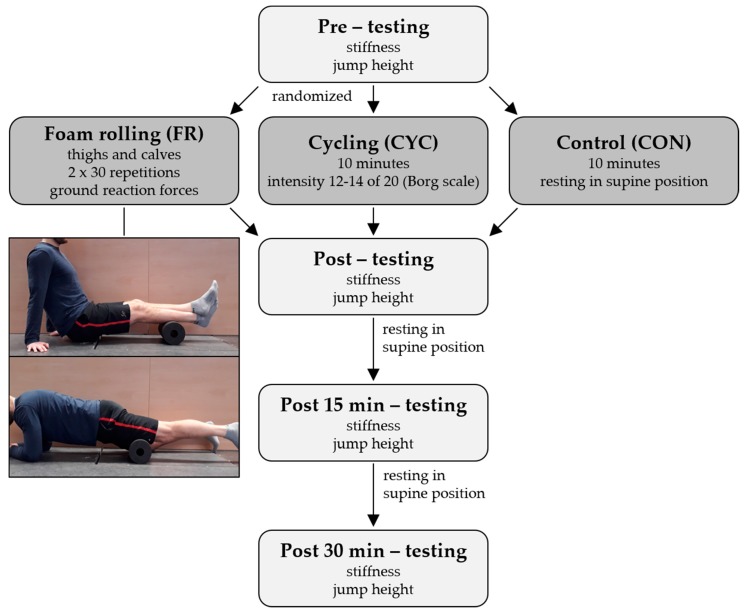
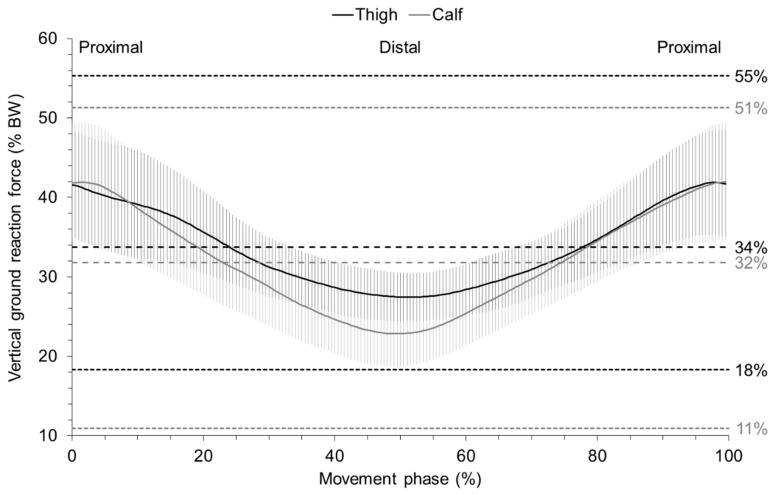
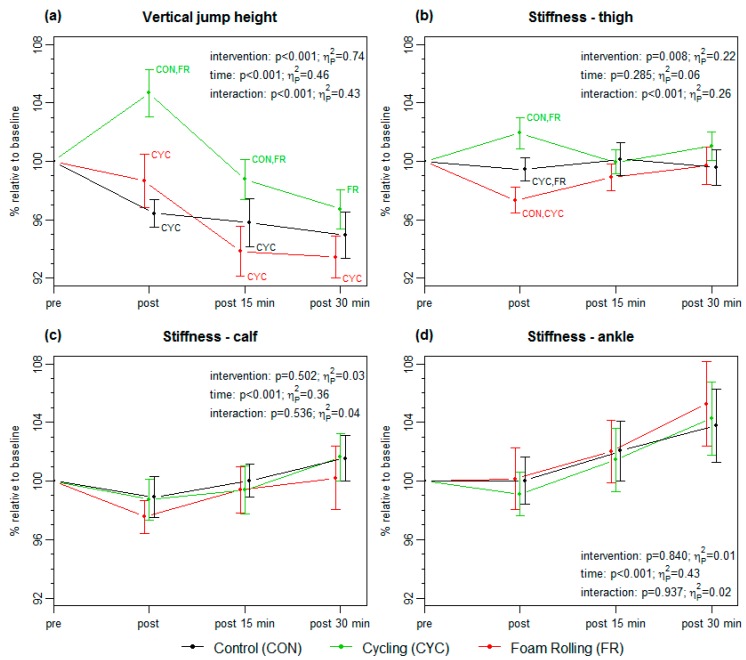
When considering the scientific lack concerning the execution and acute effects and mechanism of foam rolling (FR), this study has evaluated the biomechanical loads by the force-time characteristics during two popular FR exercises. Additionally, the acute effects of FR on jump height and muscular stiffness were simultaneously assessed. Within a randomized cross-over design, 20 males (26.6 ± 2.7 years; 181.6 ± 6.8 cm; 80.4 ± 9.1 kg) were tested on different days pre, post, and 15 and 30 min after three interventions. The interventions consisted of a FR procedure for the calf and anterior thigh of both legs, 10 min ergometer cycling, and resting as a control. Stiffness was measured via mechanomyography at the thigh, calf, and ankle. The vertical ground reaction forces were measured under the roller device during FR as well as to estimate jump height. Within the FR exercises, the forces decreased from the proximal to distal position, and were in mean 34 and 32% of body weight for the calves and thighs, respectively. Importantly, with 51 to 55%, the maxima of the individual mean forces were considerably higher. Jump height did not change after FR, but increased after cycling. Moreover, stiffness of the thigh decreased after FR and increased after cycling.
Keywords: cycling; force; muscle; self-myofascial release; warm-up.
Conflict of interest statement
The authors declare no conflict of interest.
Figures
References
-
- Freiwald J., Baumgart C., Kühnemann M., Hoppe M.W. Foam-Rolling in sport and therapy—Potential benefits and risks: Part 1—Definitions, anatomy, physiology, and biomechanics. Sport Orthop. Sport Traumatol. 2016;32:267–275. doi: 10.1016/j.orthtr.2016.07.002. - DOI
-
- Freiwald J., Baumgart C., Kühnemann M., Hoppe M.W. Foam-Rolling in sport and therapy—Potential benefits and risks: Part 2—Positive and adverse effects on athletic performance. Sport Orthop. Sport Traumatol. 2016;32:258–266. doi: 10.1016/j.orthtr.2016.07.001. - DOI
LinkOut - more resources
Full Text Sources
