


Small Dense Low-Density Lipoprotein Cholesterol Predicts Cardiovascular Events in Liver Transplant Recipients
- PMID: 30672598
- PMCID: PMC7018439
- DOI: 10.1002/hep.30518
Small Dense Low-Density Lipoprotein Cholesterol Predicts Cardiovascular Events in Liver Transplant Recipients
Abstract
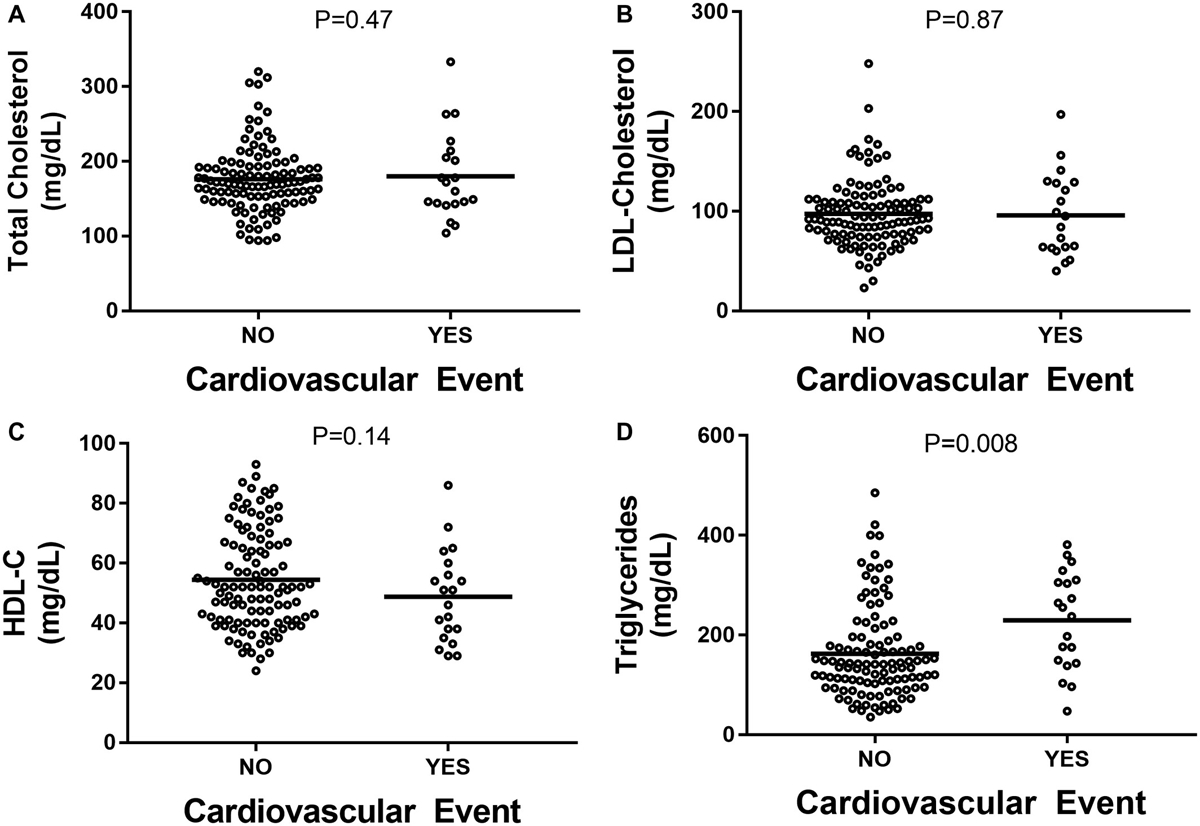
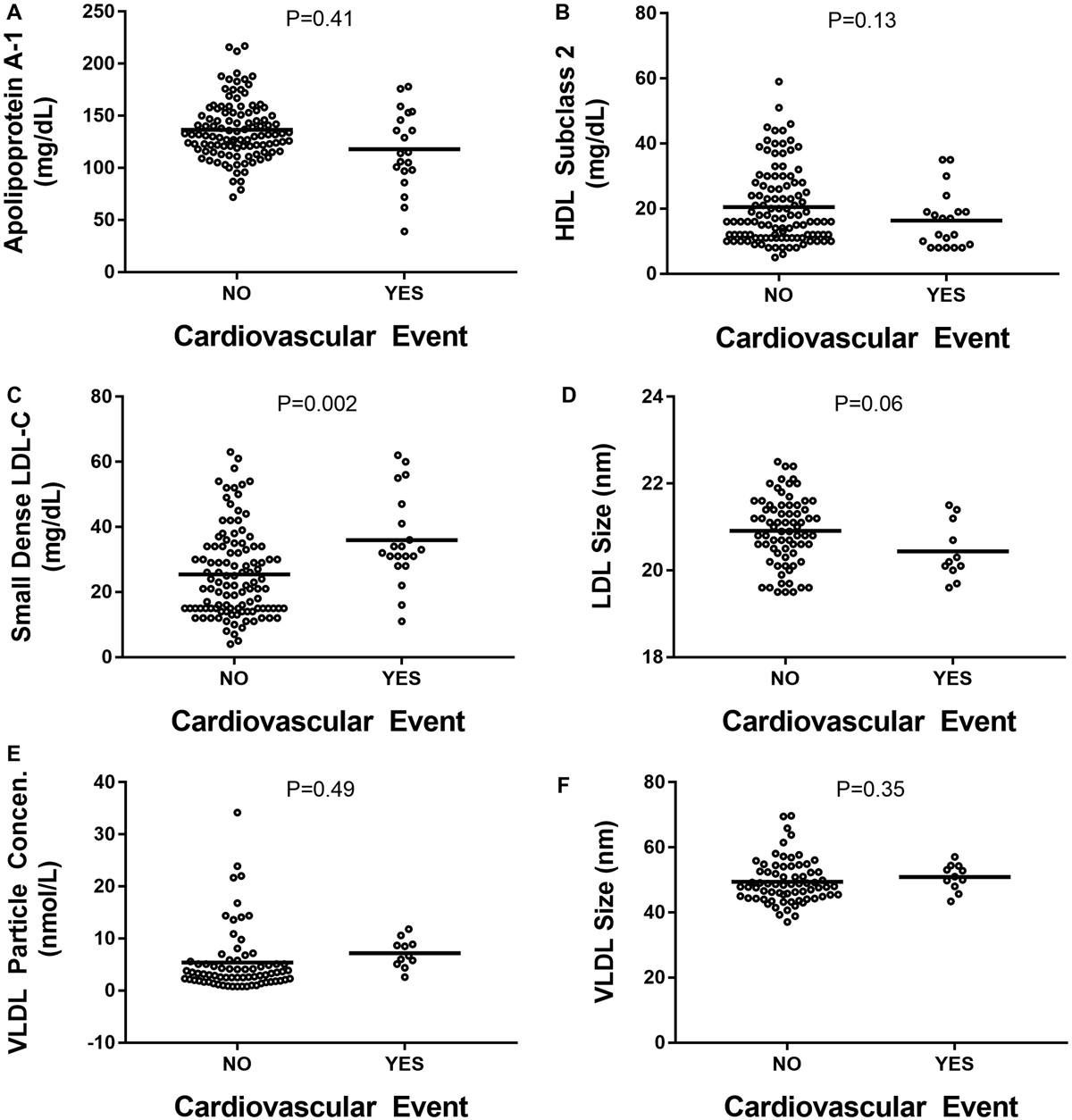
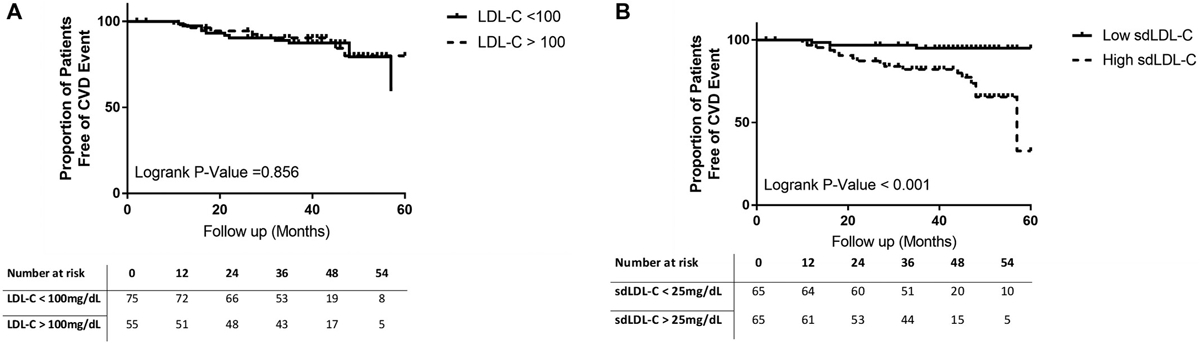
Cardiovascular disease (CVD) is an important cause of morbidity and mortality after liver transplantation (LT). Although LT is associated with dyslipidemia, particularly atherogenic lipoprotein subparticles, the impact of these subparticles on CVD-related events is unknown. Therefore, the aim of the current study was to evaluate the impact of small dense (sdLDL-C) low-density lipoprotein (LDL) cholesterol (LDL-C) on CVD events. Prospectively enrolled patients (N = 130) had detailed lipid profile consisting of traditional lipid parameters and sdLDL-C and were followed for CVD events. The primary endpoint was a CVD composite consisting of myocardial infarction (MI), angina, need for coronary revascularization, and cardiac death. Mean age of the cohort was 58 ± 11 years, and the most common etiology of liver disease (LD) was hepatitis C virus (N = 48) and nonalcoholic steatohepatitis (N = 23). A total of 20 CVD events were noted after median follow-up of 45 months. The baseline traditional profile was similar in patients with and without CVD events. A serum LDL-C cutoff of 100 mg/dL was unable to identify individuals at risk of a CVD event (P = 0.86). In contrast, serum concentration of atherogenic sdLDL-C >25 mg/dL was predictive of CVD events with a hazard ratio of 6.376 (95% confidence interval, 2.65, 15.34; P < 0.001). This relationship was independent of diabetes, hypertension, sex, ethnicity, LD, obesity, and statin use. Conclusion: sdLDL-C independently predicted CVD events whereas LDL-C did not. Thus, sdLDL-C may provide a useful clinical tool in risk stratifying and managing patients after LT.
© 2019 by the American Association for the Study of Liver Diseases.
Conflict of interest statement
Potential conflict of interest: Dr. Sterling received grants from AbbVie, Roche, and Gilead. Dr. Sanyal consults for and received grants from Echosens-Sandhill, Gilead, malinckrodt, Salix, Novartis, Galectin, and Sequana. He consults for and is employed by Sanyal Bio. He consults for and owns stock in Genfit. He consults for Pfizer, Nitto Denko, Nimbus, Boehringer Ingelheim, Hemoshear, Lilly, and Ardelyx. He received grants from Conatus, Bristol-Myers Squibb, and Merck. He received royalties from Elsevier and Uptodate. He owns stock in Akarna, NewCo LLC, Tiziana, and Natural Shield.
Figures
Comment in
-
Letter to the Editor: Lipoprotein Subparticles and Cardiovascular Risk in Liver Transplantation: More Details, More Significance.Hepatology. 2020 Jan;71(1):400-401. doi: 10.1002/hep.30972. Epub 2020 Jan 3. Hepatology. 2020. PMID: 31556127 No abstract available.
-
Reply.Hepatology. 2020 Jan;71(1):401-402. doi: 10.1002/hep.30971. Epub 2019 Dec 24. Hepatology. 2020. PMID: 31556129 No abstract available.
References
-
- Bhati C, Idowu MO, Sanyal AJ, Rivera M, Driscoll C, Stravitz RT, et al. Long Term Outcomes in Patients Undergoing Liver Transplantation for Nonalcoholic Steatohepatitis Related Cirrhosis. Transplantation 2017;101:1867–1874. - PubMed
-
- Agarwal K, Castells L, Müllhaupt B, Rosenberg WMC, McNabb B, Arterburn S, et al. Sofosbuvir/velpatasvir for 12 weeks in genotype 1–4 HCV-infected liver transplant recipients. J Hepatol 2018;69:603–607. - PubMed
-
- Members WG, Mozaffarian D, Benjamin EJ, Go AS, Arnett DK, Blaha MJ, et al. Heart Disease and Stroke Statistics-2016 Update: A Report From the American Heart Association. Circulation 2016;133:e38–e60. - PubMed
-
- Yancy CW, Jessup M, Bozkurt B, Butler J, Casey DE Jr., Drazner MH, et al. 2013 ACCF/AHA guideline for the management of heart failure: a report of the American College of Cardiology Foundation/American Heart Association Task Force on Practice Guidelines. J Am Coll Cardiol 2013;62:e147–e239. - PubMed
MeSH terms
Substances
Grants and funding
LinkOut - more resources
Full Text Sources
Medical
Research Materials
