. 2019 Feb 1;4(2):144-152.
doi: 10.1001/jamacardio.2018.4635.

Assessment of the Relationship Between Genetic Determinants of Thyroid Function and Atrial Fibrillation: A Mendelian Randomization Study

Affiliations

Assessment of the Relationship Between Genetic Determinants of Thyroid Function and Atrial Fibrillation: A Mendelian Randomization Study

Christina Ellervik et al. JAMA Cardiol. .

Abstract

Importance: Increased free thyroxine (FT4) and decreased thyrotropin are associated with increased risk of atrial fibrillation (AF) in observational studies, but direct involvement is unclear.

Objective: To evaluate the potential direct involvement of thyroid traits on AF.

Design, setting, and participants: Study-level mendelian randomization (MR) included 11 studies, and summary-level MR included 55 114 AF cases and 482 295 referents, all of European ancestry.

Exposures: Genomewide significant variants were used as instruments for standardized FT4 and thyrotropin levels within the reference range, standardized triiodothyronine (FT3):FT4 ratio, hypothyroidism, standardized thyroid peroxidase antibody levels, and hyperthyroidism. Mendelian randomization used genetic risk scores in study-level analysis or individual single-nucleotide polymorphisms in 2-sample MR for the summary-level data.

Main outcomes and measures: Prevalent and incident AF.

Results: The study-level analysis included 7679 individuals with AF and 49 233 referents (mean age [standard error], 62 [3] years; 15 859 men [29.7%]). In study-level random-effects meta-analysis, the pooled hazard ratio of FT4 levels (nanograms per deciliter) for incident AF was 1.55 (95% CI, 1.09-2.20; P = .02; I2 = 76%) and the pooled odds ratio (OR) for prevalent AF was 2.80 (95% CI, 1.41-5.54; P = .003; I2 = 64%) in multivariable-adjusted analyses. The FT4 genetic risk score was associated with an increase in FT4 by 0.082 SD (standard error, 0.007; P < .001) but not with incident AF (risk ratio, 0.84; 95% CI, 0.62-1.14; P = .27) or prevalent AF (OR, 1.32; 95% CI, 0.64-2.73; P = .46). Similarly, in summary-level inverse-variance weighted random-effects MR, gene-based FT4 within the reference range was not associated with AF (OR, 1.01; 95% CI, 0.89-1.14; P = .88). However, gene-based increased FT3:FT4 ratio, increased thyrotropin within the reference range, and hypothyroidism were associated with AF with inverse-variance weighted random-effects OR of 1.33 (95% CI, 1.08-1.63; P = .006), 0.88 (95% CI, 0.84-0.92; P < .001), and 0.94 (95% CI, 0.90-0.99; P = .009), respectively, and robust to tests of horizontal pleiotropy. However, the subset of hypothyroidism single-nucleotide polymorphisms involved in autoimmunity and thyroid peroxidase antibodies levels were not associated with AF. Gene-based hyperthyroidism was associated with AF with MR-Egger OR of 1.31 (95% CI, 1.05-1.63; P = .02) with evidence of horizontal pleiotropy (P = .045).

Conclusions and relevance: Genetically increased FT3:FT4 ratio and hyperthyroidism, but not FT4 within the reference range, were associated with increased AF, and increased thyrotropin within the reference range and hypothyroidism were associated with decreased AF, supporting a pathway involving the pituitary-thyroid-cardiac axis.


Conflict of interest statement

Conflict of Interest Disclosures: All authors have completed and submitted the ICMJE Form for Disclosure of Potential Conflicts of Interest. Dr Alonso reported grants from National Heart, Lung, and Blood Institute and American Heart Association during the conduct of the study. Dr Sitlani reported grants from National Institutes of Health/National Heart, Lung, and Blood Institute during the conduct of the study. Dr Arking reported grants from National Institutes of Health during the conduct of the study. Dr Macfarlane reported grants from University of Glasgow during the conduct of the study. Dr Verweij is an employee of Genomics plc outside the submitted work. Dr Heckbert reported grants from National Institutes of Health during the conduct of the study. Dr März reported grants from European Union during the conduct of the study; grants and personal fees from Siemens Diagnostics, Aegerion Pharmaceuticals, Amgen, AstraZeneca, Sanofi, BASF, Abbott Diagnostics, and Numares AG outside the submitted work; personal fees from Akcea Therapeutics, Alexion, and Berlin-Chemie, outside the submitted work; other support from Synlab Group outside the submitted work; and is employed with Synlab Holding Deuschland GmbH. Dr Psaty reported serving on the Steering Committee of the Yale Open Data Access Project funded by Johnson & Johnson and on the Data and Safety Monitoring Board of a clinical trial funded by Zoll LifeCor. Dr Ridker reported grants from National Heart, Lung, and Blood Institute during the conduct of the study. Dr Stott reported grants from Bristol-Myers Squibb during the conduct of the study and nonfinancial support from Merck Serono outside the submitted work. Dr Benjamin reported grants from Boston University, during the conduct of the study and other support from National Institutes of Health/National Heart, Lung, and Blood Institute: CARDIA OSMB and American Heart Association outside the submitted work. Dr Ellinor reported grants from Bayer AG, personal fees from Novartis, and personal fees from Quest Diagnostics outside the submitted work. Dr Lubitz reported grants from National Institutes of Health during the conduct of the study; grants from Doris Duke Charitable Foundation, American Heart Association, Boehringer Ingelheim, and Bayer HealthCare outside the submitted work; grants and personal fees from Bristol-Myers Squibb/Pfizer outside the submitted work; and personal fees from Quest Diagnostics and Abbott outside the submitted work. Dr Mora reported grants from Atherotech Diagnostics during the conduct of the study and personal fees and nonfinancial support from Quest Diagnostics outside the submitted work. Dr Rotter reported grants from National Institutes of Health during the conduct of the study. Dr Albert reported grants from National Heart, Lung, and Blood Institute during the conduct of the study. No other disclosures were reported.

Figures

Figure 1.
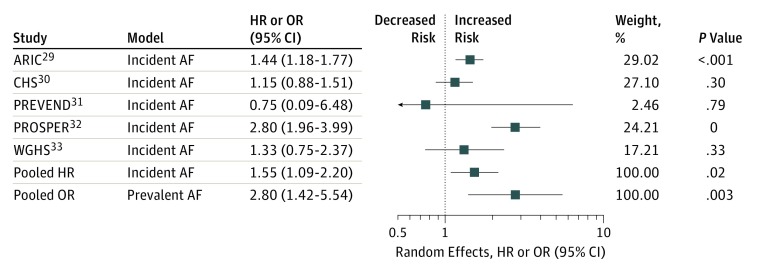
Figure 1.. Observational Meta-analyses of Free Thyroxine (FT4) on Atrial Fibrillation (AF) (Study Level)
See eTable 3 in the Supplement for details. HR indicates hazard ratio; OR, odds ratio.
Figure 2.
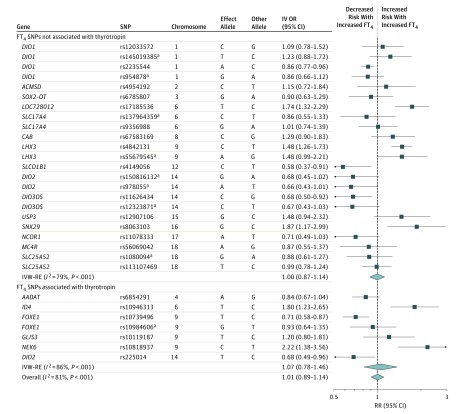
Figure 2.. Summary-Level Analysis of FT4 SNPs and Atrial Fibrillation
The mendelian randomization effect estimate is risk of atrial fibrillation (IV OR) per standardized FT4. aIndependent SNPs within a locus as defined by Teumer et al. FT4 indicates free thyroxine; IV OR, instrumental variable odds ratio; IVW-RE, inverse variance-weighted random-effects; RR, risk ratio; SNP, single-nucleotide polymorphism.
Figure 3.
Figure 3.. Summary-Level Analysis of SNP (Thyrotropin) and Atrial Fibrillation
The mendelian randomization effect estimate is risk of atrial fibrillation per standardized thyrotropin. FT4 indicates free thyroxine; het, heterogeneity; IV OR, instrumental variable odds ratio; IVW-RE, inverse variance-weighted random-effects; OR, odds ratio; SNP, single-nucleotide polymorphism.
Figure 4.
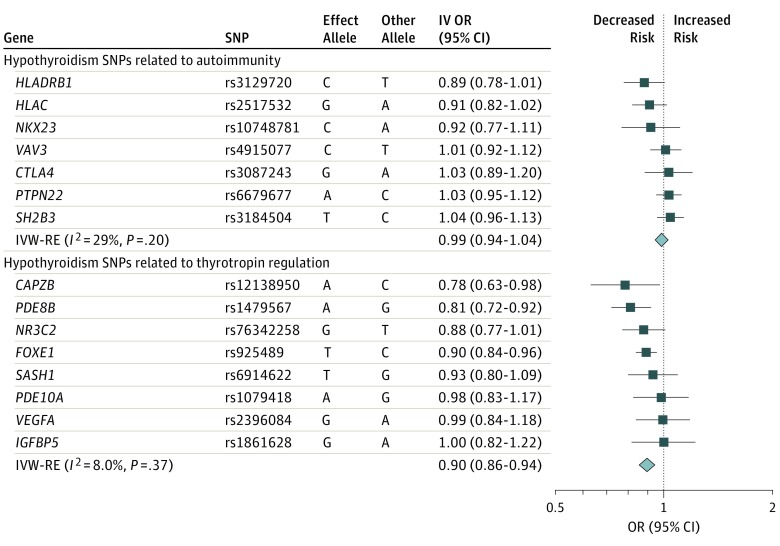
Figure 4.. Summary-Level Analysis of SNP (Hypothyroidism) and Atrial Fibrillation
The mendelian randomization effect estimate is risk of atrial fibrillation per allele per risk of hypothyroidism. IV OR indicates instrumental variable odds ratio; IVW-RE, inverse variance-weighted random-effects; OR, odds ratio; SNP, single-nucleotide polymorphism.

Comment in

References

    1. Baumgartner C, da Costa BR, Collet TH, et al. ; Thyroid Studies Collaboration . Thyroid function within the normal range, subclinical hypothyroidism, and the risk of atrial fibrillation. Circulation. 2017;136(22):2100-2116. doi: 10.1161/CIRCULATIONAHA.117.028753 - DOI - PMC - PubMed
    1. Selmer C, Olesen JB, Hansen ML, et al. The spectrum of thyroid disease and risk of new onset atrial fibrillation: a large population cohort study. BMJ. 2012;345:e7895. doi: 10.1136/bmj.e7895 - DOI - PMC - PubMed
    1. Cappola AR, Fried LP, Arnold AM, et al. Thyroid status, cardiovascular risk, and mortality in older adults. JAMA. 2006;295(9):1033-1041. doi: 10.1001/jama.295.9.1033 - DOI - PMC - PubMed
    1. Dekkers OM, Horváth-Puhó E, Cannegieter SC, Vandenbroucke JP, Sørensen HT, Jørgensen JO. Acute cardiovascular events and all-cause mortality in patients with hyperthyroidism: a population-based cohort study. Eur J Endocrinol. 2017;176(1):1-9. doi: 10.1530/EJE-16-0576 - DOI - PubMed
    1. Osman F, Franklyn JA, Holder RL, Sheppard MC, Gammage MD. Cardiovascular manifestations of hyperthyroidism before and after antithyroid therapy: a matched case-control study. J Am Coll Cardiol. 2007;49(1):71-81. doi: 10.1016/j.jacc.2006.08.042 - DOI - PubMed

MeSH terms