


Women's Preferences for Maternal Healthcare Services in Bangladesh: Evidence from a Discrete Choice Experiment
- PMID: 30678044
- PMCID: PMC6406443
- DOI: 10.3390/jcm8020132
Women's Preferences for Maternal Healthcare Services in Bangladesh: Evidence from a Discrete Choice Experiment
Abstract
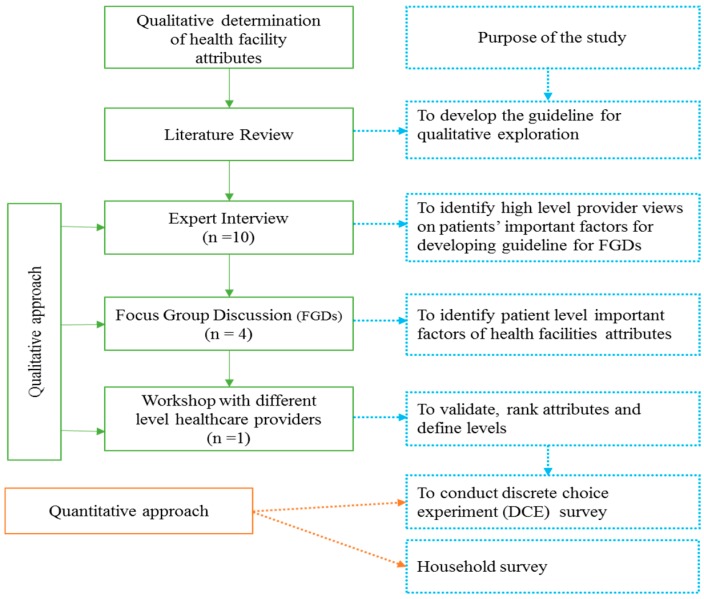
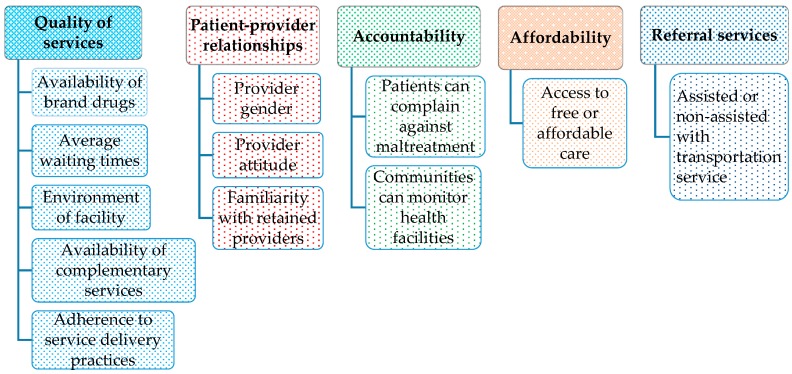
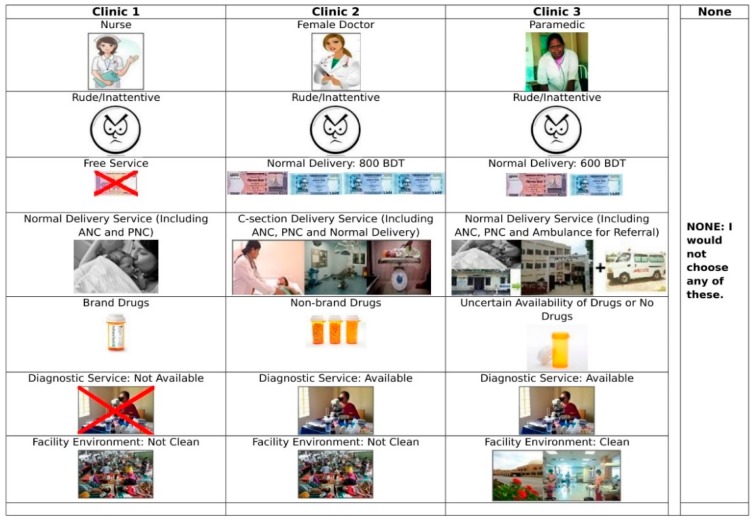
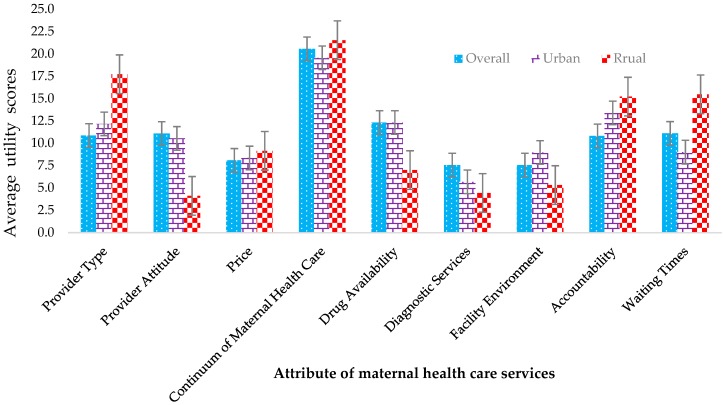
Despite substantial improvements in several maternal health indicators, childbearing and birthing remain a dangerous experience for many women in Bangladesh. This study assessed the relative importance of maternal healthcare service characteristics to Bangladeshi women when choosing a health facility to deliver their babies. The study used a mixed-methods approach. Qualitative methods (expert interviews, focus group discussions) were initially employed to identify and develop the characteristics which most influence a women's decision making when selecting a maternal health service facility. A discrete choice experiment (DCE) was then constructed to elicit women's preferences. Women were shown choice scenarios representing hypothetical health facilities with nine attributes outlined. The women were then asked to rank the attributes they considered most important in the delivery of their future babies. A Hierarchical Bayes method was used to measure mean utility parameters. A total of 601 women completed the DCE survey. The model demonstrated significant predictive strength for actual facility choice for maternal health services. The most important attributes were the following: consistent access to a female doctor, the availability of branded drugs, respectful provider attitudes, a continuum of maternal healthcare including the availability of a C-section delivery and lesser waiting times. Attended maternal healthcare utilisation rates are low despite the access to primary healthcare facilities. Further implementation of quality improvements in maternal healthcare facilities should be prioritised.
Keywords: Bangladesh; demand for healthcare; discrete choice experiment; healthcare services; maternal healthcare.
Conflict of interest statement
The authors declare no conflict of interest. The funder had no role in the design of the study; in the collection, analyses, or interpretation of data; in the writing of the manuscript, and in the decision to publish the results.
Figures
References
-
- World Health Organization (WHO) Trends in Maternal Mortality: 1990 to 2015. Volume 2012 WHO, UNICEF, UNFPA and The World Bank Estimates; Geneva, Switzerland: 2015. Tech. Rep.
-
- Alkema L., Chou D., Hogan D., Zhang S., Moller A.B., Gemmill A., Fat D.M., Boerma T., Temmerman M., Mathers C., et al. Global, regional, and national levels and trends in maternal mortality between 1990 and 2015, with scenario-based projections to 2030: A systematic analysis by the un maternal mortality estimation Inter-Agency group. Lancet. 2016;387:462–474. doi: 10.1016/S0140-6736(15)00838-7. - DOI - PMC - PubMed
-
- The World Health Organization (WHO) Maternal Mortality, Department of Reproductive Health and Research. WHO; Geneva, Switzerland: 2016.
-
- Akhter S. Ph.D. Thesis. School of the Environment, Flinders University; Adelaide, Australia: 2015. Maternal Health Care Seeking Behaviour of Women from Lower and Upper Socio-Economic Groups of Dhaka, Bangladesh—Fear or Fashion?
Grants and funding
LinkOut - more resources
Full Text Sources
