


VEGF/Neuropilin Signaling in Cancer Stem Cells
- PMID: 30678134
- PMCID: PMC6387347
- DOI: 10.3390/ijms20030490
VEGF/Neuropilin Signaling in Cancer Stem Cells
Abstract
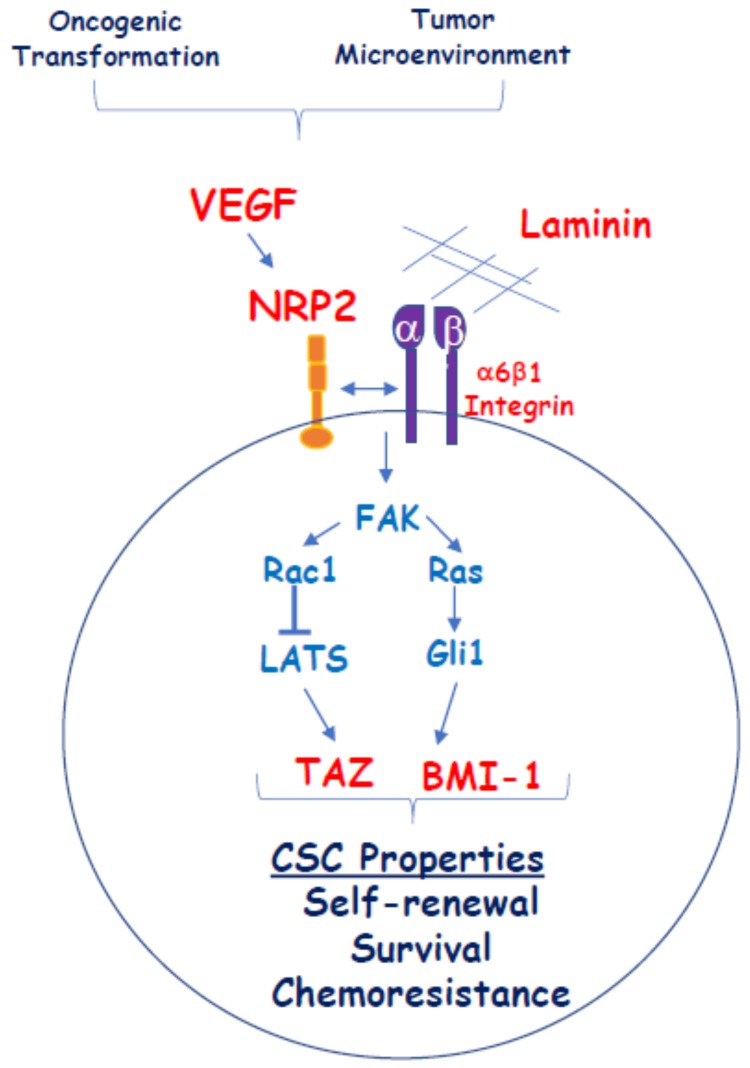
The function of vascular endothelial growth factor (VEGF) in cancer extends beyond angiogenesis and vascular permeability. Specifically, VEGF-mediated signaling occurs in tumor cells and this signaling contributes to key aspects of tumorigenesis including the self-renewal and survival of cancer stem cells (CSCs). In addition to VEGF receptor tyrosine kinases, the neuropilins (NRPs) are critical for mediating the effects of VEGF on CSCs, primarily because of their ability to impact the function of growth factor receptors and integrins. VEGF/NRP signaling can regulate the expression and function of key molecules that have been implicated in CSC function including Rho family guanosine triphosphatases (GTPases) and transcription factors. The VEGF/NRP signaling axis is a prime target for therapy because it can confer resistance to standard chemotherapy, which is ineffective against most CSCs. Indeed, several studies have shown that targeting either NRP1 or NRP2 can inhibit tumor initiation and decrease resistance to other therapies.
Keywords: VEGF; cancer stem cell; neuropilin.
Conflict of interest statement
The author declares no conflict of interest.
Figures
References
-
- Clarke M.F., Dick J.E., Dirks P.B., Eaves C.J., Jamieson C.H., Jones D.L., Visvader J., Weissman I.L., Wahl G.M. Cancer stem cells—Perspectives on current status and future directions: AACR Workshop on cancer stem cells. Cancer Res. 2006;66:9339–9344. doi: 10.1158/0008-5472.CAN-06-3126. - DOI - PubMed
Publication types
MeSH terms
Substances
Grants and funding
LinkOut - more resources
Full Text Sources
Other Literature Sources
Miscellaneous
