


Common Ingredient Profiles of Multi-Ingredient Pre-Workout Supplements
- PMID: 30678328
- PMCID: PMC6413194
- DOI: 10.3390/nu11020254
Common Ingredient Profiles of Multi-Ingredient Pre-Workout Supplements
Abstract
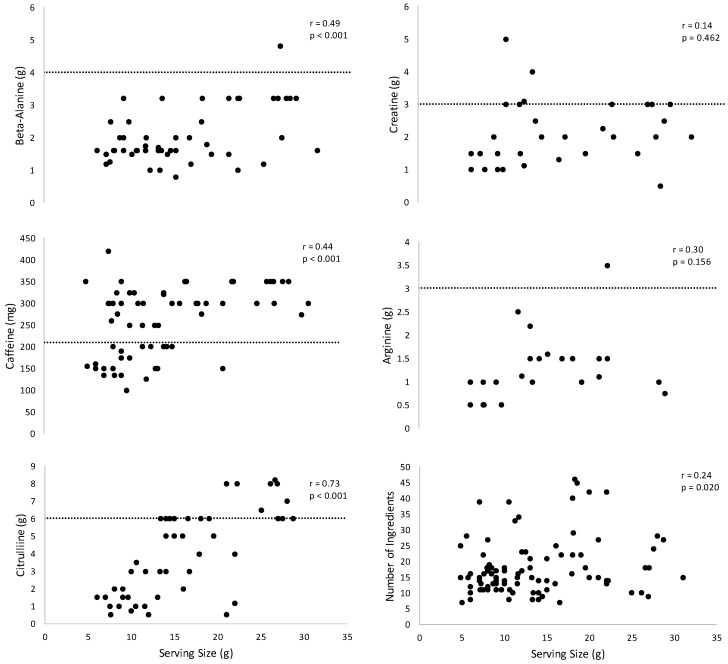
Multi-ingredient pre-workout supplements are a popular class of dietary supplements which are purported to improve exercise performance. However, the composition of these products varies substantially between formulations, thus making comparisons challenging. Therefore, the purpose of this study was to identify a common ingredient profile of top-selling pre-workout supplements and to compare ingredient dosages to established efficacious values. The top 100 commercially available pre-workout products were analyzed for listed ingredients and amounts, if available, from the supplement facts panel. The mean ± SD number of ingredients per supplement (n = 100) was 18.4 ± 9.7 with 8.1 ± 9.9 of these ingredients included in a proprietary blend at undisclosed quantities. Relative prevalence and average amounts of the top ingredients amounted to: Beta-alanine (87%; 2.0 ± 0.8 g), Caffeine (86%; 254.0 ± 79.5 mg), Citrulline (71%; 4.0 ± 2.5 g), Tyrosine (63%; 348.0 ± 305.7 mg), Taurine (51%; 1.3 ± 0.6 g), and Creatine (49%; 2.1 ± 1.0 g). Nearly half (44.3%) of all ingredients were included as part of a proprietary blend with undisclosed amounts of each ingredient. The average amount of beta-alanine per serving size was below the recommended efficacious dose. The average caffeine content was near the low end for an effective relative dose for a 70 kg individual (3⁻6 mg·kg-1 of bodyweight).
Keywords: beta-alanine; caffeine; citrulline; creatine; energy; ergogenic aid; power; pre-workout; strength; supplement.
Conflict of interest statement
The authors declare no conflicts of interest.
Figures
References
-
- Public Law . 108 Stat. 4325. U.S. Government Printing Office; Washington, DC, USA: 1994. Dietary Supplement Health and Education Act of 1994.
-
- U.S. Food and Drug Administration . Dietary Supplement Labeling Guide: Chapter IV. Nutrition Labeling. U.S. Food and Drug Administration; Silver Spring, MD, USA: 2015.
MeSH terms
Substances
LinkOut - more resources
Full Text Sources
Other Literature Sources
Medical
