


Interaction of different Chlamydiae species with bovine spermatozoa
- PMID: 30683062
- PMCID: PMC6347757
- DOI: 10.1186/s12866-019-1392-z
Interaction of different Chlamydiae species with bovine spermatozoa
Abstract
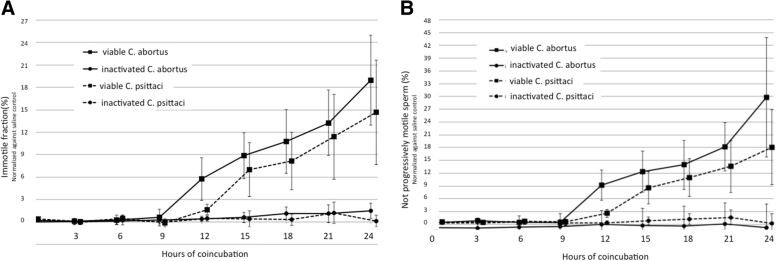
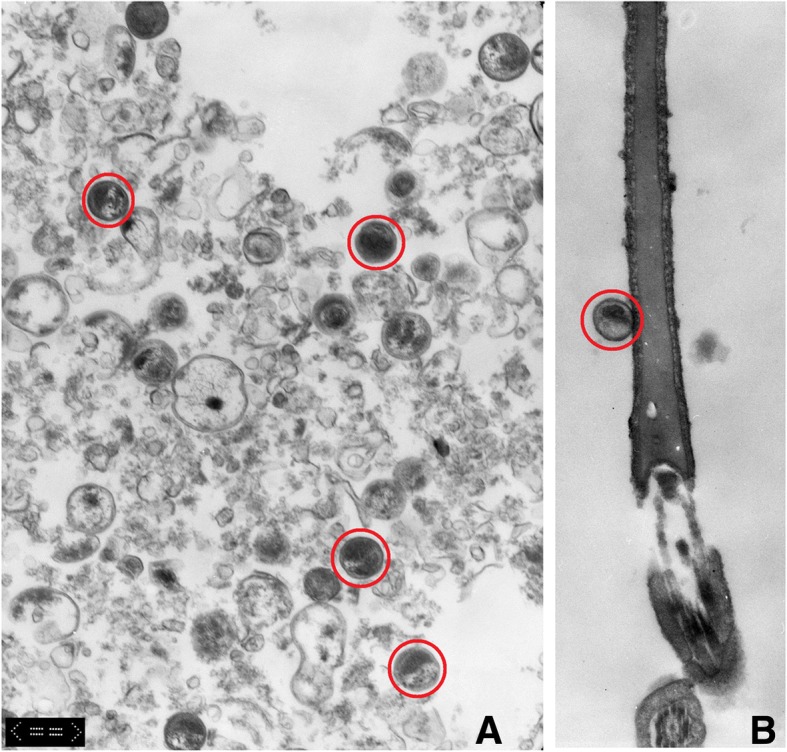
Background: Interaction of spermatozoa and Chlamydiae spp. might contribute to reduced fertility in cattle. To proof this hypothesis, bovine semen was incubated with viable or heat inactivated Chlamydia (C.) abortus or psittaci (Multiplicity of infection = 1) and sperm motility was monitored with a computer-assisted sperm analyzer over 24 h. Additionally, the interaction with the spermatozoa was further investigated by means of light and transmission electron microscopy (TEM).
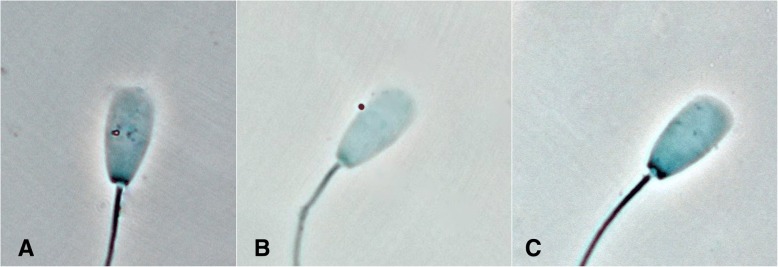
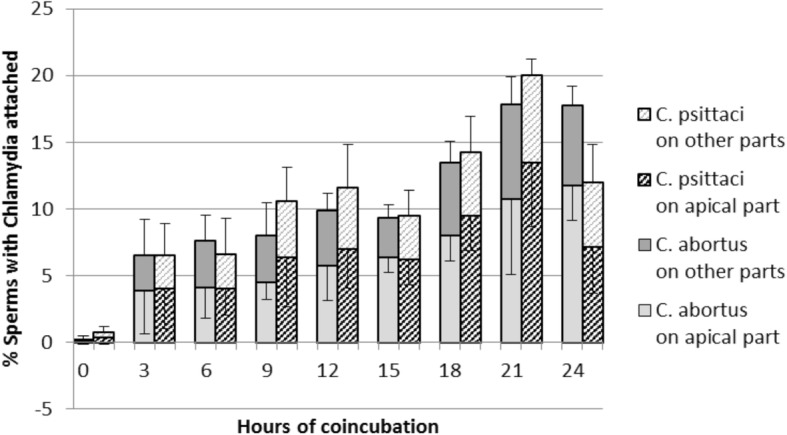
Results: Only viable Chlamydiae of both species decreased sperm motility and this only after about 9 h. Taking binding rates into account, the loss of sperm motility after about 9 h could likely be a consequence of Chlamydiae attachment to the spermatozoa. About two thirds of the Chlamydiae elementary bodies were bound to the front third of the sperm, the acrosomal region. No inclusions of Chlamydiae in spermatozoa were observed in TEM after 2 h co-incubation.
Conclusions: As initial motility was not affected following co-incubation of viable Chlamydiae and bovine sperm, it seems likely that sperm could serve as a carrier/vehicle for Chlamydiae facilitating cervical passage of Chlamydiae spp. in cattle. Additionally, our results suggest that spermatozoa carrying Chlamydiae may have no initial disadvantage in reaching the oviduct, but are immotile at the time of ovulation what might have an impact on fertilization capacities of the individual sperm. Consequently, high concentrations of the investigated Chlamydiae in the seminal plasma or female genital tract might play a role in reduced fertility in cattle.
Keywords: CASA (computer assisted sperm analysis); Cattle; Chlamydiae; Semen motility.
Conflict of interest statement
Ethics approval
This study was carried out in strict accordance with the recommendations of the Guide for the Care and Use of Laboratory Animals of the National Institutes of Health. The housing facilities and the protocol were approved by the Regierungspräsidium Giessen, Germany (AZ No. V 54-19c2015h02 GI 18/14 Nr. A 27/2012).
Consent for publication
Not applicable.
Competing interests
The authors declare no conflict of interest. I confirm that I have read BioMed Central’s guidance on competing interests and have included a statement indicating that none of the authors have any competing interests in the manuscript.
Publisher’s Note
Springer Nature remains neutral with regard to jurisdictional claims in published maps and institutional affiliations.
Figures
References
Publication types
MeSH terms
LinkOut - more resources
Full Text Sources
Research Materials
Miscellaneous
