


Transcranial direct current stimulation for the treatment of motor impairment following traumatic brain injury
- PMID: 30683136
- PMCID: PMC6347832
- DOI: 10.1186/s12984-019-0489-9
Transcranial direct current stimulation for the treatment of motor impairment following traumatic brain injury
Abstract
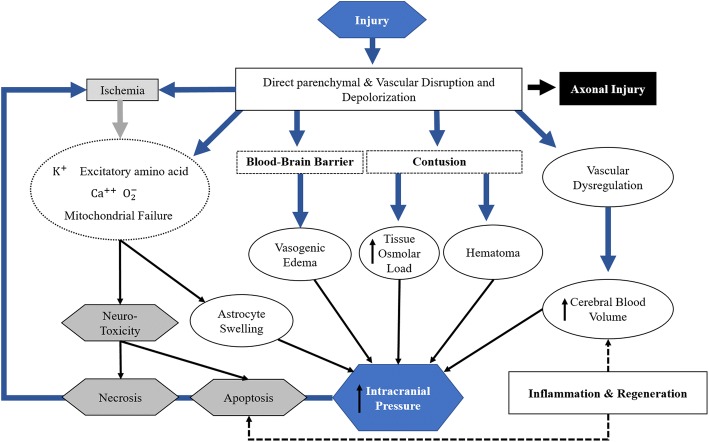
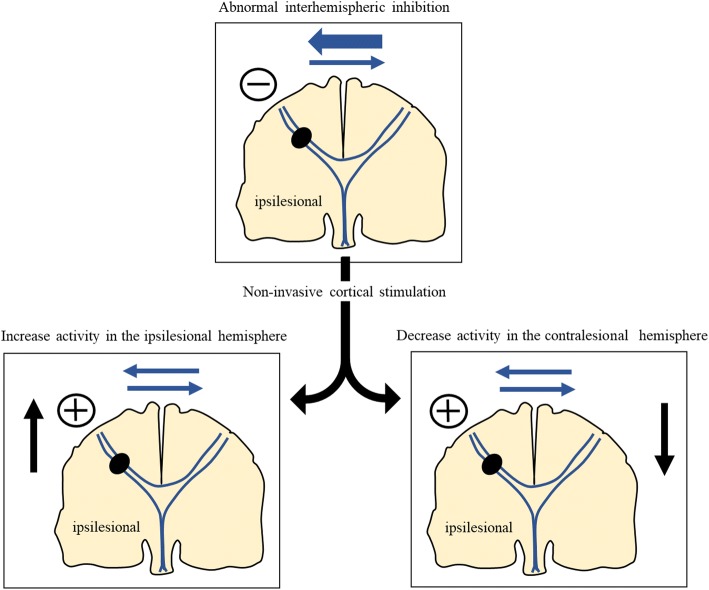
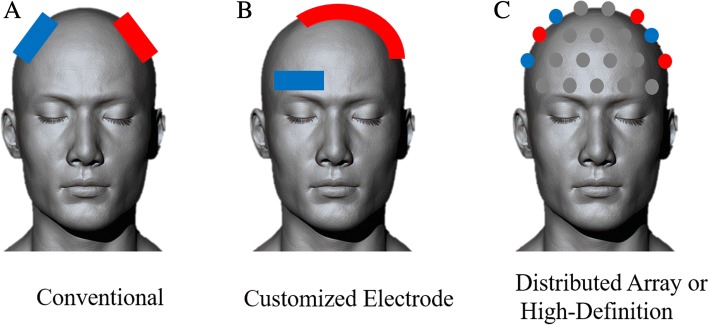
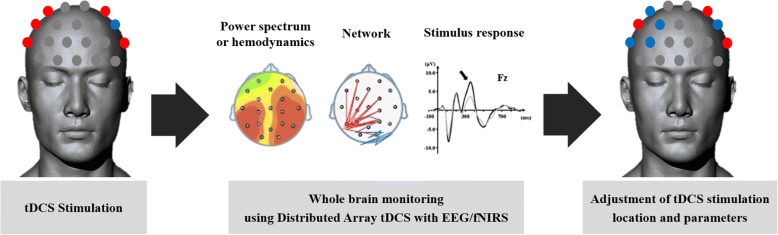
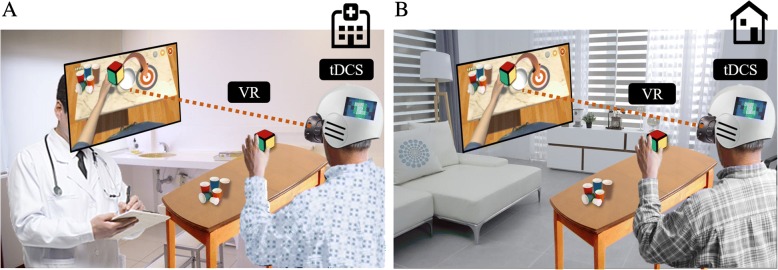
After traumatic brain injury (TBI), motor impairment is less common than neurocognitive or behavioral problems. However, about 30% of TBI survivors have reported motor deficits limiting the activities of daily living or participation. After acute primary and secondary injuries, there are subsequent changes including increased GABA-mediated inhibition during the subacute stage and neuroplastic alterations that are adaptive or maladaptive during the chronic stage. Therefore, timely and appropriate neuromodulation by transcranial direct current stimulation (tDCS) may be beneficial to patients with TBI for neuroprotection or restoration of maladaptive changes.Technologically, combination of imaging-based modelling or simultaneous brain signal monitoring with tDCS could result in greater individualized optimal targeting allowing a more favorable neuroplasticity after TBI. Moreover, a combination of task-oriented training using virtual reality with tDCS can be considered as a potent tele-rehabilitation tool in the home setting, increasing the dose of rehabilitation and neuromodulation, resulting in better motor recovery.This review summarizes the pathophysiology and possible neuroplastic changes in TBI, as well as provides the general concepts and current evidence with respect to the applicability of tDCS in motor recovery. Through its endeavors, it aims to provide insights on further successful development and clinical application of tDCS in motor rehabilitation after TBI.
Keywords: Electroencephalography; Functional near infrared spectroscopy; Neuronal plasticity; Recovery of function; Rehabilitation; Transcranial direct current stimulation; Traumatic brain injuries; Virtual reality.
Conflict of interest statement
Ethics approval and consent to participate
Not applicable.
Consent for publication
Not applicable.
Competing interests
KL and SK have equity in Ybrain Inc. Ybrain has patents in tDCS with KL and SK as inventors. SC has equity in Delvine Inc. Seoul National University R&DB Foundation and Seoul National University Bundang Hospital have the patent related with VR with SC, WSK, and NJP as inventors.
Publisher’s Note
Springer Nature remains neutral with regard to jurisdictional claims in published maps and institutional affiliations.
Figures
References
Publication types
MeSH terms
Grants and funding
- NRF-2016R1A2B4013730/Ministry of Science, ICT and Future Planning/International
- 20001650/the Ministry of Trade Industry & Energy (MOTIE, Korea), Ministry of Science & ICT (MSIT, Korea), and Ministry of Health & Welfare(MOHW, Korea) under Technology Development Program for AI-Bio-Robot-Medicine Convergence/International
- 20001650/the Ministry of Trade Industry & Energy (MOTIE, Korea), Ministry of Science & ICT (MSIT, Korea), and Ministry of Health & Welfare(MOHW, Korea) under Technology Development Program for AI-Bio-Robot-Medicine Convergence/International
- 20001650/the Ministry of Trade Industry & Energy (MOTIE, Korea), Ministry of Science & ICT (MSIT, Korea), and Ministry of Health & Welfare(MOHW, Korea) under Technology Development Program for AI-Bio-Robot-Medicine Convergence/International
LinkOut - more resources
Full Text Sources
Medical
