Review
. 2019 Jan 25;10(1):1.
doi: 10.1186/s13244-019-0688-8.

Imaging features of adrenal masses

Affiliations
Review

Imaging features of adrenal masses

Domenico Albano et al. Insights Imaging. .

Abstract

The widespread use of imaging examinations has increased the detection of incidental adrenal lesions, which are mostly benign and non-functioning adenomas. The differentiation of a benign from a malignant adrenal mass can be crucial especially in oncology patients since it would greatly affect treatment and prognosis. In this setting, imaging plays a key role in the detection and characterization of adrenal lesions, with several imaging tools which can be employed by radiologists. A thorough knowledge of the imaging features of adrenal masses is essential to better characterize these lesions, avoiding a misinterpretation of imaging findings, which frequently overlap between benign and malignant conditions, thus helping clinicians and surgeons in the management of patients. The purpose of this paper is to provide an overview of the main imaging features of adrenal masses and tumor-like conditions recalling the strengths and weaknesses of imaging modalities commonly used in adrenal imaging.

Keywords: Adenoma; Adrenal; Chemical shift imaging; Computed tomography; Magnetic resonance imaging.


Conflict of interest statement

Competing interests

The authors declare that they have no competing interests.

Publisher’s Note

Springer Nature remains neutral with regard to jurisdictional claims in published maps and institutional affiliations.

Figures
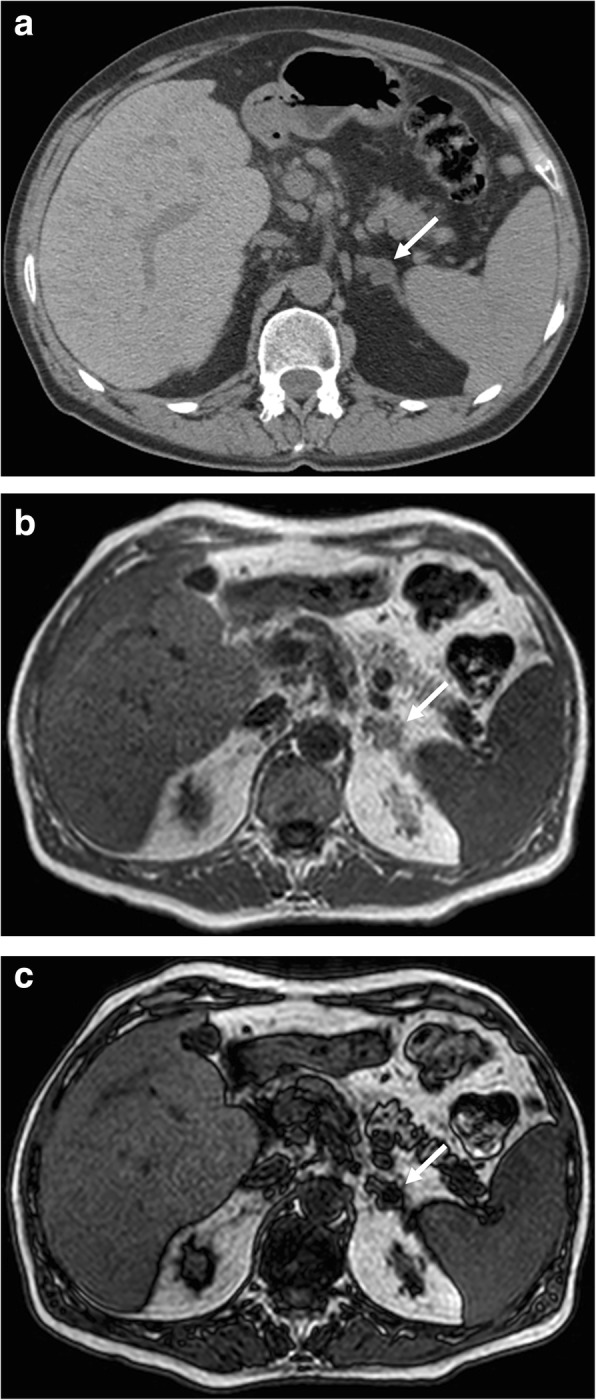
Fig. 1
Fig. 1
Adrenal adenoma of a 45-year-old woman. Unenhanced CT (a) shows a left adrenal mass (arrow) with lower attenuation values than 10 HU. Axial T1-weighted in-phase (b) and out-of-phase (c) gradient recalled echo MR images show prominent loss of signal on out-of-phase
Fig. 2
Fig. 2
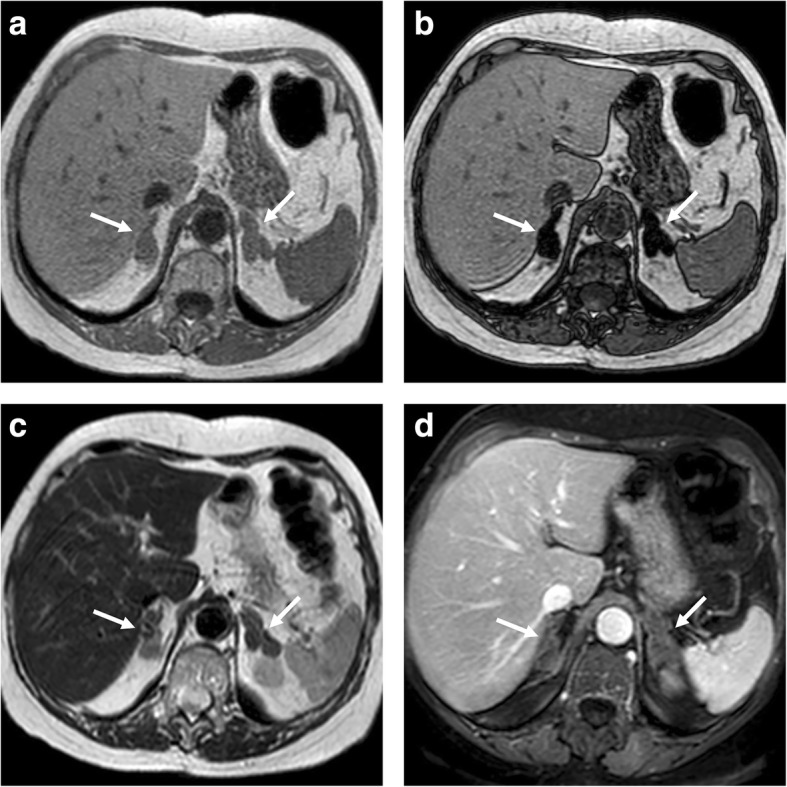
Bilateral adrenal hyperplasia in a 75-year-old woman. Axial T1-weighted in-phase (a) and out-of-phase gradient recalled echo (c), T2-weighted fast spin echo (c), and three dimensional fat-suppressed T1-weighted gradient recalled echo image in portal phase after contrast injection (d) show the nodular enlargement of both adrenal glands (arrows) with loss of signal on out-of-phase (b)
Fig. 3
Fig. 3
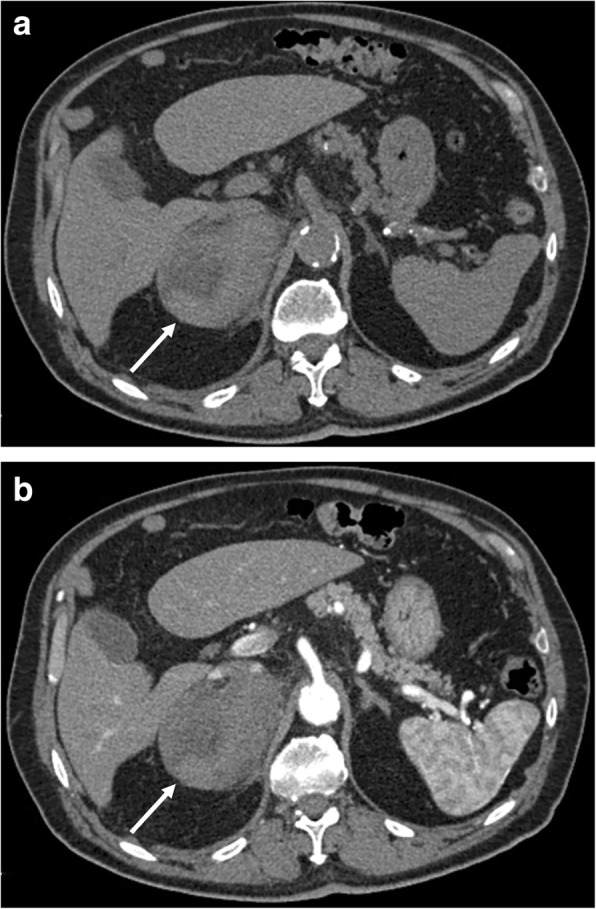
Right adrenal hemorrhage in a 61-year-old man with acute abdominal pain after starting anticoagulant therapy. Axial unenhanced (a) and arterial (b) phase CT images show a large right adrenal hematoma (arrow) with relatively high attenuation values and without enhancement after contrast injection
Fig. 4
Fig. 4
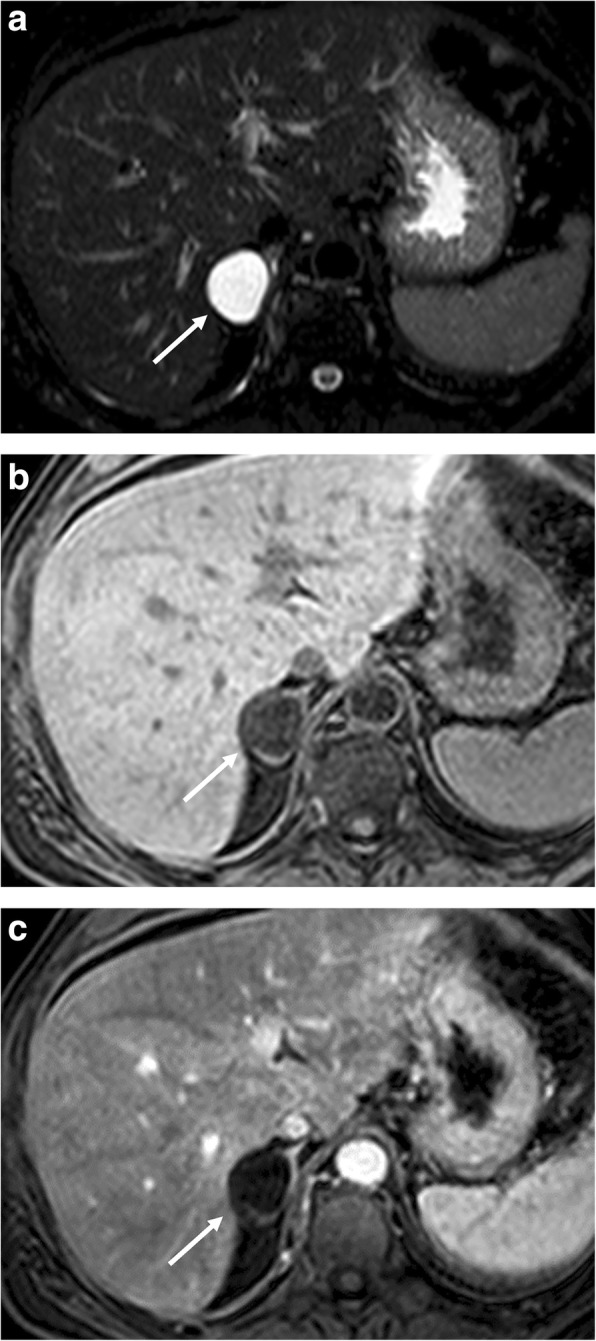
Right adrenal cyst in a 50-year-old woman. Axial T2-weighted fat-saturated fast spin echo MR image (a), three-dimensional fat-suppressed T1-weighted gradient recalled echo images before (b) and after paramagnetic contrast administration (c) show a right adrenal cystic lesion (arrow) with low T1 signal intensity, high T2 signal intensity, no contrast enhancement and no septations, blood products, soft-tissue components, or calcifications
Fig. 5
Fig. 5
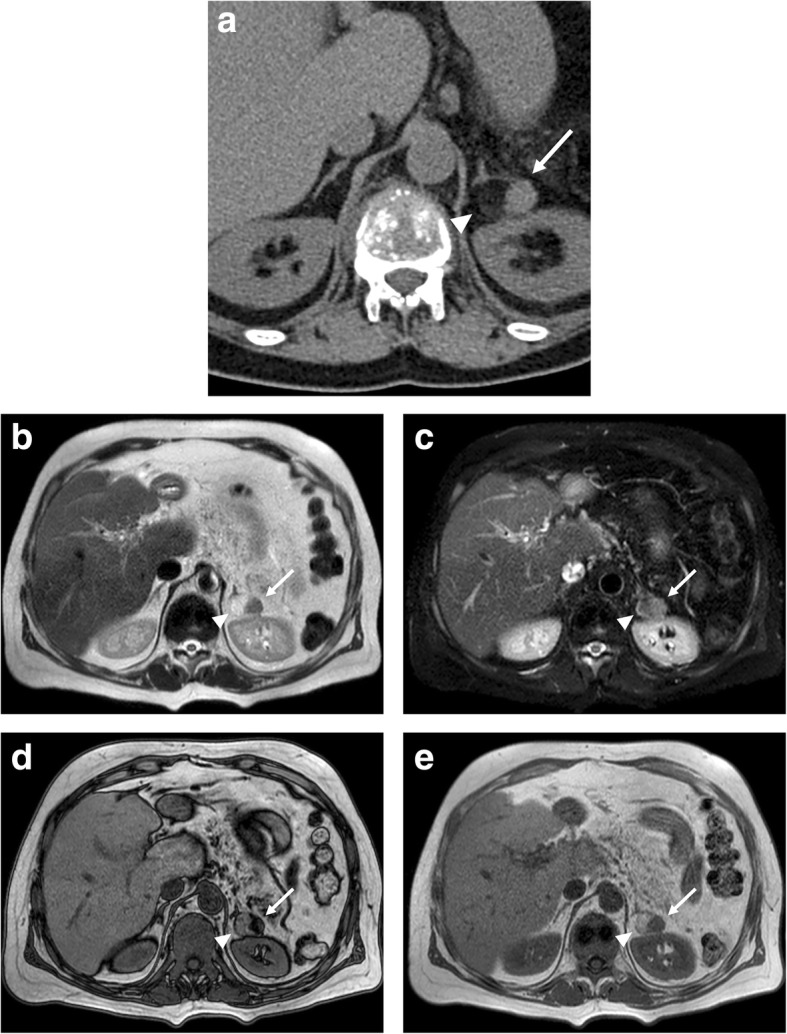
Left adrenal myelolipoma incidentally discovered in a lumbar CT scan on a 51-year-old man. Unenhanced CT (a) shows a left adrenal mass with macroscopic fat (arrowhead) and a soft-tissue myeloid component (arrow). Axial T2-weighted fast spin echo (b), T2-weighted fat-saturated spin echo (c), T1-weighted in-phase (d), and out-of-phase gradient recalled echo images (e) show the signal drop of macroscopic fat in fat-suppressed T2-weigthed images (c, arrowhead) and show loss of signal on out-of-phase imaging of the myeloid element (e, arrow)
Fig. 6
Fig. 6
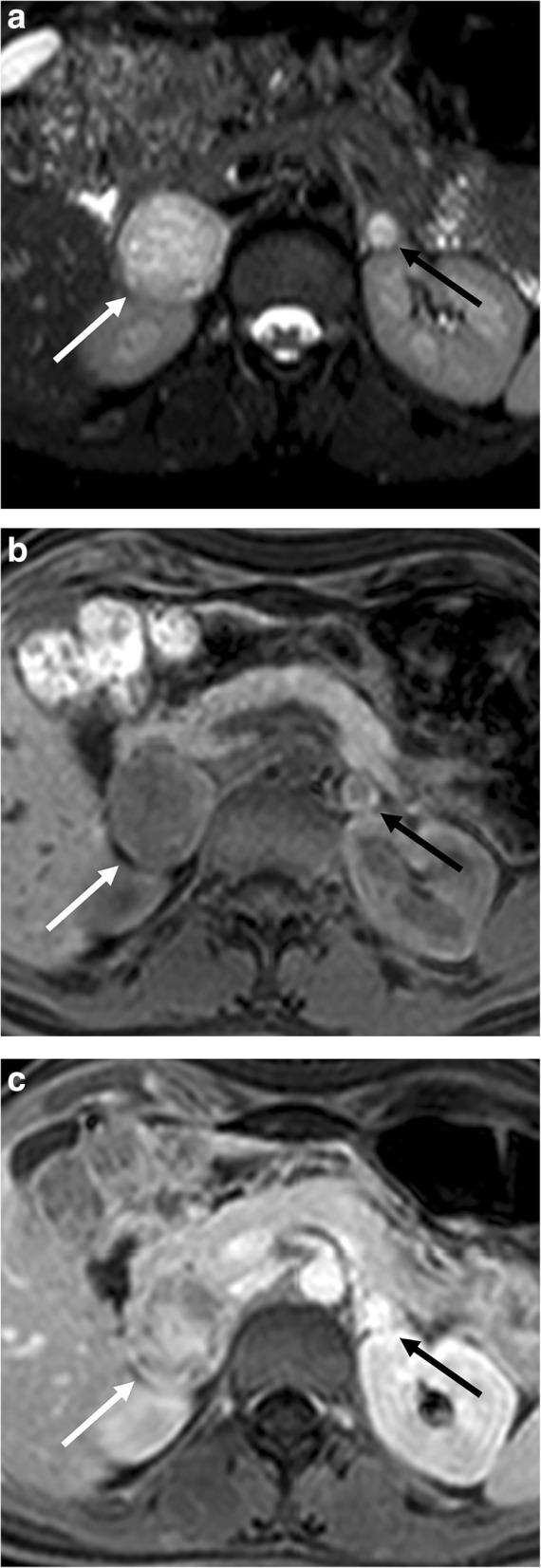
Bilateral adrenal pheochromocytoma in a 27-year-old woman with multiple endocrine neoplasia type 2. Axial T2-weighted fat-saturated spin echo (a), three-dimensional fat-suppressed T1-weighted gradient recalled echo images before contrast injection (b), and in portal phase (c) images show a bilateral adrenal mass with high T2 signal intensity and strong and heterogenous contrast enhancement. The signal intensity is typically more inhomogenous in larger lesions (white arrow, right adrenal gland) than in smaller ones (black arrow, left adrenal gland)
Fig. 7
Fig. 7
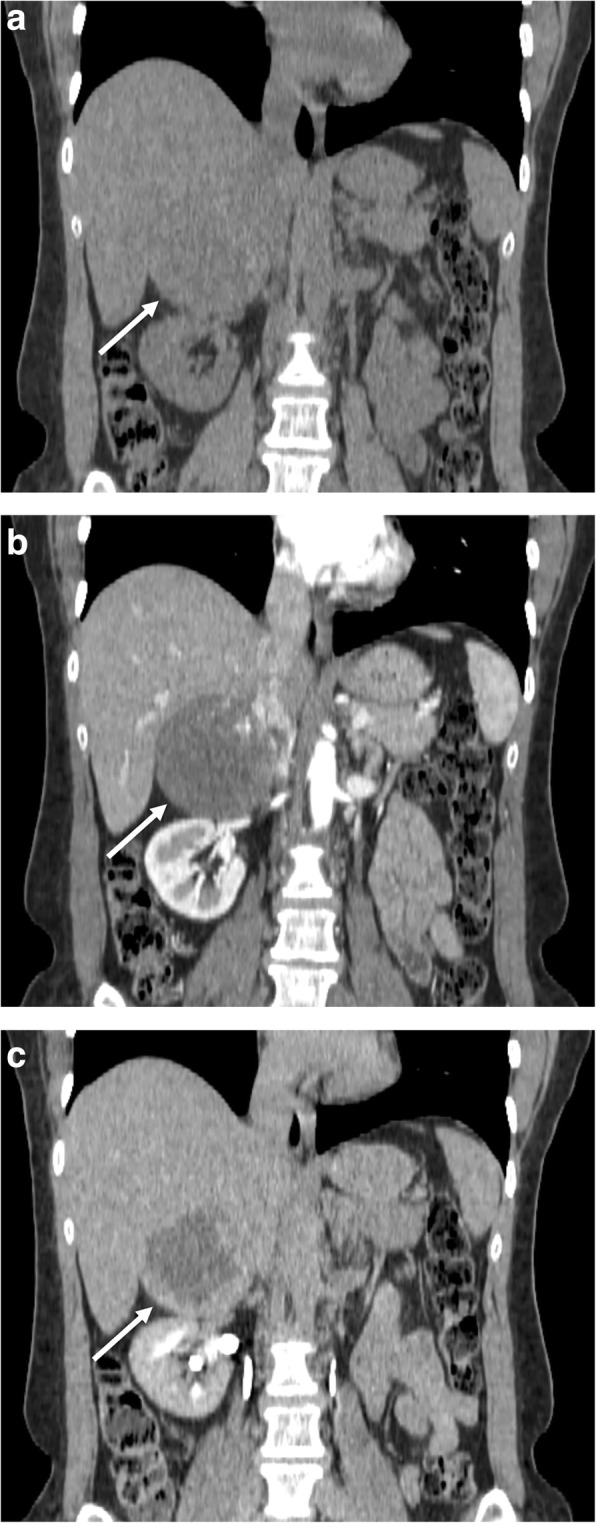
Right adrenal hemangioma in a 49-year-old woman. Coronal reformatted CT images before (a) and after contrast injection in arterial (b) and late phase (c) show a well-encapsulated large right adrenal lesion (arrow) showing peripheral contrast enhancement with progressive centripetal filling and a hypodense center
Fig. 8
Fig. 8
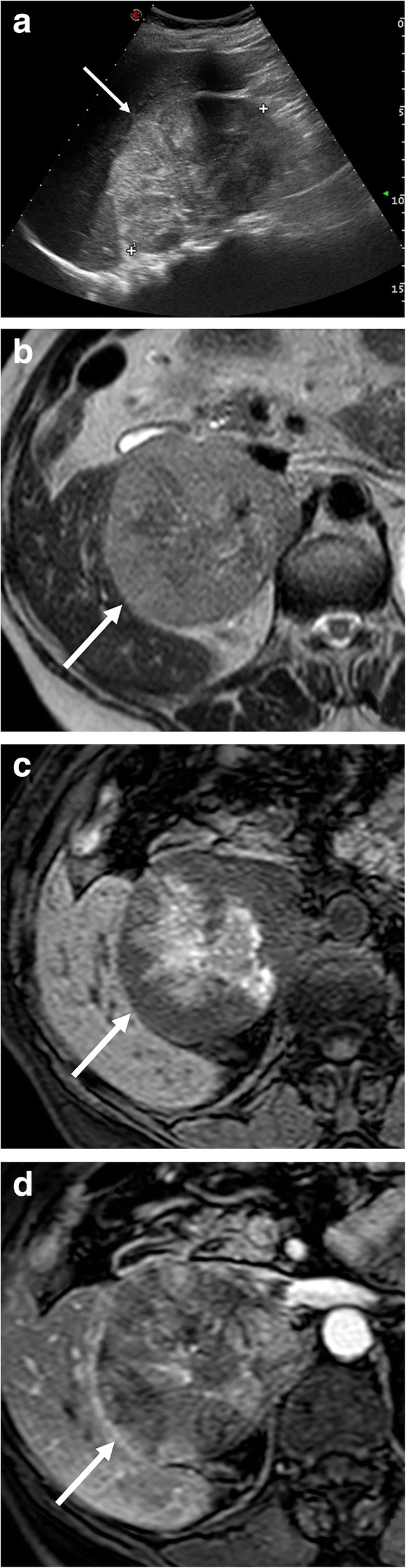
Right cortical carcinoma in a 70-year-old woman admitted to the emergency department for atraumatic abdominal pain. US (a) shows a large heterogeneous right adrenal mass (arrow). Axial T2-weighted spin echo (b), three-dimensional fat-suppressed T1-weighted gradient recalled echo images before contrast injection (c), in arterial phase (d) images confirm the presence of a large right adrenal mass with necrotic and hemorrhagic components which present as areas of high signal on unenhanced T1-weighted (c) images and non-enhancing areas after contrast injection (d)
Fig. 9
Fig. 9
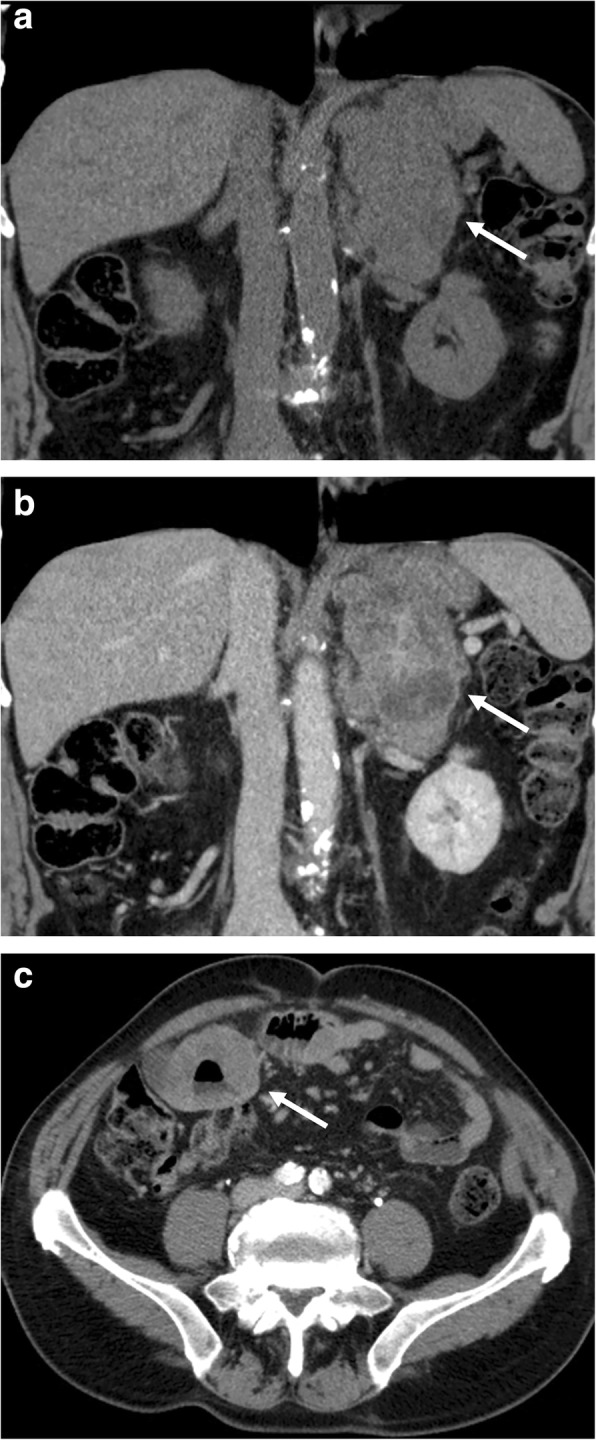
Left adrenal lymphomatous lesion in a 70-year-old man with non-Hodgkin lymphoma. Coronal reformatted CT images before (a) and after contrast injection in portal phase (b) show a large left adrenal mass (arrow) with inhomogeneous enhancement. Axial CT image of the lower abdomen in portal phase (c; arrow) shows the gastrointestinal involvement by lymphoma as aneurysmal dilatation of some loops of the small bowel
Fig. 10
Fig. 10
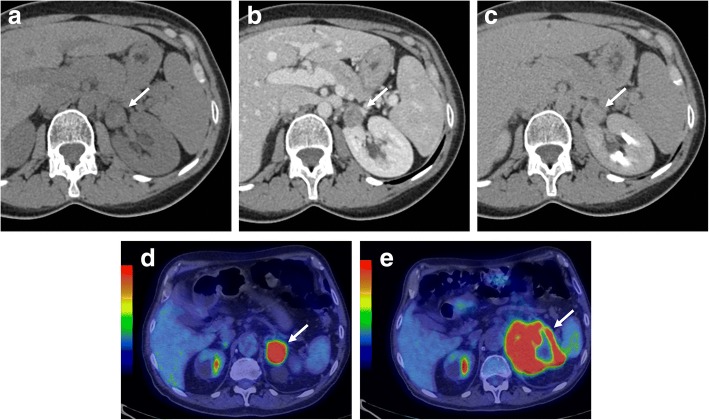
Left adrenal metastasis in a 62-year-old woman with lung cancer. Unenhanced CT (a), portal (b), and late phase (c) images show a left adrenal mass (arrow) with attenuation value of 26 HU on unenhanced CT (a) and “absolute percentage washout” of 15%. Staging 18F-FDG PET/CT (d) performed 3 months later revealed a left adrenal lesion (arrow) with high metabolic activity (SUVmax 14 g/mL) and increased in size in comparison with CT images. After chemotherapy, restaging 18F-FDG-PET/CT (e) showed morpho-functional disease progression of the adrenal lesion (arrow) with signs of central necrosis (SUVmax 19 g/mL with central necrotic area of absence of 18F-FDG uptake). Images of 18F-FDG-PET/CT provided by database of Nuclear Medicine Service, Fondazione Istituto G. Giglio, Cefalù, Italy
Fig. 11
Fig. 11
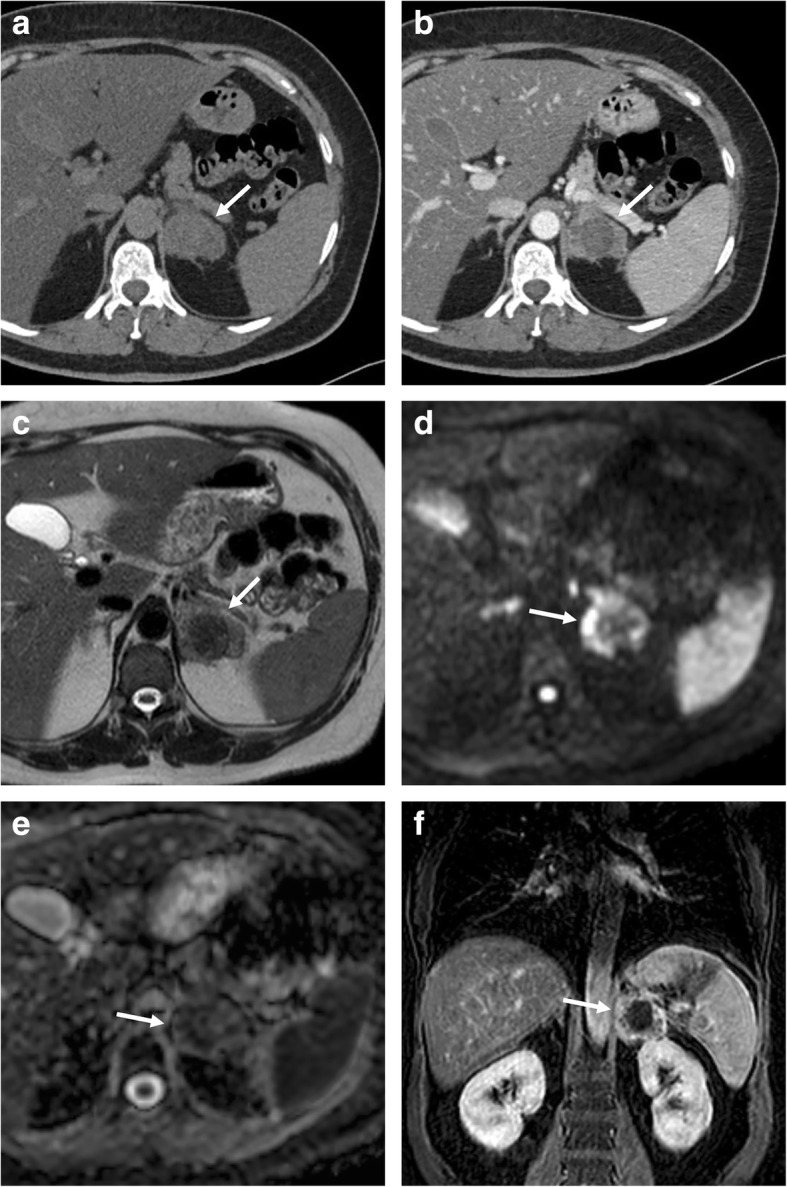
Left adrenal metastasis in a 58-year-old woman with breast cancer. Axial unenhanced CT (a), portal phase (b), T2-weighted fast spin echo (c), b800 s/mm2 diffusion-weighted image (d), ADC map (e), and coronal three-dimensional fat-suppressed T1-weighted gradient recalled echo image in portal phase after contrast injection (f) show a left adrenal mass (arrow). This lesion intra-lesional hemorrhage presenting as spontaneously hyperdense area on unenhanced CT (a), hypointense on T2-weighted (c), and no enhancement on CT (b) and MR (f) images after contrast injection. The peripheral solid component of the lesion shows also restricted pattern of diffusion (d, e)

References

    1. Galia M, Albano D, Narese D et al (2016) Whole body MRI in patients with lymphoma: collateral findings. Radiol Med. 10.1007/s11547-016-0658-x - PubMed
    1. Sconfienza LM, Mauri G, Muzzupappa C et al (2015) Relevant incidental findings at abdominal multi-detector contrast-enhanced computed tomography: a collateral screening? World J Radiol. 10.4329/wjr.v7.i10.350 - PMC - PubMed
    1. Mayo-Smith WW, Song JH, Boland GL, et al (2017) Management of incidental adrenal masses: a White Paper of the ACR Incidental Findings Committee. J Am Coll Radiol. 10.1016/j.jacr.2017.05.001 - PubMed
    1. Kebebew E (2017) Management of adrenal masses in children and adults. Springer. 10.1007/978-3-319-44136-8
    1. Johnson PT, Horton KM, Fishman EK (2009) Adrenal mass imaging with multidetector CT: pathologic conditions, pearls, and pitfalls. Radiographics. 10.1148/rg.295095027 - PubMed