


Novel Approaches to the Control of Oral Microbial Biofilms
- PMID: 30687755
- PMCID: PMC6330817
- DOI: 10.1155/2018/6498932
Novel Approaches to the Control of Oral Microbial Biofilms
Abstract
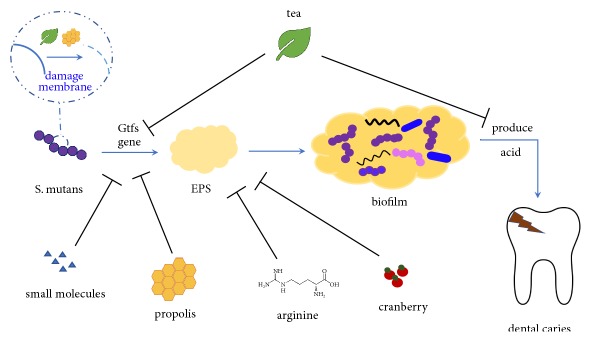
Effective management of biofilm-related oral infectious diseases is a global challenge. Oral biofilm presents increased resistance to antimicrobial agents and elevated virulence compared with planktonic bacteria. Antimicrobial agents, such as chlorhexidine, have proven effective in the disruption/inhibition of oral biofilm. However, the challenge of precisely and continuously eliminating the specific pathogens without disturbing the microbial ecology still exists, which is a major factor in determining the virulence of a multispecies microbial consortium and the consequent development of oral infectious diseases. Therefore, several novel approaches are being developed to inhibit biofilm virulence without necessarily inducing microbial dysbiosis of the oral cavity. Nanoparticles, such as pH-responsive enzyme-mimic nanoparticles, have been developed to specifically target the acidic niches within the oral biofilm where tooth demineralization readily occurs, in effect controlling dental caries. Quaternary ammonium salts (QAS) such as dimethylaminododecyl methacrylate (DMADDM), when incorporated into dental adhesives or resin composite, have also shown excellent and durable antimicrobial activity and thus could effectively inhibit the occurrence of secondary caries. In addition, custom-designed small molecules, natural products and their derivatives, as well as basic amino acids such as arginine, have demonstrated ecological effects by modulating the virulence of the oral biofilm without universally killing the commensal bacteria, indicating a promising approach to the management of oral infectious diseases such as dental caries and periodontal diseases. This article aims to introduce these novel approaches that have shown potential in the control of oral biofilm. These methods may be utilized in the near future to effectively promote the clinical management of oral infectious diseases and thus benefit oral health.
Figures
References
-
- Liljemark W. F., Bloomquist C. Human oral microbial ecology and dental caries and periodontal diseases. Critical Reviews in Oral Biology Medicine. 2016;7(2):180–198. - PubMed
Publication types
MeSH terms
Substances
LinkOut - more resources
Full Text Sources
Other Literature Sources
Medical
