


Moving into the mainstream: healthcare professionals' views of implementing treatment focussed genetic testing in breast cancer care
- PMID: 30689103
- PMCID: PMC6560008
- DOI: 10.1007/s10689-019-00122-y
Moving into the mainstream: healthcare professionals' views of implementing treatment focussed genetic testing in breast cancer care
Abstract
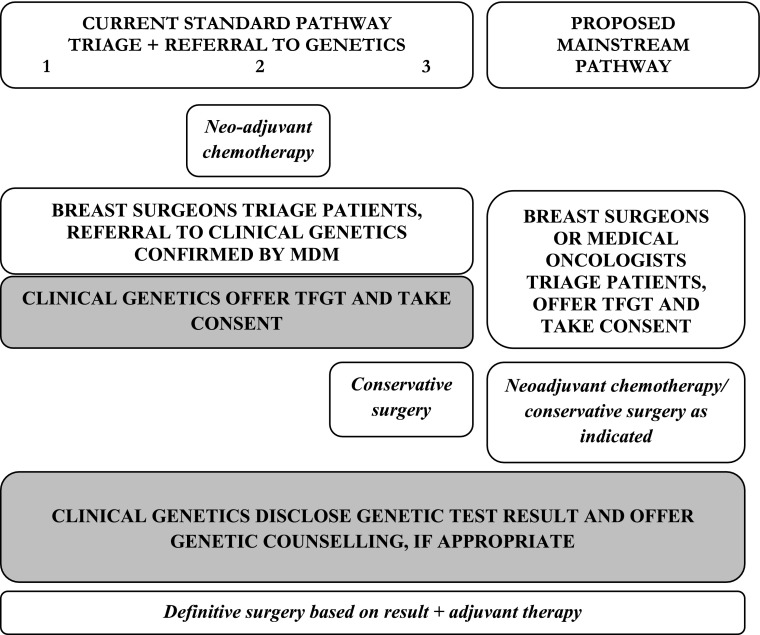
A proportion of breast cancers are attributable to BRCA1 or BRCA2 mutations. Technological advances has meant that mutation testing in newly diagnosed cancer patients can be used to inform treatment plans. Although oncologists increasingly deliver treatment-focused genetic testing (TFGT) as part of mainstream ovarian cancer care, we know little about non-genetics specialists' views about offering genetic testing to newly diagnosed breast cancer patients. This study sought to determine genetics and non-genetics specialists' views of a proposal to mainstream BRCA1 and 2 testing in newly diagnosed breast cancer patients. Qualitative interview study. Nineteen healthcare professionals currently responsible for offering TFGT in a standard (triage + referral) pathway (breast surgeons + clinical genetics team) and oncologists preparing to offer TFGT to breast cancer patients in a mainstreamed pathway participated in in-depth interviews. Genetics and non-genetics professionals' perceptions of mainstreaming are influenced by their views of: their clinical roles and responsibilities, the impact of TFGT on their workload and the patient pathway and the perceived relevance of genetic testing for patient care in the short-term. Perceived barriers to mainstreaming may be overcome by: more effective communication between specialities, clearer guidelines/patient pathways and the recruitment of mainstreaming champions.
Keywords: BRCA1 and BRCA2 treatment focussed testing; Clinician perspectives; Mainstreaming; Qualitative analysis.
Conflict of interest statement
SW, MP, DS, JL, OY, and NH declare that they have no conflict of interest. CG has sat on Advisory Boards for AstraZeneca, Clovis and Tesaro, has received lecture fees and research funding from AstraZeneca and Tesaro.
Figures
References
-
- National Institute for Health and Clinical Excellence (2013) Familial breast cancer: classification, care and managing breast cancer and related risks in people with a family history of breast cancer. NICE guideline [CG164]. National Institute for Health and Clinical Excellence - PubMed
Publication types
MeSH terms
LinkOut - more resources
Full Text Sources
Medical
Miscellaneous
