


Dynamic magnetic resonance imaging of the female pelvic floor-a pictorial review
- PMID: 30689115
- PMCID: PMC6352388
- DOI: 10.1186/s13244-019-0687-9
Dynamic magnetic resonance imaging of the female pelvic floor-a pictorial review
Abstract
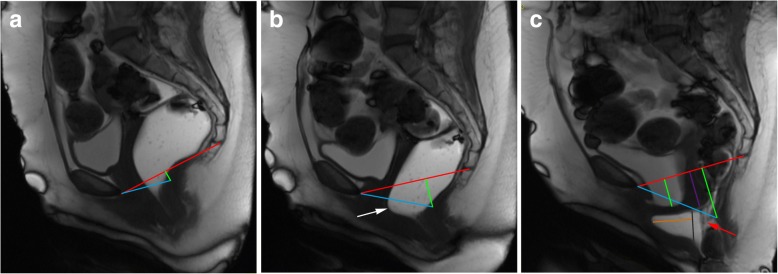
Pelvic floor dysfunctions represent a range of functional disorders that frequently occur in adult women, carrying a significant burden on the quality of life, and its incidence tends to increase attending to the expected aging of the population. Pelvic floor dysfunctions can manifest as incontinence, constipation, and prolapsed pelvic organs. Since pelvic floor weakness is frequently generalized and clinically underdiagnosed, imaging evaluation is of major importance, especially prior to surgical correction. Given some interobserver variability of soft-tissue measurements, MR defecography allows a noninvasive, radiation-free, multiplanar dynamic evaluation of the three pelvic compartments simultaneously and with high spatial and temporal resolution. Both static/anatomic and dynamic/functional findings are important, since pelvic disorders can manifest as whole pelvic floor weakness/dysfunction or as an isolated or single compartment disorder. Imaging has a preponderant role in accessing pelvic floor disorders, and dynamic MR defecography presents as a reliable option, being able to evaluate the entire pelvic floor for optimal patient management before surgery. The purpose of this article is to address the female pelvic anatomy and explain the appropriate MR Defecography protocol, along with all the anatomic points, lines, angles, and measurements needed for a correct interpretation, to later focus on the different disorders of the female pelvic floor, illustrated with MR defecography images, highlighting the role of this technique in accessing these pathologic conditions.
Keywords: Diagnostic imaging; Female pelvic floor; Magnetic resonance defecography.
Conflict of interest statement
Springer Nature remains neutral with regard to jurisdictional claims in published maps and institutional affiliations.
Figures




References
-
- García del Salto L, de Miguel Criado J, Aguilera del Hoyo LF et al (2014) MR imaging-based assessment of the female pelvic floor. Radiographics 34:1417–1439. - PubMed
-
- Olsen AL, Smith VJ, Bergstrom JO, Colling JC, Clark AL (1997) Epidemiology of surgically managed pelvic organ prolapse and urinary incontinence. Obstet Gynecol 89(4):501–506. - PubMed
-
- Luber KM, Boero S, Choe JY (2001) The demographics of pelvic floor disorders: current observations and future projections. Am J Obstet Gynecol 184(7):1496–1503. - PubMed
-
- Members of the Consensus Development Panel (1989) Consensus conference. Urinary incontinence in adults. JAMA 261(18):2685–2690. - PubMed
-
- Dolan LM, Hilton P (2010) Obstetric risk factors and pelvic floor dysfunction 20 years after first delivery. Int Urogynecol J 21:535–544. - PubMed
Publication types
LinkOut - more resources
Full Text Sources
