


Plasma Cell Leukemia: Definition, Presentation, and Treatment
- PMID: 30689121
- PMCID: PMC6349791
- DOI: 10.1007/s11912-019-0754-x
Plasma Cell Leukemia: Definition, Presentation, and Treatment
Abstract
Purpose of review: We discuss current topics on the definition of plasma cell leukemia and the distinction between plasma cell leukemia and multiple myeloma. Moreover, we review the latest literature on how to treat plasma cell leukemia.
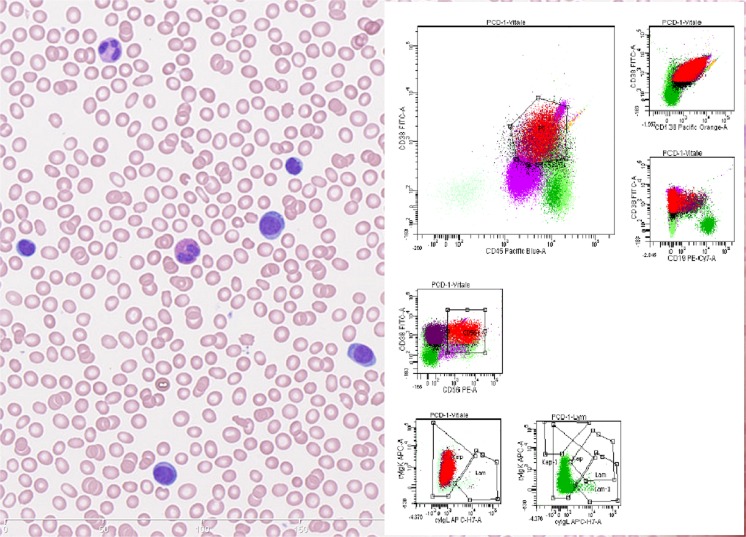
Recent findings: Plasma cell leukemia is clinically and genetically distinct from multiple myeloma. Plasma cell leukemia is defined by the observation in blood of more than 20% clonal plasma cells by differential count of the leucocytes or by counting more than 2 × 10⁹ per liter circulating clonal plasma cells. However, patients with lower levels of circulating plasma cells have the same adverse prognosis, which challenges the disease definition. Survival has improved after implementation of high-dose chemotherapy with stem-cell support, bortezomib, and lenalidomide in the treatment; yet, the prognosis remains poor. The results of allo-transplants have been disappointing. The diagnostic criteria of PCL are currently discussed in the international myeloma community. Despite some improvement in survival, the prognosis remains adverse. New, more targeted treatment modalities, including immunotherapies, will hopefully improve the outcome in the near future.
Keywords: Cytogenetics; Diagnosis; Molecular biology; Plasma cell leukemia; Prognosis; Treatment.
Conflict of interest statement
Conflict of Interest
The authors declare that they have no conflict of interest.
Human and Animal Rights and Informed Consent
All reported studies/experiments with human or animal subjects performed by the authors have been previously published and complied with all applicable ethical standards (including the Helsinki Declaration and its amendments, institutional/national research committee standards, and international/national/institutional guidelines).
Figures
References
-
- Gonsalves WI, Rajkumar SV, Go RS, Dispenzieri A, Gupta V, Singh PP, Buadi FK, Lacy MQ, Kapoor P, Dingli D, Lust JA, Zeldenrust SR, Hayman SR, Kyle RA, Gertz MA, Kumar SK. Trends in survival of patients with primary plasma cell leukemia: a population-based analysis. Blood. 2014;124:907–912. doi: 10.1182/blood-2014-03-565051. - DOI - PMC - PubMed
-
- García-Sanz R, Orfao A, González M, Tabernero MD, Bladé J, Moro MJ, et al. Primary plasma cell leukemia: clinical, immunophenotypic, DNA ploidy, and cytogenetic characteristics. Blood. 1999;93:1032–1037. - PubMed
Publication types
MeSH terms
LinkOut - more resources
Full Text Sources
Research Materials
