


Amygdala and Hypothalamus: Historical Overview With Focus on Aggression
- PMID: 30690521
- PMCID: PMC6565484
- DOI: 10.1093/neuros/nyy635
Amygdala and Hypothalamus: Historical Overview With Focus on Aggression
Abstract
Aggressiveness has a high prevalence in psychiatric patients and is a major health problem. Two brain areas involved in the neural network of aggressive behavior are the amygdala and the hypothalamus. While pharmacological treatments are effective in most patients, some do not properly respond to conventional therapies and are considered medically refractory. In this population, surgical procedures (ie, stereotactic lesions and deep brain stimulation) have been performed in an attempt to improve symptomatology and quality of life. Clinical results obtained after surgery are difficult to interpret, and the mechanisms responsible for postoperative reductions in aggressive behavior are unknown. We review the rationale and neurobiological characteristics that may help to explain why functional neurosurgery has been proposed to control aggressive behavior.
Keywords: Aggression; Amygdala; Deep brain simulation; Hypothalamus; Review; Stereotactic neurosurgery.
© Congress of Neurological Surgeons 2019.
Figures
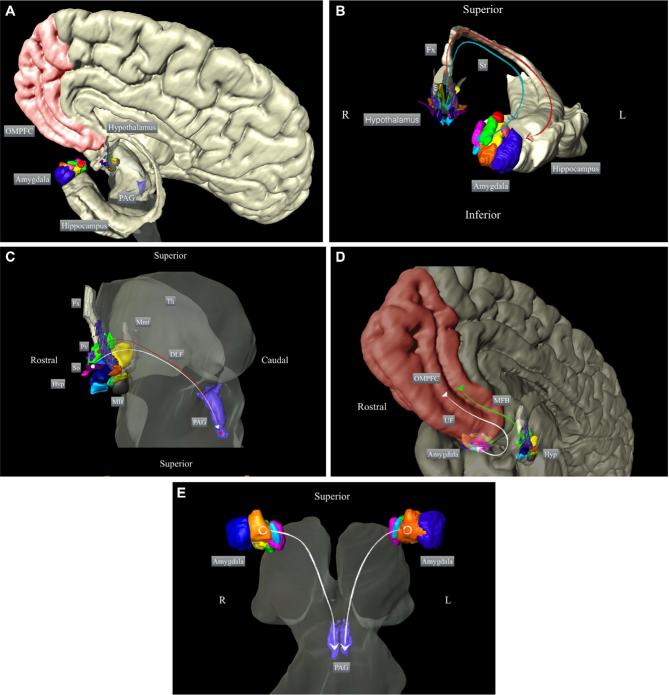
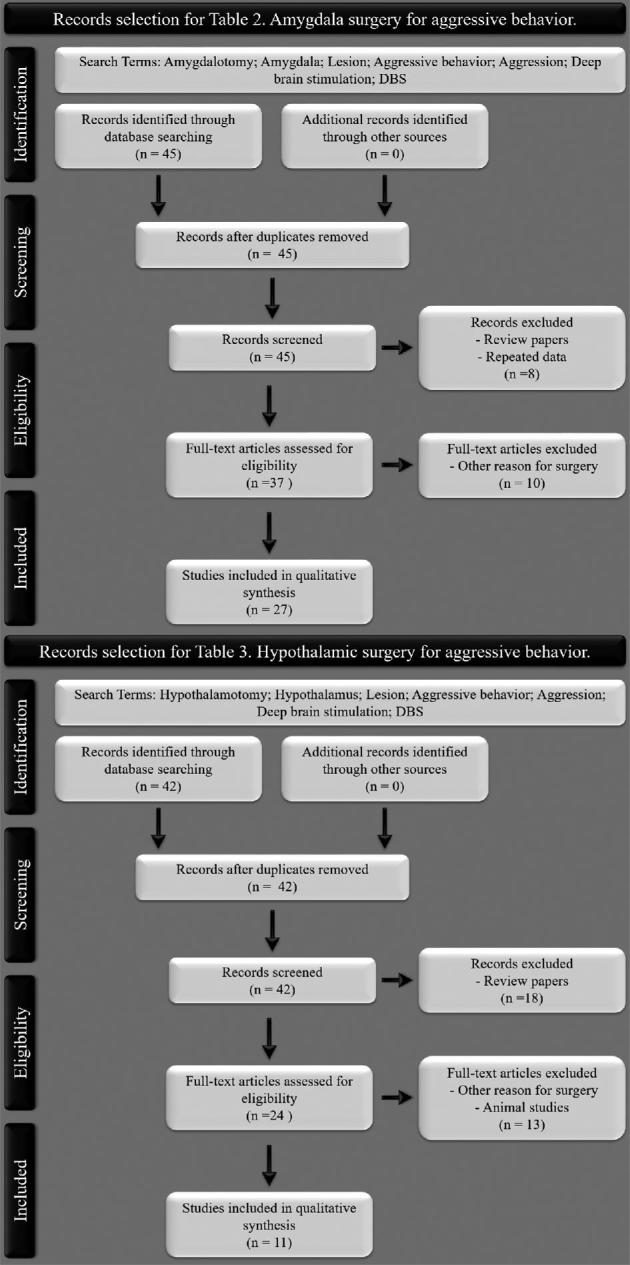
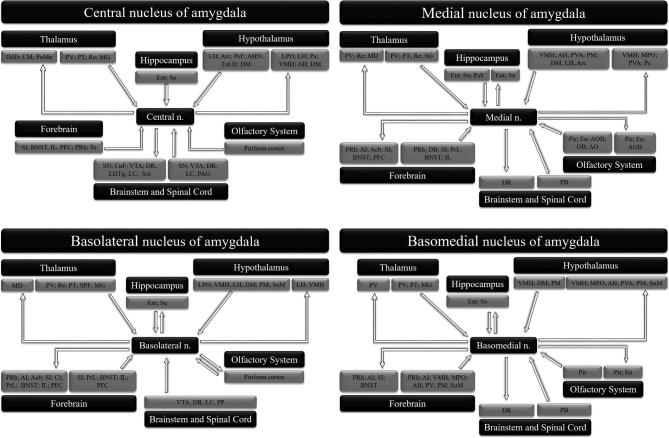
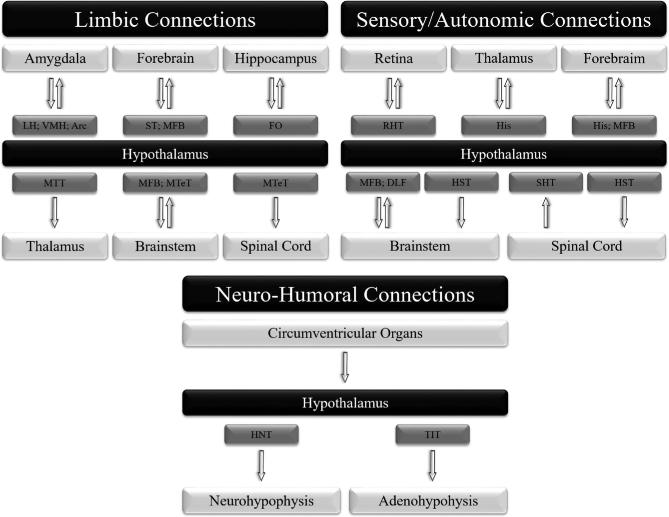
Comment in
-
Commentary: Amygdala and Hypothalamus: Historical Overview With a Focus on Aggression.Neurosurgery. 2019 Jul 1;85(1):E1-E3. doi: 10.1093/neuros/nyz045. Neurosurgery. 2019. PMID: 30864653 No abstract available.
References
-
- Comai S, Tau M, Gobbi G. The psychopharmacology of aggressive behavior. J Clin Psychopharmacol. 2012;32(1):83–94. - PubMed
-
- Dorfman HM, Meyer-Lindenberg A, Buckholtz JW. Neurobiological Mechanisms for Impulsive-Aggression: The Role of MAOA. In: Miczek K, Meyer-Lindenberg A (eds). Neuroscience of Aggression. Current Topics in Behavioral Neurosciences. Vol. 17. Springer, Berlin, Heidelberg; 2013. doi:10.1007/7854_2013_272. - PubMed
-
- American Psychiatric Association. Diagnostic and Statistical Manual of Mental Disorders. Vol. 64 Arlington, VA, American Psychiatric Association; 2013. doi:10.1176/appi.books.9780890425596.
MeSH terms
LinkOut - more resources
Full Text Sources
