


The Role of Tissue Transglutaminase in Cancer Cell Initiation, Survival and Progression
- PMID: 30691081
- PMCID: PMC6409630
- DOI: 10.3390/medsci7020019
The Role of Tissue Transglutaminase in Cancer Cell Initiation, Survival and Progression
Abstract
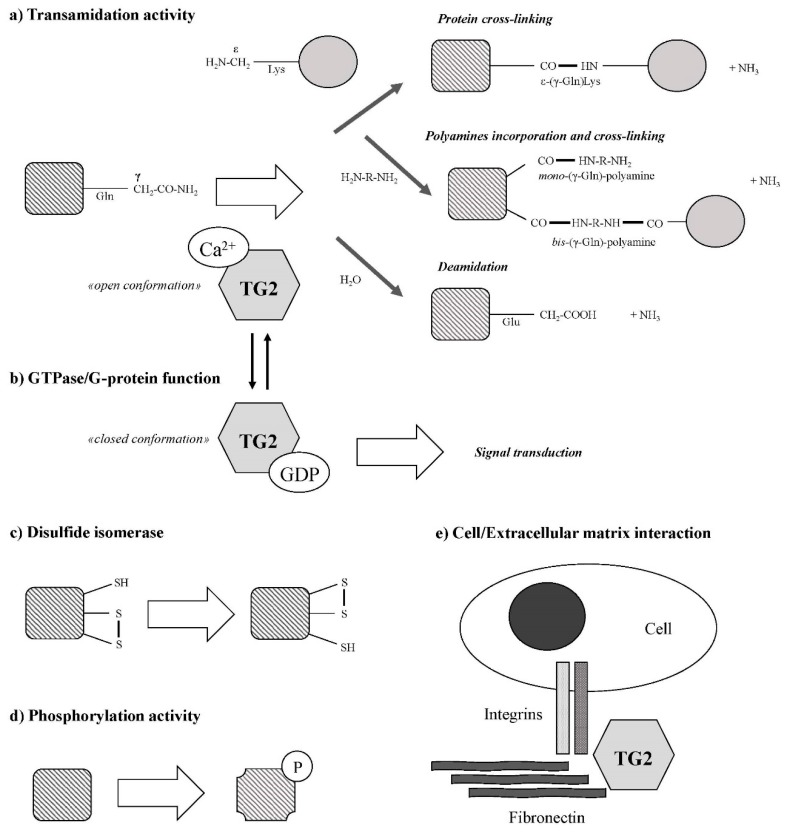
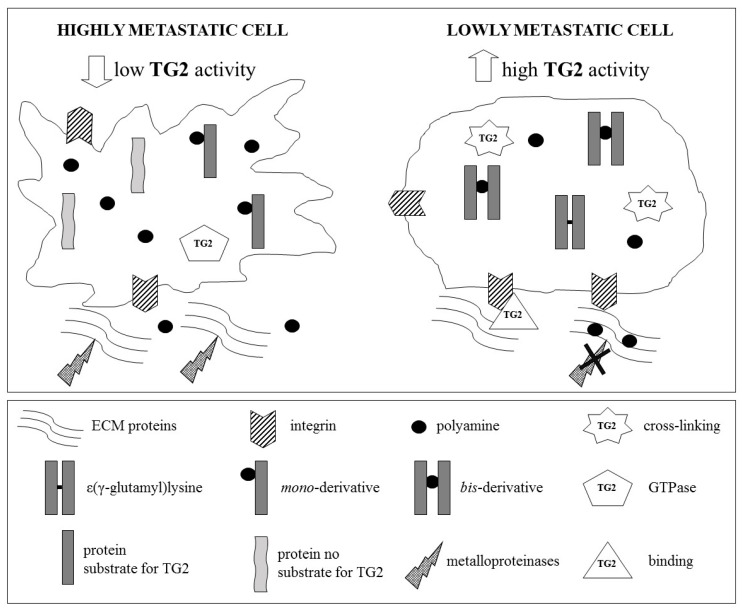
Tissue transglutaminase (transglutaminase type 2; TG2) is the most ubiquitously expressed member of the transglutaminase family (EC 2.3.2.13) that catalyzes specific post-translational modifications of proteins through a calcium-dependent acyl-transfer reaction (transamidation). In addition, this enzyme displays multiple additional enzymatic activities, such as guanine nucleotide binding and hydrolysis, protein kinase, disulfide isomerase activities, and is involved in cell adhesion. Transglutaminase 2 has been reported as one of key enzymes that is involved in all stages of carcinogenesis; the molecular mechanisms of action and physiopathological effects depend on its expression or activities, cellular localization, and specific cancer model. Since it has been reported as both a potential tumor suppressor and a tumor-promoting factor, the role of this enzyme in cancer is still controversial. Indeed, TG2 overexpression has been frequently associated with cancer stem cells' survival, inflammation, metastatic spread, and drug resistance. On the other hand, the use of inducers of TG2 transamidating activity seems to inhibit tumor cell plasticity and invasion. This review covers the extensive and rapidly growing field of the role of TG2 in cancer stem cells survival and epithelial⁻mesenchymal transition, apoptosis and differentiation, and formation of aggressive metastatic phenotypes.
Keywords: cancer stem cells; inflammation; metastasis; tissue transglutaminase.
Conflict of interest statement
The authors declare no conflict of interest.
Figures
References
-
- Johnson D.B., Menzies A.M., Zimmer L., Eroglu Z., Ye F., Zhao S., Rizos H., Sucker A., Scolyer R.A., Gutzmer R., et al. Acquired BRAF inhibitor resistance: A multicenter meta-analysis of the spectrum and frequencies, clinical behaviour, and phenotypic associations of resistance mechanisms. Eur. J. Cancer. 2015;51:2792–2999. doi: 10.1016/j.ejca.2015.08.022. - DOI - PMC - PubMed
Publication types
LinkOut - more resources
Full Text Sources
