


Prevalence of Tinea Capitis among Children in Osogbo, Nigeria, and the Associated Risk Factors
- PMID: 30691234
- PMCID: PMC6473642
- DOI: 10.3390/diseases7010013
Prevalence of Tinea Capitis among Children in Osogbo, Nigeria, and the Associated Risk Factors
Abstract
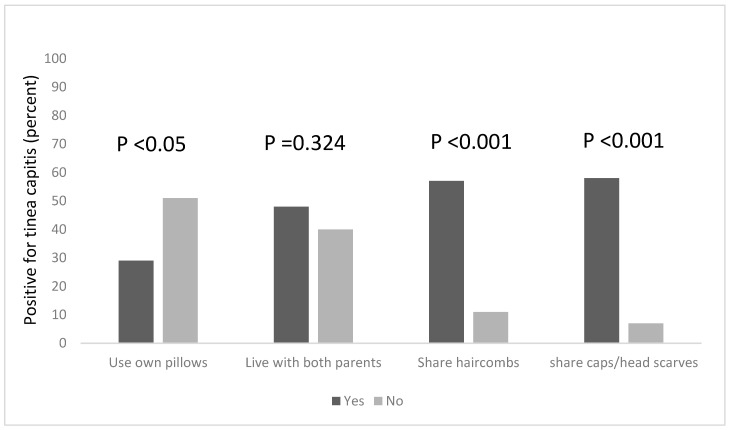
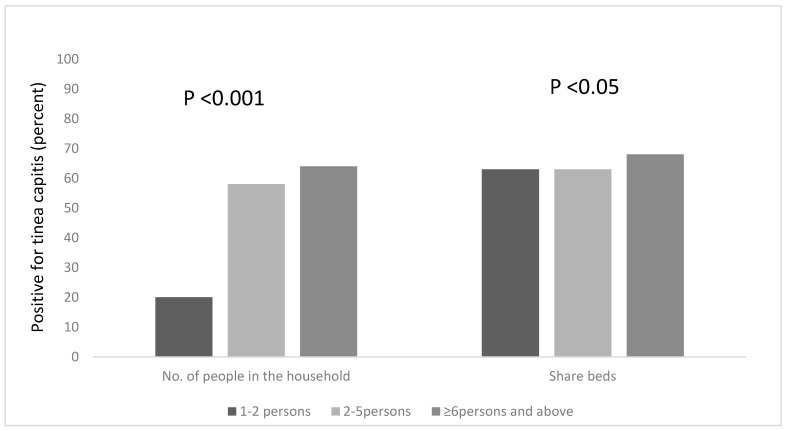
Tinea capitis is a fungi infection of the scalp that disproportionately affects children in rural and underserved communities in Nigeria. A case-control study was conducted to identify the causative agents and factors that predispose school pupils to tinea capitis in two selected government-owned public primary schools in Osogbo, Southwestern Nigeria. A total of 230 participants were included in the study: 115 cases and 115 controls. Head scrapings were collected from pupils with suspected T. capitis lesions, viewed under Potassium Hydroxide smear microscopy and cultured in Sabouraud's Dextrose Agar (SDA) for characteristic fungal elements. A total of 105 (91%) samples were successfully cultured, of which 56% (59/105) were from male pupils. Tricophyton rubrum (34%), Tricophyton mentagrophyte (31%) and Microsporum canis (18%) were the most prevalent organisms. Other dermatophytes obtained include Microsporum nanuum (3%), Epidermophyton floccusum (6%), Tricophyton verucosum (1%), and Microsporum gypseum (8%). Pupils between the ages of 4 and 7 years had the highest distribution (67%) followed by those between the ages of 8 and 11 years (39%). Playing with animals, the sharing of combs and not bathing with soap were significantly associated with tinea capitis infection (P < 0.05) in each case. This study showed a high prevalence of tinea capitis caused by the identified dermatophytes in the area.
Keywords: Nigeria; dermatophytes; school children; tinea capitis.
Conflict of interest statement
The authors declare no conflict of interest.
Figures
References
-
- Oladele R.O., Denning D.W. Burden of serious fungal infection in Nigeria. West Afr. J. Med. 2014;33:107–114. - PubMed
-
- Ndako J.A., Osemwegie O., Olopade B., Yunusa G.O. Prevalence of Dermatophytes and other associated Fungi among school children. Glob. Adv. Res. J. Med. Med. Sci. 2012;1:49–56.
-
- Vishnu Sharma T.K.K., Sharma A., Seth R., Chandra S. Dermatophytes: Diagnosis of dermatophytosis and its treatment. Afr. J. Microbiol. Res. 2015;9:1286–1293. doi: 10.5897/AJMR2015.7374. - DOI
LinkOut - more resources
Full Text Sources
