


Potential Health Benefits From Downhill Skiing
- PMID: 30692936
- PMCID: PMC6340074
- DOI: 10.3389/fphys.2018.01924
Potential Health Benefits From Downhill Skiing
Abstract
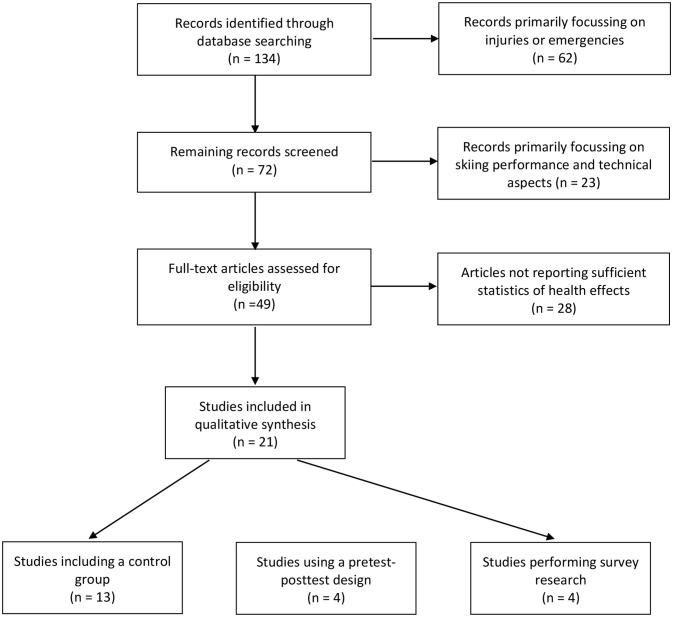
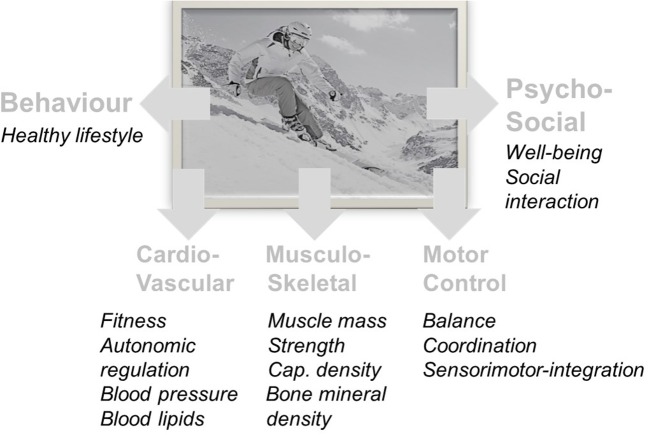
Objectives: Downhill skiing represents one of the most popular winter sports worldwide. Whereas a plethora of studies dealt with the risk of injury and death associated with downhill skiing, data on its favorable health effects are scarce. A more comprehensive overview on such effects might emerge from a multidisciplinary perspective. Methods: A literature search has been performed to identify original articles on downhill/alpine skiing interventions or questionnaire-based evaluation of skiing effects and the assessment of health effects (cardiorespiratory, neurophysiological, musculoskeletal, psycho-social). Results and Discussion: A total of 21 original articles dealing with potentially favorable health effects resulting from downhill skiing were included in this review. Results indicate that downhill skiing, especially when performed on a regular basis, may contribute to healthy aging by its association with a healthier life style including higher levels of physical activity. Several other mechanisms suggest further favorable health effects of downhill skiing in response to specific challenges and adaptations in the musculo-skeletal and postural control systems, to exposures to cold temperatures and intermittent hypoxia, and/or emotional and social benefits from outdoor recreation. However, reliable data corroborating these mechanisms is scarce.
Keywords: alpine skiing; biomechanics; cardiovascular; neurophysiology; psycho-social.
Figures
References
-
- Alvarez-San Emeterio C., Antuñano N. P., López-Sobaler A. M., González-Badillo J. J. (2011). Effect of strength training and the practice of Alpine skiing on bone mass density, growth, body composition, and the strength and power of the legs of adolescent skiers. J. Strength Cond. Res. 25, 2879–2890. 10.1519/JSC.0b013e31820c8687 - DOI - PubMed
-
- Asang E. (1976). Experimental biomechanics of the human leg. A basis for interpreting typical skiing injury mechanisms. Orthopedic Clin. North Am. 7, 63–73. - PubMed
-
- Babiel S., Hartmann S., Spitzenpfeil P., Mester J. (1997). Ground reaction forces in alpine skiing, cross-country skiing and ski jumping, in Science and Skiing III, edsMüller E., Bacharach D., Klika R., Schwameder H., Lindinger S. (London: E & FN Spon; ), 200–207.
Publication types
LinkOut - more resources
Full Text Sources
