


Environmental Chemical Contaminants in Food: Review of a Global Problem
- PMID: 30693025
- PMCID: PMC6332928
- DOI: 10.1155/2019/2345283
Environmental Chemical Contaminants in Food: Review of a Global Problem
Abstract
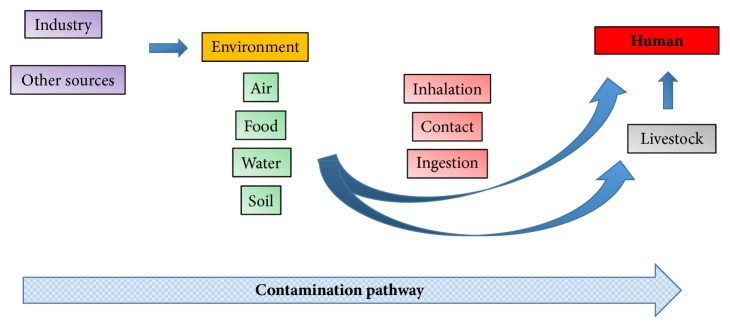
Contamination by chemicals from the environment is a major global food safety issue, posing a serious threat to human health. These chemicals belong to many groups, including metals/metalloids, polycyclic aromatic hydrocarbons (PAHs), persistent organic pollutants (POPs), perfluorinated compounds (PFCs), pharmaceutical and personal care products (PPCPs), radioactive elements, electronic waste, plastics, and nanoparticles. Some of these occur naturally in the environment, whilst others are produced from anthropogenic sources. They may contaminate our food-crops, livestock, and seafood-and drinking water and exert adverse effects on our health. It is important to perform assessments of the associated potential risks. Monitoring contamination levels, enactment of control measures including remediation, and consideration of sociopolitical implications are vital to provide safer food globally.
Figures
References
-
- Price P., Zaleski R., Hollnagel H., Ketelslegers H., Han X. Assessing the safety of co-exposure to food packaging migrants in food and water using the maximum cumulative ratio and an established decision tree. Food Additives and Contaminants - Part A Chemistry, Analysis, Control, Exposure and Risk Assessment. 2014;31(3):414–421. doi: 10.1080/19440049.2013.865145. - DOI - PubMed
-
- Leibson T., Lala P., Ito S. Drug and Chemical Contaminants in Breast Milk: Effects on Neurodevelopment of the Nursing Infant. In: Slikker W. J., Paule M. G., and., Wang C., editors. Handbook of Developmental Neurotoxicology. Elsevier; 2018. pp. 275–284.
-
- Vafeiadi M., Georgiou V., Chalkiadaki G., et al. Association of prenatal exposure to persistent organic pollutants with obesity and cardiometabolic traits in early childhood: the Rhea mother-child cohort (Crete, Greece) Environmental Health Perspectives. 2015;123(10) doi: 10.1289/ehp.1409062. - DOI - PMC - PubMed
-
- Mahmood A., Malik R. N. Human health risk assessment of heavy metals via consumption of contaminated vegetables collected from different irrigation sources in Lahore, Pakistan. Arabian Journal of Chemistry. 2014;7:91–99. doi: 10.1016/j.arabjc.2013.07.002. - DOI
Publication types
LinkOut - more resources
Full Text Sources
