Antibiotic Prescription Patterns among Children Younger than 5 Years in Nouna District, Burkina Faso
- PMID: 30693860
- PMCID: PMC6493961
- DOI: 10.4269/ajtmh.18-0791
Antibiotic Prescription Patterns among Children Younger than 5 Years in Nouna District, Burkina Faso
Abstract
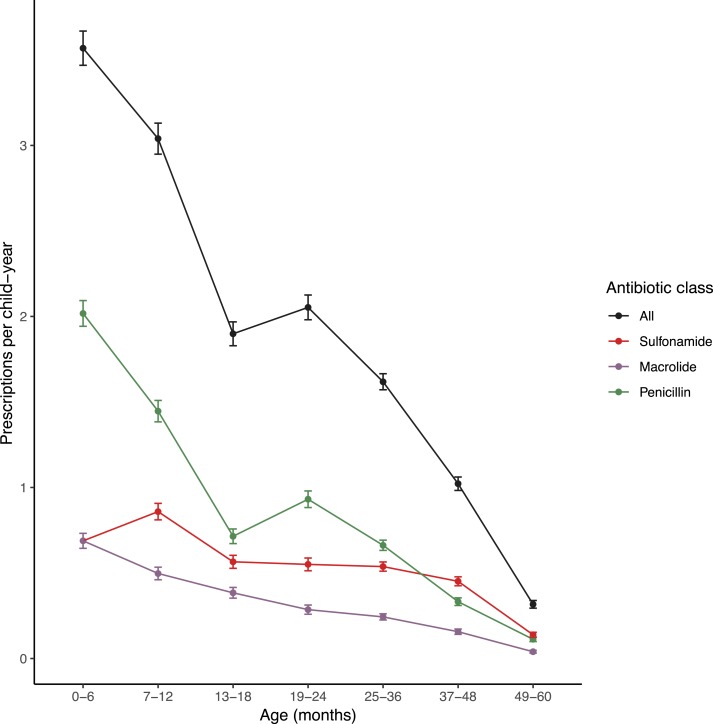
Understanding antibiotic use may help predict emergence of antimicrobial resistance. We evaluated antibiotic prescription trends in rural Burkina Faso, where little is known about antibiotic consumption. Antibiotic prescription data for 20 communities were extracted through record review in six primary health-care facilities serving the communities. The number of antibiotic prescriptions per child-year was calculated using population-based census data from the communities. A total of 1,444 antibiotic prescriptions were made from March to June 2017 among 3,401 children in the communities. The frequency of antibiotic prescription was 1.70 prescriptions per child-year (95% CI: 1.61-1.79). Penicillins were the most common (1.04 prescriptions per child-year, 95% CI: 1.01-1.06), followed by sulfonamides (0.69 prescriptions per child-year, 95% CI: 0.67-0.71) and macrolides (0.38 prescriptions per child-year, 95% CI: 0.37-0.40). Continued monitoring of antibiotic consumption in diverse settings will be important to understand the potential for emergence of antibiotic resistance.
Figures
References
-
- Lee AC, Chandran A, Herbert HK, Kozuki N, Markell P, Shah R, Campbell H, Rudan I, Baqui AH, 2014. Treatment of infections in young infants in low- and middle-income countries: a systematic review and meta-analysis of frontline health worker diagnosis and antibiotic access. PLoS Med 11: e1001741. - PMC - PubMed
-
- Thaver D, Ali SA, Zaidi AKM, 2009. Antimicrobial resistance among neonatal pathogens in developing countries. Pediatr Infect Dis J 28: S19–S21. - PubMed