


Total serum magnesium in cats with chronic kidney disease with nephrolithiasis
- PMID: 30694098
- PMCID: PMC10814274
- DOI: 10.1177/1098612X18823588
Total serum magnesium in cats with chronic kidney disease with nephrolithiasis
Abstract
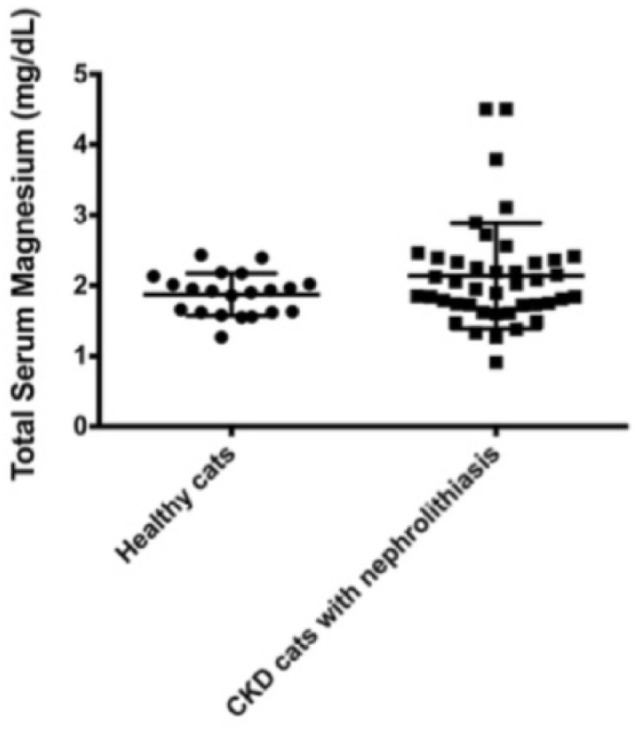
Objectives: Magnesium has been 'the forgotten ion' for many years. Over the past decade, however, the role of magnesium in essential physiological functions and several illness conditions have been elucidated. Nevertheless, the investigation of magnesium in cats with chronic kidney disease (CKD) and nephrolithiasis is yet to be determined. The purpose of this study was to investigate whether CKD cats with nephrolithiasis have changes in total serum magnesium concentrations, and whether magnesium disorders may be associated with other electrolyte disturbances, as well as with prognosis. We also aimed to evaluate whether total serum magnesium concentration differs between CKD cats with and without nephrolithiasis.
Methods: Total serum magnesium concentrations were assessed in 42 cats with CKD with stage 1-4 nephrolithiasis. The correlation between magnesium and other electrolytes, as well as Kaplan-Meier survival analysis, were performed. We also selected 14 control cats with CKD without nephrolithiasis age-matched with 14 cats with CKD with nephrolithiasis.
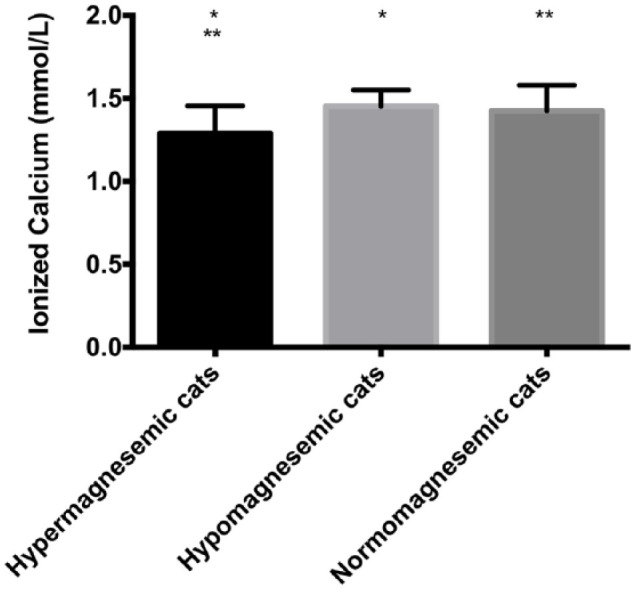
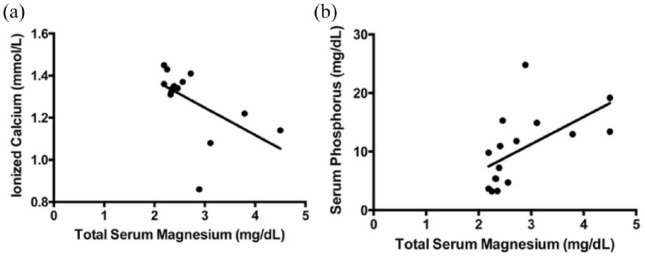
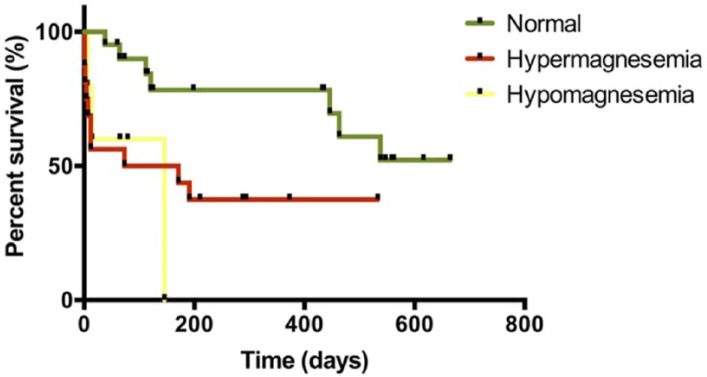
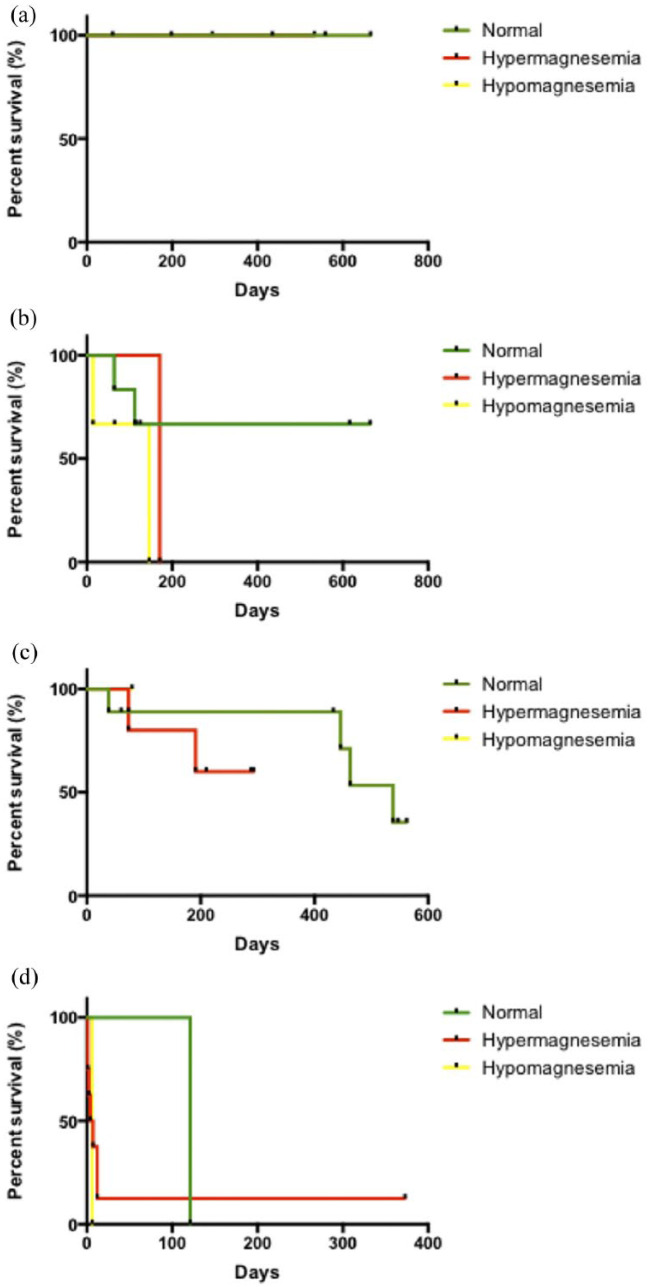
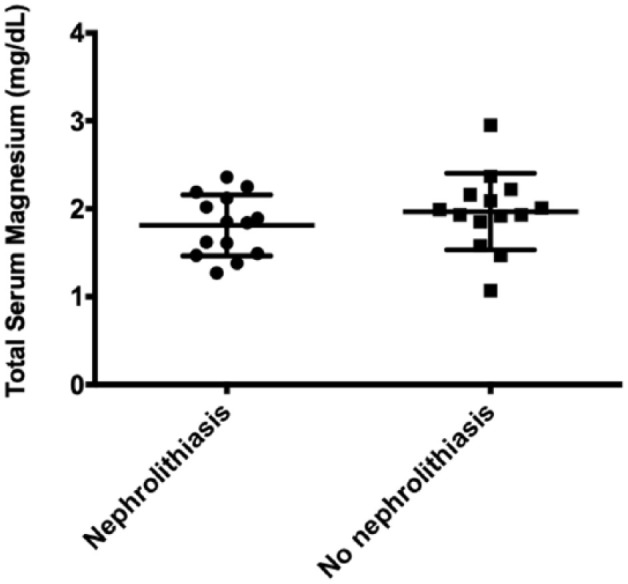
Results: Hypermagnesemia was observed in 16/42 (38.1%) and hypomagnesemia in 6/42 (14.3%) cats. Serum magnesium abnormalities were observed in cats of all stages, and marked hypermagnesemia was noted in cats with stage 4 CKD with nephrolithiasis (P <0.001). There was a negative correlation between total serum magnesium and ionized calcium (r = -0.64; P <0.01), and a positive correlation between total serum magnesium and serum phosphorus (r = 0.58, P = 0.01). Cats with CKD with nephrolithiasis and hypomagnesemia or hypermagnesemia had higher mortality than those with normal total serum magnesium concentration (P <0.01), regardless of CKD stage. There was no difference in total serum magnesium concentration between CKD cats with and without nephrolithiasis.
Conclusions and relevance: Cats with CKD with nephrolithiasis have magnesium abnormalities. Hypomagnesemia and hypermagnesemia were associated with an increase in mortality, and thus total serum magnesium abnormalities may be used as prognostic factors in these cases.
Keywords: Magnesium; electrolytes; mortality; nephrolithiasis; renal insufficiency.
Conflict of interest statement
The authors declared no potential conflicts of interest with respect to the research, authorship, and/or publication of this article.
Figures
References
-
- Ishimura E, Okuno S, Yamakawa T, et al. Serum magnesium concentration is a significant predictor of mortality in maintenance hemodialysis patients. Magnes Res 2007; 20: 237–244. - PubMed
-
- Rude RK, Gruber HE, Wei LY, et al. Magnesium deficiency: effect on bone and mineral metabolism in the mouse. Calcif Tissue Int 2003; 72: 32–41. - PubMed
-
- Musso CG. Magnesium metabolism in health and disease. Magnesium 2009; 41: 357–362. - PubMed
-
- Eichorn EJ, Tandon PK, DiBianco R, et al. Clinical and prognostic significance failure: the PROMISE study of serum magnesium concentration in patients with severe chronic congestive heart (II) results. JACC Heart Fail 1993; 21: 634–640. - PubMed
-
- Lacson E, Jr, Wang W, Ma L, et al. Serum magnesium and mortality in hemodialysis patients in the United States: a cohort study. Am J Kidney Dis 2015; 66: 1056–1066. - PubMed
MeSH terms
Substances
LinkOut - more resources
Full Text Sources
Medical
Miscellaneous
