


Leonurine promotes neurite outgrowth and neurotrophic activity by modulating the GR/SGK1 signaling pathway in cultured PC12 cells
- PMID: 30694908
- PMCID: PMC6392205
- DOI: 10.1097/WNR.0000000000001180
Leonurine promotes neurite outgrowth and neurotrophic activity by modulating the GR/SGK1 signaling pathway in cultured PC12 cells
Abstract
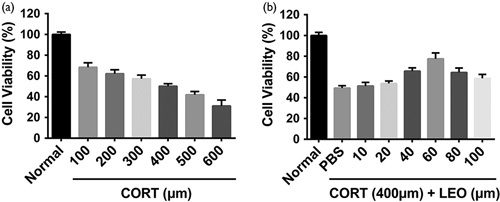
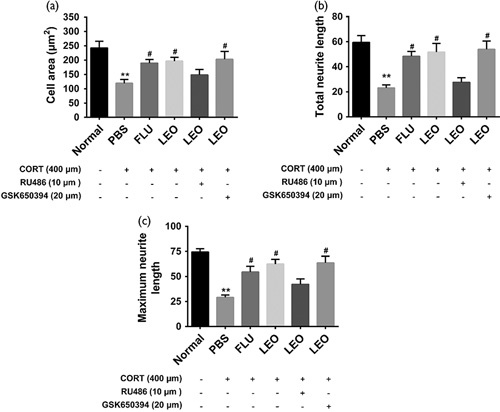
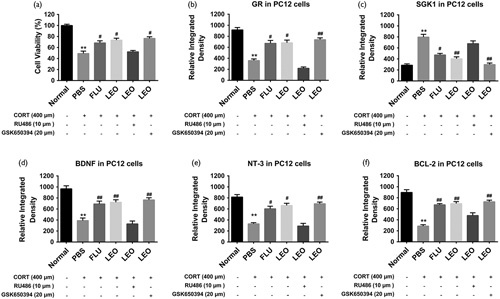
Depression is a common psychiatric disorder that affects almost 10% of children and adolescents worldwide. Numerous synthetic chemical antidepressants used to treat depression have adverse side effects. Therefore, new therapeutic approaches for depression treatment are urgently needed. Leonurus cardiaca has recently been shown to be effective for the treatment of nervous system diseases such as depression, but its mechanism is not clear. In this study, we aimed to reveal the mechanism underlying leonurine's antidepressant activity. Leonurine was used to treat corticosterone-induced PC12 cells to examine its effect on neurite outgrowth and neurotrophic factors after treatment with the inhibitor of glucocorticoid receptor (GR) and serum-inducible and glucocorticoid-inducible kinase 1 (SGK1). Methyl thiazolyl tetrazolium assays were used to evaluate the viability of cells. High content analysis was used to detect cell area, total neurite length, maximum neurite length, and expression of GR, SGK1, brain-derived neurotrophic factor (BDNF), neurotrophic factor-3 (NT-3), and B-cell lymphoma-2 (BCL-2). The results showed that leonurine increased cell viability in a concentration-dependent manner, with the maximal prosurvival effect at 60 μM. Leonurine increased cell area, total neurite length, and maximum neurite length of corticosterone-induced PC12 cells, increased the expression of GR, BDNF, NT-3, and BCL-2, and decreased the expression of SGK1. After treatment with GR inhibitor RU486, the expressions of GR, BDNF, NT-3, and BCL-2 were significantly decreased and SGK1 was increased. In contrast, treatment with GSK650394 had the opposite effect of RU486. Our data indicate that leonurine promotes neurite outgrowth and neurotrophic activity in cultured PC12 cells, and its potential mechanism may involve the GR/SGK1 signaling pathway.
Figures

References
-
- Ferrari AJ, Somerville AJ, Baxter AJ, Norman R, Patten SB, Vos T, et al. Global variation in the prevalence and incidence of major depressive disorder: a systematic review of the epidemiological literature. Psychol Med 2013; 43:471–481. - PubMed
-
- Furtado M, Katzman MA. Examining the role of neuroinflammation in major depression. Psychiatry Res 2015; 229: 27–36. - PubMed
-
- Heller AS, Ezie CEC, Otto AR, Timpano KR. Model-based learning and individual differences in depression: the moderating role of stress. Behav Res Ther 2018; 111:19–26. - PubMed
Publication types
MeSH terms
Substances
LinkOut - more resources
Full Text Sources
Medical
Research Materials
