


Assessment of the oral health behavior, knowledge and status among dental and medical undergraduate students: a cross-sectional study
- PMID: 30696440
- PMCID: PMC6352450
- DOI: 10.1186/s12903-019-0716-6
Assessment of the oral health behavior, knowledge and status among dental and medical undergraduate students: a cross-sectional study
Abstract
Background: It is widely accepted that oral health plays an important role in overall health. Both dental and medical students are expected to possess good oral health awareness and work together for public oral health promotion especially in developing countries like China. The aim of this study was to assess the oral health knowledge, behavior and status of dental and medical undergraduate students in the first (fresh) and third year (before specialized courses) study.
Methods: A self-administered structured questionnaire with 13 questions was designed based on oral health knowledge, behavior and status and a cross-sectional study was conducted among the 1st, 3rd year dental students (1DS, 3DS) and medical students (1MS, 3MS) of Sichuan University in Chengdu, China, in the period of September-December 2017. The data was analyzed by chi-square test using IBM SPSS Statistics v. 21.0.
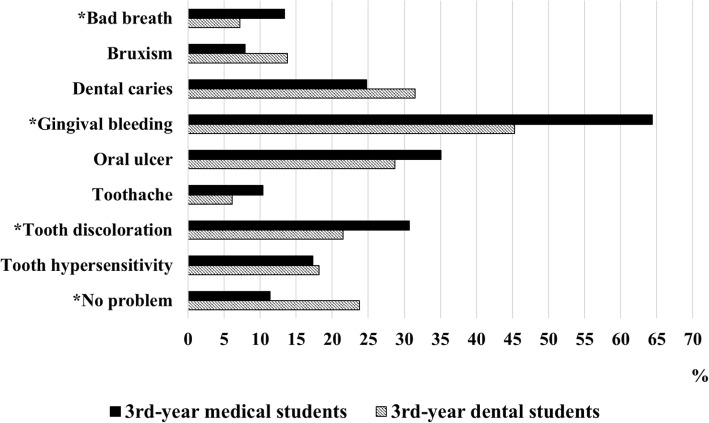
Results: The oral health behavior, consciousness and status of the 1st, 3rd year medical and dental students were not optimistic. Dental freshmen were slightly superior to the medical ones in terms of the brushing methods and the awareness of oral disease-systemic disease relationship. The junior dental students showed highly significant improvement than their counterparts, mainly in the items about frequency of brushing teeth, brushing methods of vertical scrub or Bass technique (66.3%), usage of floss or mouth wash (49.7%), causes of caries, periodontal diseases and system diseases (56.9-83.4%). The rates mentioned above were 36.1, 15.8%, 26.7-43.6% among 3MS, respectively. In terms of oral health status, significant differences were only observed in junior students. The prevalence rates of bad breath, gum bleeding, and tooth discoloration among 3DS were obviously lower than those of 3MS. However, only a total of 17.2% junior students had a good oral health, including 23.8% dental students and 11.4% medical students.
Conclusions: Our study provided a new understanding of oral health knowledge, behavior and status among dental and medical students, which may help to promote the reform of oral health education and establish a model for clinicians and dentists to work together for improving oral health.
Keywords: China; Dental students; Medical students; Oral health behavior; Oral health education; Oral health knowledge; Oral health status.
Conflict of interest statement
Authors’ information
Not applicable.
Ethics approval and consent to participate
All participants volunteered for the study, were informed about the scope of the study, and provided written consent. The study was approved by the ethics committee of West China School of Stomatology, Sichuan University (Reference: WCHSIBR-OT-2016-179).
Consent for publication
Not applicable.
Competing interests
The authors declare that they have no competing interests.
Publisher’s Note
Springer Nature remains neutral with regard to jurisdictional claims in published maps and institutional affiliations.
Figures
References
Publication types
MeSH terms
LinkOut - more resources
Full Text Sources
Medical
Research Materials
