Meta-Analysis
. 2019 Jan 29;9(1):822.
doi: 10.1038/s41598-018-35734-4.

Remyelination promoting therapies in multiple sclerosis animal models: a systematic review and meta-analysis

Affiliations
Meta-Analysis

Remyelination promoting therapies in multiple sclerosis animal models: a systematic review and meta-analysis

Carlijn R Hooijmans et al. Sci Rep. .

Abstract

An unmet but urgent medical need is the development of myelin repair promoting therapies for Multiple Sclerosis (MS). Many such therapies have been pre-clinically tested using different models of toxic demyelination such as cuprizone, ethidium bromide, or lysolecithin and some of the therapies already entered clinical trials. However, keeping track on all these possible new therapies and their efficacy has become difficult with the increasing number of studies. In this study, we aimed at summarizing the current evidence on such therapies through a systematic review and at providing an estimate of the effects of tested interventions by a meta-analysis. We show that 88 different therapies have been pre-clinically tested for remyelination. 25 of them (28%) entered clinical trials. Our meta-analysis also identifies 16 promising therapies which did not enter a clinical trial for MS so far, among them Pigment epithelium-derived factor, Plateled derived growth factor, and Tocopherol derivate TFA-12.We also show that failure in bench to bedside translation from certain therapies may in part be attributable to poor study quality. By addressing these problems, clinical translation might be smoother and possibly animal numbers could be reduced.


Conflict of interest statement

The authors declare no competing interests.

Figures
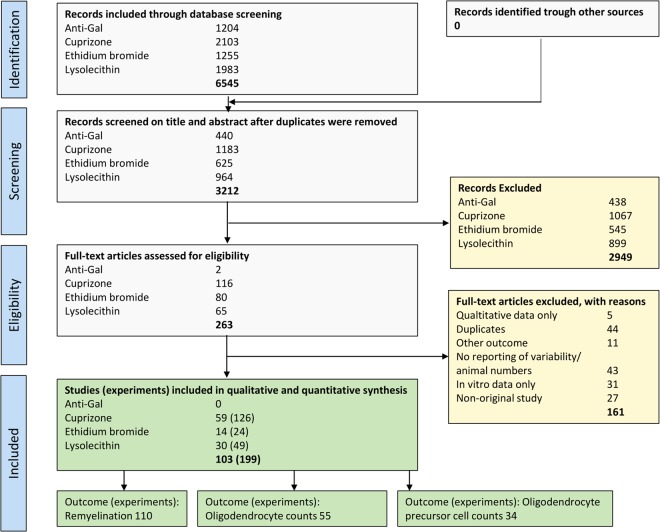
Figure 1
Figure 1
Quorum chart of the study selection process. Duplicate references are references that are mentioned in multiple medical databases (e.g. same references in Embase and Pubmed) or studies published in duplicate (e.g. same study in multiple journals).
Figure 2
Figure 2
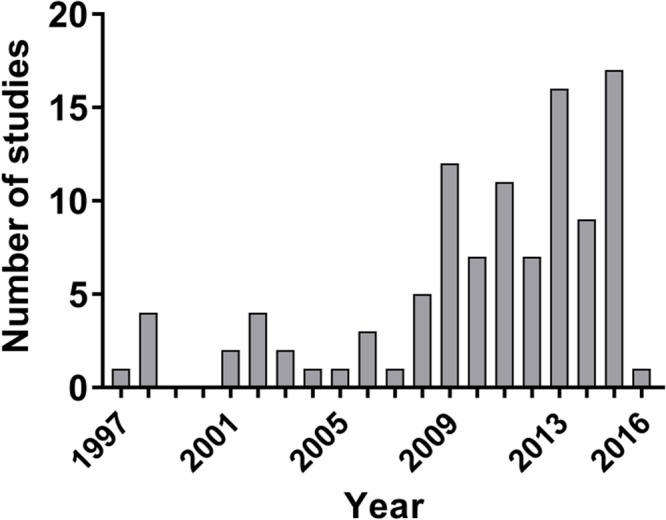
Histogram depicting the number of included studies per year.
Figure 3
Figure 3
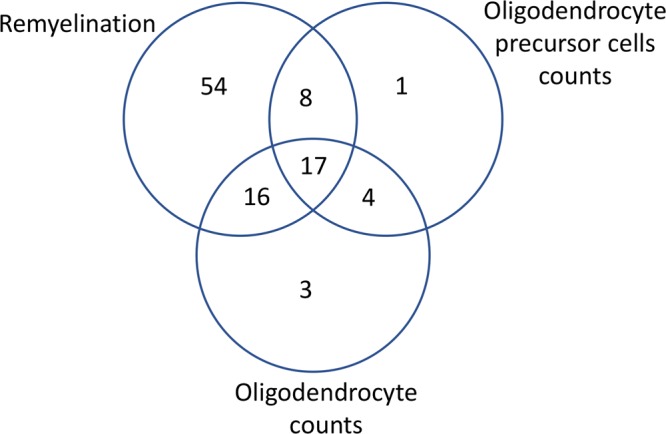
Venn diagram illustrating how many of the 103 studies assessed one or more of the outcomes remyelination, oligodendrocyte precursor (OPC) count, and oligodendrocyte count.
Figure 4
Figure 4
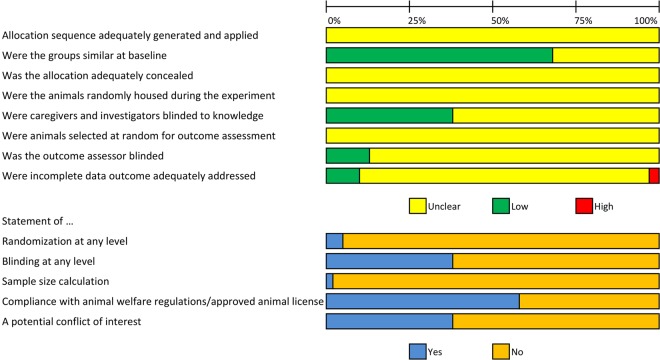
Risk of bias assessment of the included studies. The first 8 items assess study quality by reporting “yes” indicating low risk of bias, “no” high risk of bias, and “unclear” as not reported. The remaining 5 items score a “yes” if reported and a “no” if not reported.
Figure 5
Figure 5
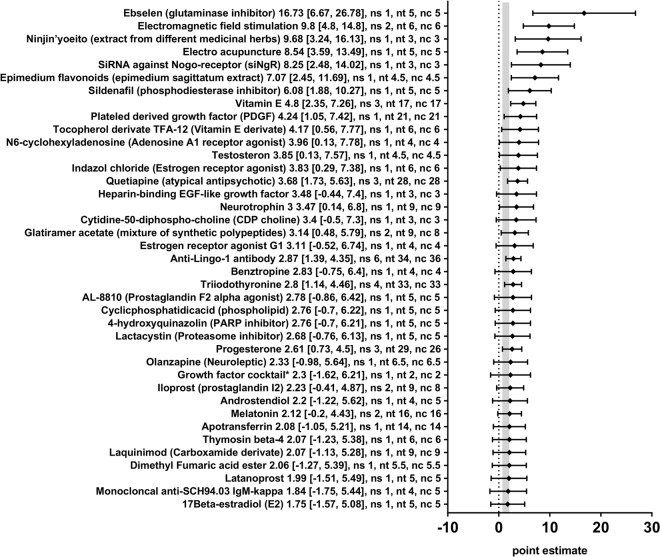
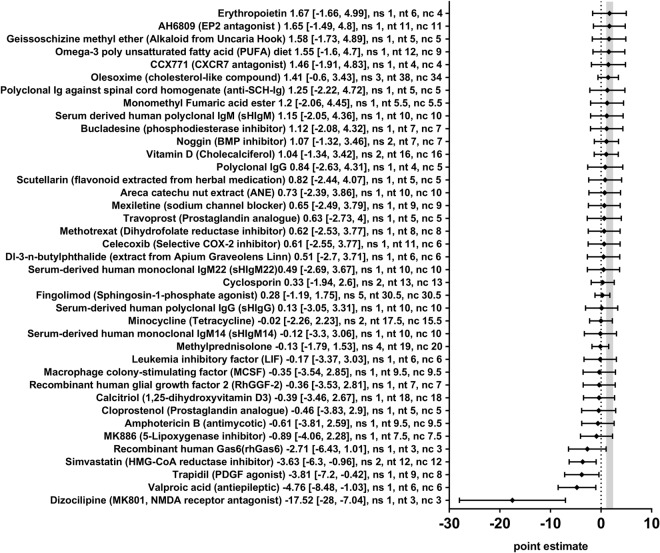
Forest plot of the included studies for the outcome remyelination (part 1). The diamond indicates the global estimate and its 95% confidence interval (CI). The numbers listed after a certain intervention are: the exact effect size with its 95% CI, the number of included studies for a certain intervention (ns), the total number of treated animals (nt) or control animals (nc). The gray bar indicates the 95% CI of the overall effect size. References are given in the Supplementary Information. *The growth factor cocktail contained Platelet derived growth factor-AA, neurotrophin-3, basic fibroblast growth factor, and insulin-like growth factor-1.
Figure 6
Figure 6
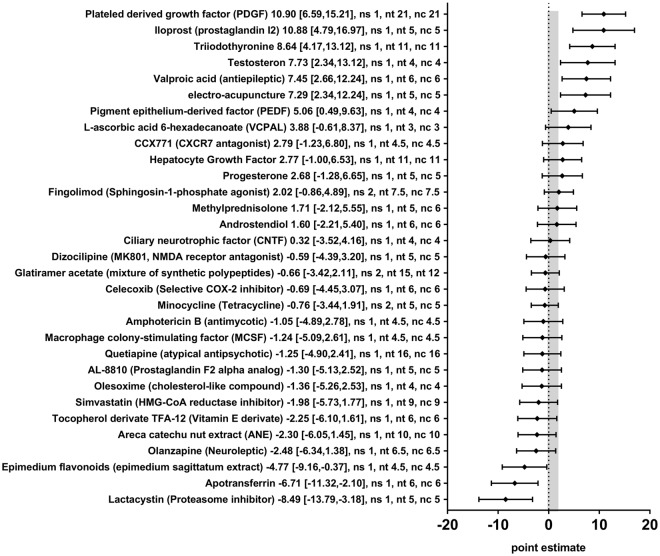
Forest plot of the included studies for the outcome remyelination (part 2). The diamond indicates the global estimate and its 95% confidence interval (CI). The numbers listed after a certain intervention are: the exact effect size with its 95% CI, the number of included studies for a certain intervention (ns), the total number of treated animals (nt) or control animals (nc). The gray bar indicates the 95% CI of the overall effect size. References are given in the Supplementary Information.
Figure 7
Figure 7
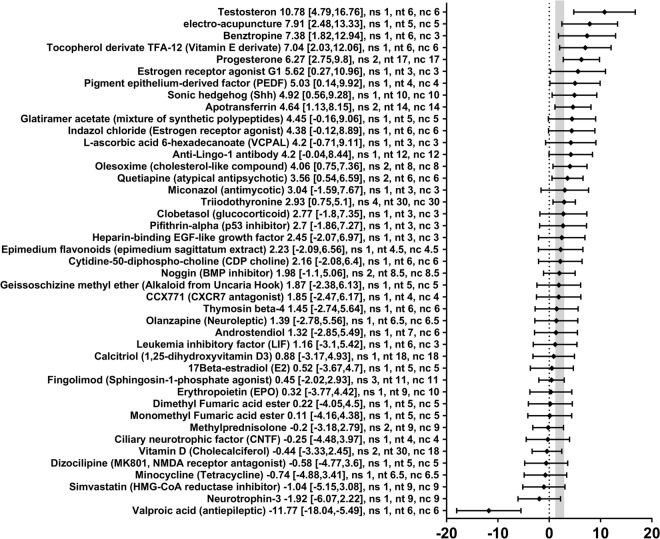
Forest plot of the included studies for outcome oligodendrocyte precursor cell (OPC) count. The diamond indicates the global estimate and its 95% confidence interval (CI). The gray bar indicates the 95% CI of the overall effect size. The numbers listed after a certain intervention are: the exact effect size with its 95% CI, the number of included studies for a certain intervention (ns), the total number of treated animals (nt) or control animals (nc). References are given in the Supplementary Information.
Figure 8
Figure 8
Forest plot of the included studies for outcome oligodendrocyte count. The diamond indicates the global estimate and its 95% confidence interval (CI). The gray bar indicates the 95% CI of the overall effect size. The numbers listed after a certain intervention are: the exact effect size with its 95% CI, the number of included studies for a certain intervention (ns), the total number of treated animals (nt) or control animals (nc). References are given in the Supplementary Information.
Figure 9
Figure 9
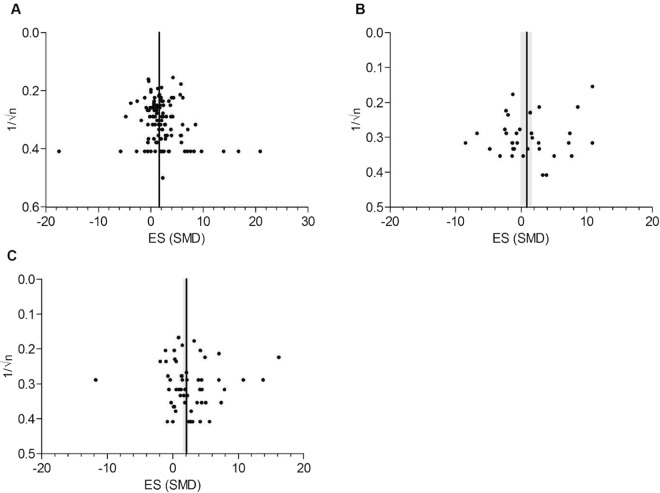
Evaluation of publication bias. Panel A, B and C represent the funnel plots for the outcomes remyelination, oligodendrocyte precursor cells (OPC) and oligodendrocyte count. The line represents the SMD of the summary effect, the grey bands represent global 95% confidence intervals.
Figure 10
Figure 10
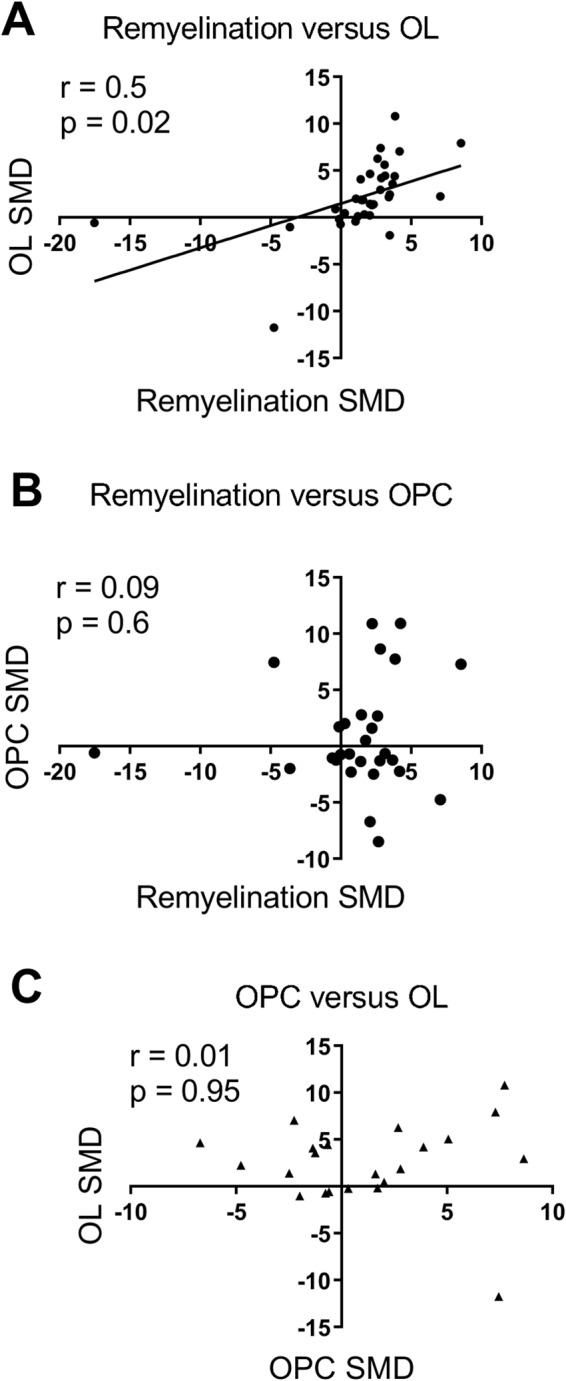
Scatter plot of standardized mean differences (SMD) from the present meta-analysis of therapies which were assessed in at least two outcomes (remyelination, oligodendrocyte cell count (OL), oligodendrocyte precursor cell count (OPC)). Remyelination versus OL (A) shows a significant positive correlation (Pearson’s r = 0.51, two-tailed p < 0.02). Neither remyelination versus OPC (B) nor OPC versus OL (C) show a significant correlation.

References

    1. Organization, W. H. Multiple Sclerosis International Federation. Atlas: Multiple Sclerosis Resources in the World 2008. World Health Organization, Geneva, Switzerland 13–17 (2008).

    1. Montalban X, et al. Ocrelizumab versus Placebo in Primary Progressive Multiple Sclerosis. The New England journal of medicine. 2017;376:209–220. doi: 10.1056/NEJMoa1606468. - DOI - PubMed
    1. Ineichen BV, et al. Nogo-A Antibodies for Progressive Multiple Sclerosis. CNS drugs. 2017;31:187–198. doi: 10.1007/s40263-017-0407-2. - DOI - PubMed
    1. Nave KA. Myelination and support of axonal integrity by glia. Nature. 2010;468:244–252. doi: 10.1038/nature09614. - DOI - PubMed
    1. Sospedra M, Martin R. Immunology of multiple sclerosis. Annual review of immunology. 2005;23:683–747. doi: 10.1146/annurev.immunol.23.021704.115707. - DOI - PubMed

Publication types

MeSH terms