


How the epigenome integrates information and reshapes the synapse
- PMID: 30696992
- PMCID: PMC7032043
- DOI: 10.1038/s41583-019-0121-9
How the epigenome integrates information and reshapes the synapse
Abstract
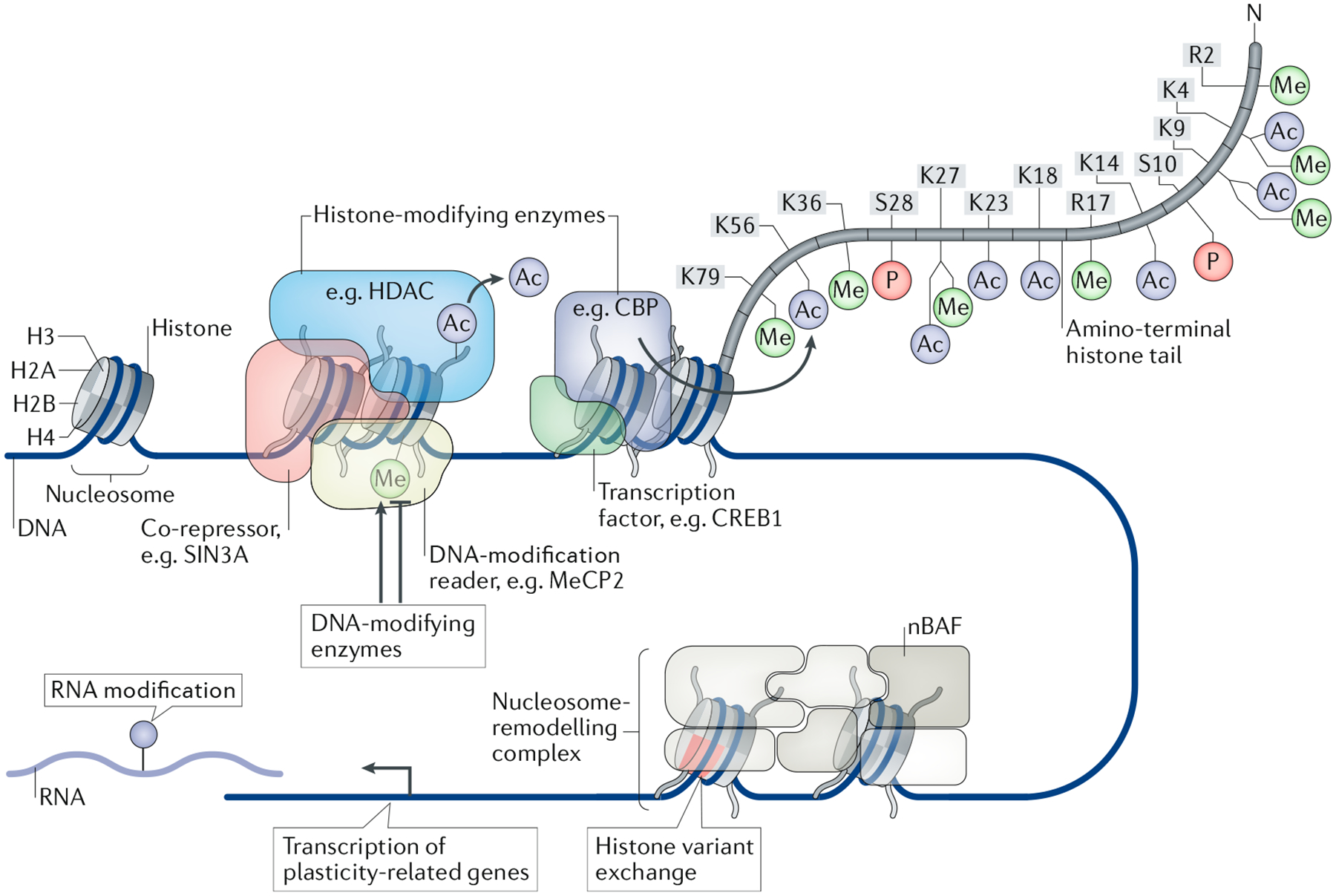
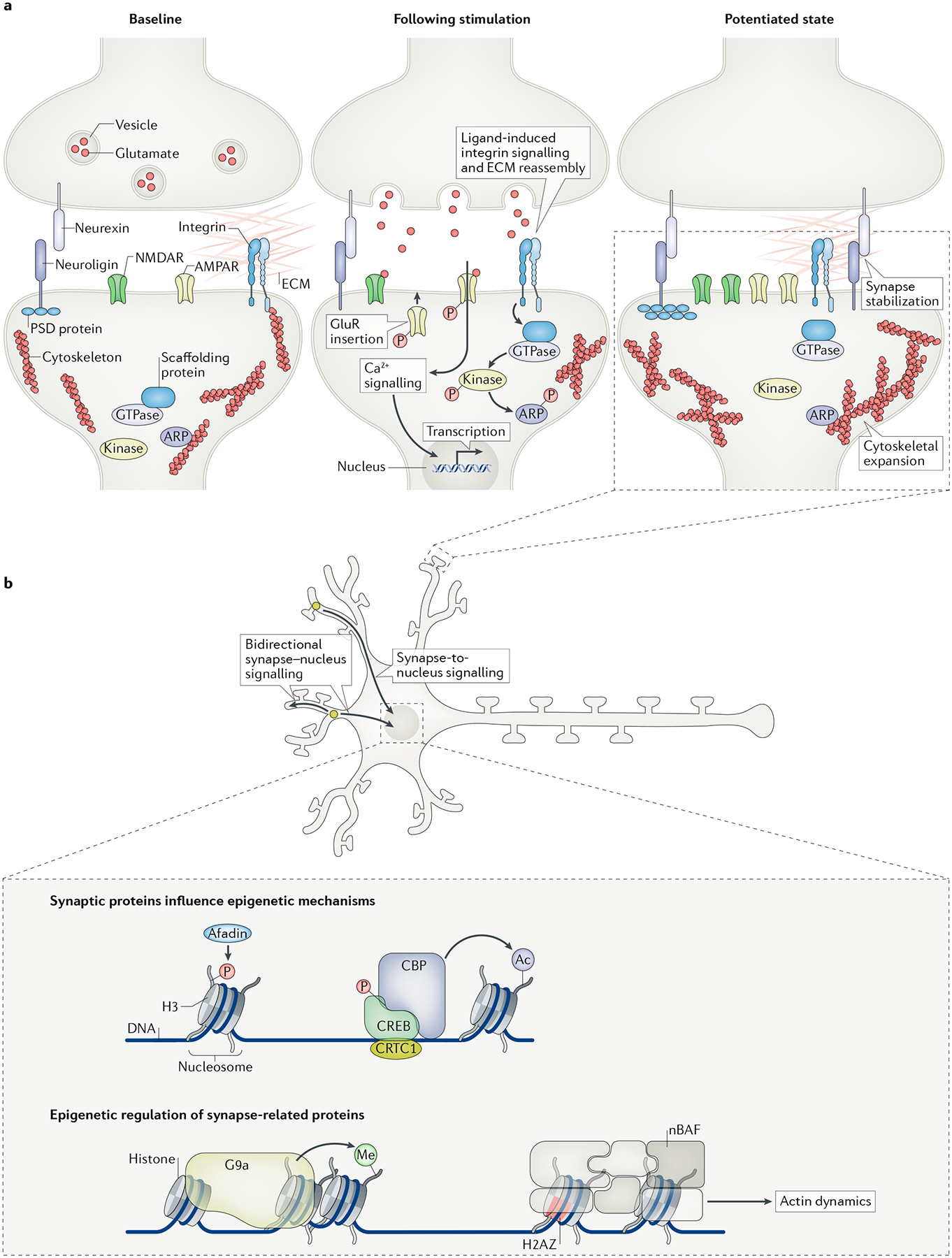
In the past few decades, the field of neuroepigenetics has investigated how the brain encodes information to form long-lasting memories that lead to stable changes in behaviour. Activity-dependent molecular mechanisms, including, but not limited to, histone modification, DNA methylation and nucleosome remodelling, dynamically regulate the gene expression required for memory formation. Recently, the field has begun to examine how a learning experience is integrated at the level of both chromatin structure and synaptic physiology. Here, we provide an overview of key established epigenetic mechanisms that are important for memory formation. We explore how epigenetic mechanisms give rise to stable alterations in neuronal function by modifying synaptic structure and function, and highlight studies that demonstrate how manipulating epigenetic mechanisms may push the boundaries of memory.
Conflict of interest statement
Competing interests
The authors declare no competing interests.
Figures
References
-
- Kandel ER, Dudai Y & Mayford MR The molecular and systems biology of memory. Cell 157, 163–186 (2014). - PubMed
Publication types
MeSH terms
Grants and funding
LinkOut - more resources
Full Text Sources
Other Literature Sources
Miscellaneous
