


Extracellular Vesicle-Mediated Communication Within Host-Parasite Interactions
- PMID: 30697211
- PMCID: PMC6340962
- DOI: 10.3389/fimmu.2018.03066
Extracellular Vesicle-Mediated Communication Within Host-Parasite Interactions
Abstract
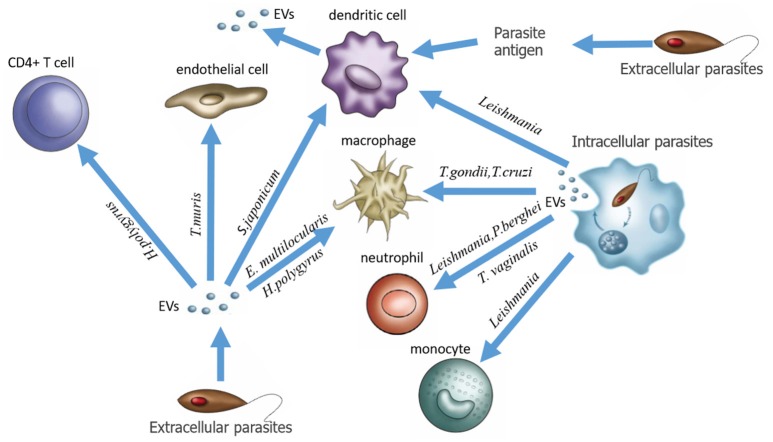
Extracellular vesicles (EVs) are small membrane-surrounded structures released by different kinds of cells (normal, diseased, and transformed cells) in vivo and in vitro that contain large amounts of important substances (such as lipids, proteins, metabolites, DNA, RNA, and non-coding RNA (ncRNA), including miRNA, lncRNA, tRNA, rRNA, snoRNA, and scaRNA) in an evolutionarily conserved manner. EVs, including exosomes, play a role in the transmission of information, and substances between cells that is increasingly being recognized as important. In some infectious diseases such as parasitic diseases, EVs have emerged as a ubiquitous mechanism for mediating communication during host-parasite interactions. EVs can enable multiple modes to transfer virulence factors and effector molecules from parasites to hosts, thereby regulating host gene expression, and immune responses and, consequently, mediating the pathogenic process, which has made us rethink our understanding of the host-parasite interface. Thus, here, we review the present findings regarding EVs (especially exosomes) and recognize the role of EVs in host-parasite interactions. We hope that a better understanding of the mechanisms of parasite-derived EVs may provide new insights for further diagnostic biomarker, vaccine, and therapeutic development.
Keywords: exosome; extracellular vesicle; intercellular communication; parasite; parasite-host interaction.
Figures
References
Publication types
MeSH terms
Substances
LinkOut - more resources
Full Text Sources
Medical
