


Seeing red: color vision in the largemouth bass
- PMID: 30697237
- PMCID: PMC6347066
- DOI: 10.1093/cz/zoy019
Seeing red: color vision in the largemouth bass
Abstract
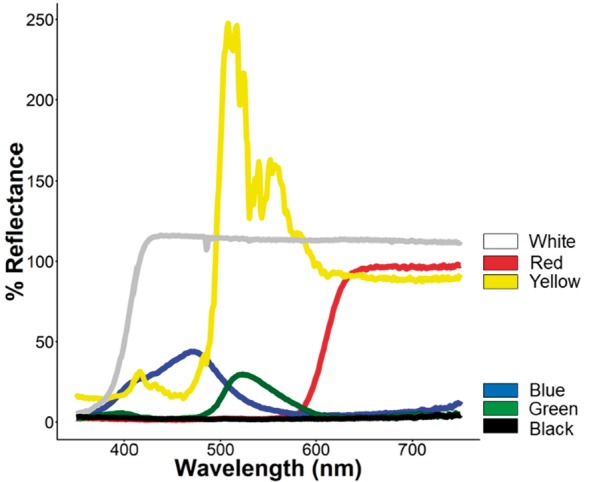
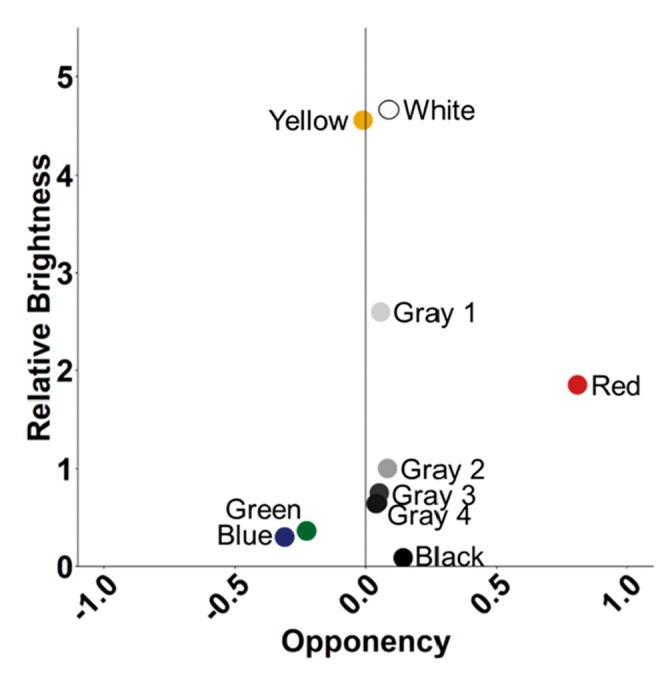
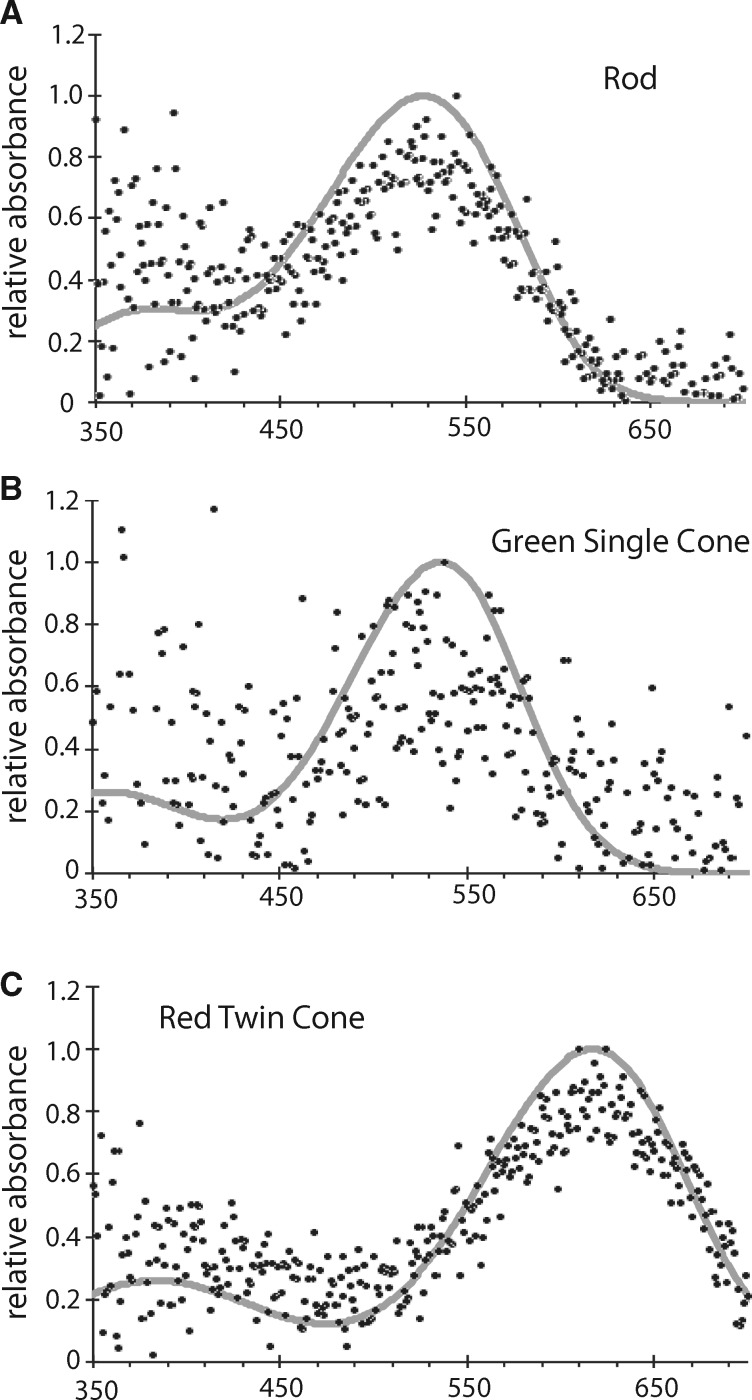
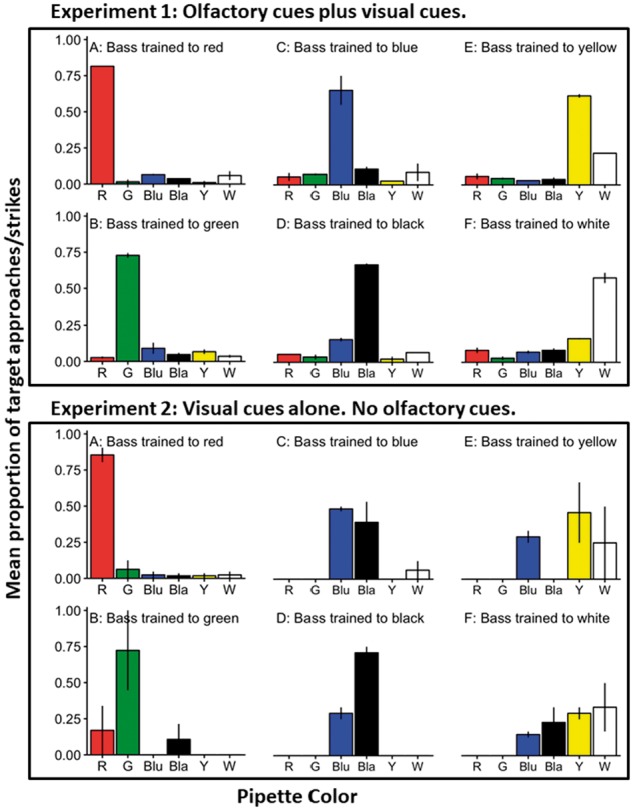
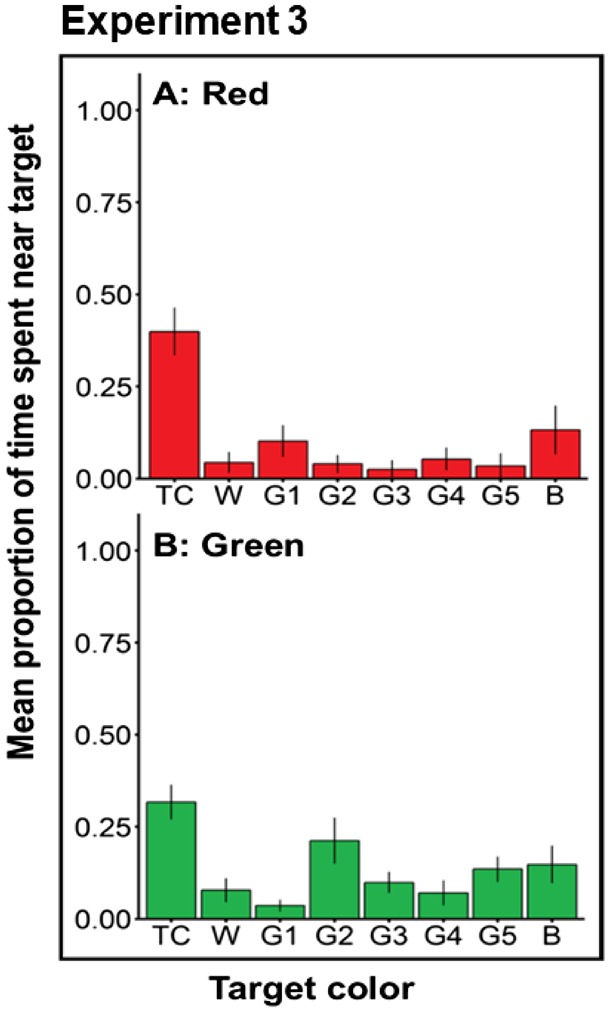
How animals visually perceive the environment is key to understanding important ecological behaviors, such as predation, foraging, and mating. This study focuses on the visual system properties and visual perception of color in the largemouth bass Micropterus salmoides. This study (1) documents the number and spectral sensitivity of photoreceptors, (2) uses these parameters to model visual perception, and (3) tests the model of color perception using a behavioral assay. Bass possess single cone cells maximally sensitive at 535 nm, twin cone cells maximally sensitive at 614 nm, and rod cells maximally sensitive at 528 nm. A simple model of visual perception predicted that bass should not be able to discern between chartreuse yellow and white nor between green and blue. In contrast, bass should be able to discern red from all achromatic (i.e., gray scale) stimuli. These predictions were partially upheld in behavioral trials. In behavioral trials, bass were first trained to recognize a target color to receive a food reward, and then tested on their ability to differentiate between their target color and a color similar in brightness. Bass trained to red and green could easily discern their training color from all other colors for target colors that were similar in brightness (white and black, respectively). This study shows that bass possess dichromatic vision and do use chromatic (i.e., color) cues in making visual-based decisions.
Keywords: bass; cones; photoreceptors; rods; vision.
Figures
References
-
- Aksnes D, Utne ACW, 1997. A revised model of visual range in fish. Sarsia 82:37–41.
-
- Ali MA, Anctil M, 1976. Retinas of Fishes: An Atlas. Berlin: Springer-Verlag.
-
- Baldwin J, Johsnen S, 2012. The male blue crab, Callinectes sapidus, uses both chromatic and achromatic cues during mate choice. J Exp Biol 215:1184–1191. - PubMed
-
- Boughman JW, 2002. How sensory drive can promote speciation. Trends Ecol Evol 17:571–577.
-
- Bridges CDB, 1972. Photochemistry of Vision. New York: Springer-Verlag.
LinkOut - more resources
Full Text Sources