Proteomic Profiles in Advanced Age-Related Macular Degeneration Using an Aptamer-Based Proteomic Technology
- PMID: 30697465
- PMCID: PMC6348995
- DOI: 10.1167/tvst.8.1.14
Proteomic Profiles in Advanced Age-Related Macular Degeneration Using an Aptamer-Based Proteomic Technology
Abstract
Purpose: To explore top-ranked plasma proteins related to neovascular age-related macular degeneration (AMD) and geographic atrophy (GA), and explore pathways related to neovascular AMD and GA.
Methods: We conducted a pilot study of patients with neovascular AMD (n = 10), GA (n = 10), and age-matched cataract controls (n = 10) who were recruited into an AMD registry. We measured 4001 proteins in ethylenediaminetetraacetic acid plasma samples using an aptamer-based proteomic technology. Relative concentrations of each of 4001 proteins were log (base 2) transformed and compared between cases of neovascular AMD and GA versus controls using linear regression. Pathway analysis was conducted using pathways downloaded from Reactome.
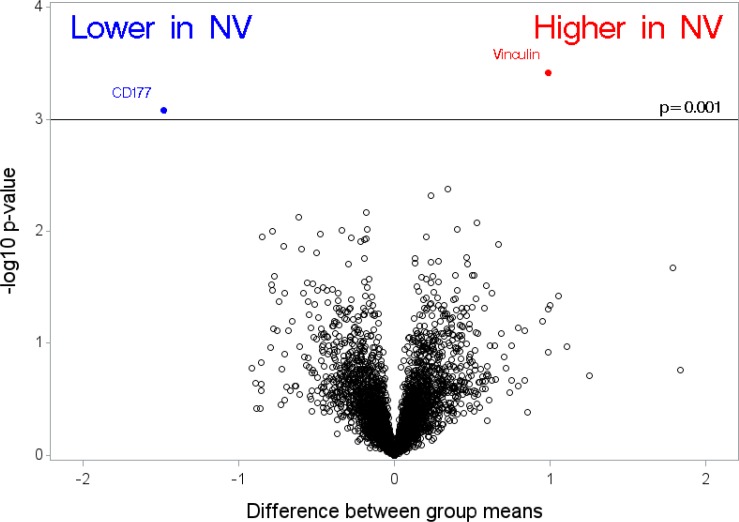
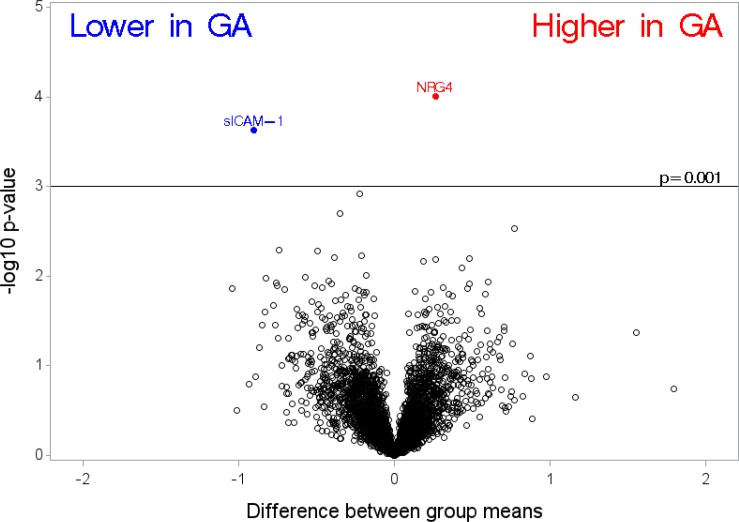
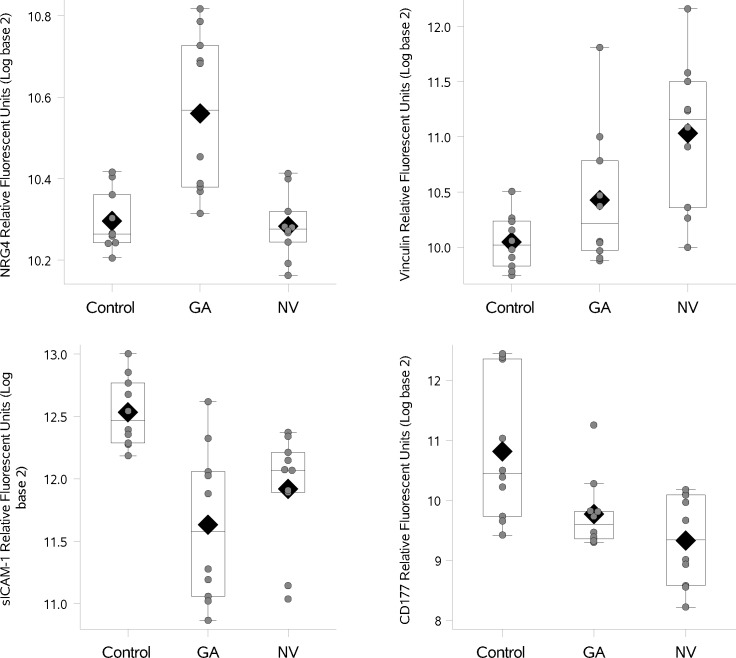
Results: In this pilot study, higher levels of vinculin and lower levels of CD177 were found in patients with neovascular AMD compared with controls. Neuregulin-4 was higher and soluble intercellular adhesion molecule-1 was lower in patients with GA compared with controls. For neovascular AMD, cargo trafficking to the periciliary membrane, fibroblast growth factor receptor 3b ligand binding and activation, and vascular endothelial growth factor-related pathways were in the top ranked pathways. The top-ranked pathways for GA included several related to ErbB4 signaling.
Conclusions: We found different proteins and different pathways associated with neovascular AMD and GA. Vinculin and some of the top-ranked pathways have been previously associated with AMD, whereas others have not been described.
Translational relevance: Biomarkers identified in plasma likely reflect systemic alterations in protein expression and may improve our understanding of the mechanisms leading to AMD.
Keywords: aptamer-based technologies; geographic atrophy; neovascular AMD; proteomics.
Figures
References
-
- Wong WL, Su X, Li X, et al. Global prevalence of age-related macular degeneration and disease burden projection for 2020 and 2040: a systematic review and meta-analysis. Lancet Glob Health. 2014;2:e106–e16. - PubMed
-
- Ambati J, Ambati BK, Yoo SH, Ianchulev S, Adamis AP. Age-related macular degeneration: etiology, pathogenesis, and therapeutic strategies. Surv Ophthalmol. 2003;48:257–293. - PubMed
-
- Advancing Therapeutic Development for Dry Age-Related Macular Degeneration (AMD): Workshop in Brief. Institute of Medicine. 2015. - PubMed
LinkOut - more resources
Full Text Sources